Spectroscopy Applications
Explore how researchers, manufacturers, and quality-control laboratories use StellarNet spectrometers to solve real-world measurement challenges. Our compact UV-Vis, VIS-NIR, NIR, and Raman spectroscopy systems support applications across food safety, pharmaceuticals, advanced materials, thin films, biomedical research, environmental monitoring, industrial process analysis, radiometry, and space science.
Browse the application areas below to discover customer research, technical articles, spectroscopy methods, and practical solutions for absorbance, transmission, reflectance, fluorescence, Raman, radiometric, and chemometric analysis.
Key Application Areas
Food Safety & Quality
Advanced & quantum materials
Thin Films & Optical Coatings
Pharmaceuticals & Nutraceuticals
Biomedical & Life Sciences
Environmental & Microplastics
Industrial & Process Analysis
Lighting, Displays & Radiometry
Featured Spectroscopy Application –
Astronomy, Space & Remote Sensing
Astronomy spectroscopy gives researchers a way to study light from objects and environments far beyond the laboratory. StellarNet systems support astronomical spectroscopy for research into stars, planets, meteors, and atmospheric phenomena. Spectral measurements can reveal information that cannot be seen through imaging alone. Compact instruments also open new possibilities for space spectroscopy and CubeSat missions where size and flexibility matter. From meteor and aurora research to remote sensing and educational astronomy, StellarNet provides accessible spectroscopy tools for exploring our planet and the universe beyond it.
Astronomy, Space & Remote Sensing
Looking for something else?
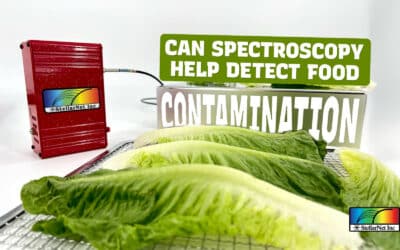
Application Note: Cyclospora Food Saftey
The 2026 Cyclospora outbreak linked to iceberg lettuce highlights a persistent challenge in food production: contamination can move through the supply chain before conventional testing identifies a...
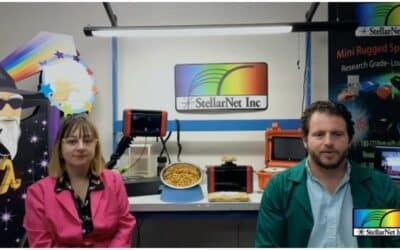
Featured in Pet Food Media on NIR Ingredient Verification
StellarNet President Jason Pierce was recently featured in Pet Food Media with the article “Looking Beyond Pass/Fail: New Approaches to Ingredient Verification in Pet Food Manufacturing.” As pet...
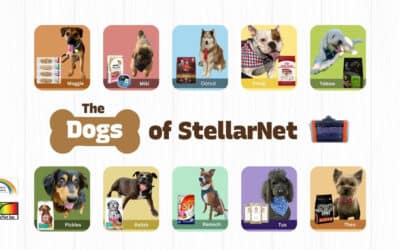
The Dogs of StellarNet and the ChemWiz-ADK™ NIR Feed and Pet Food Analyzers
Celebrate National Dog Day on August 26th! This National Dog Day, we’re highlighting how advanced NIR spectroscopy helps pet food manufacturers create consistent, high-quality products for the...
The SpectraWizard’s Spectroscopy Application Challenge has Officially Started
It’s time to show the world what your light measurement application can do! Science empowers us to explore, discover, and shape a brighter tomorrow—and now it’s your turn to shine! Show off your...
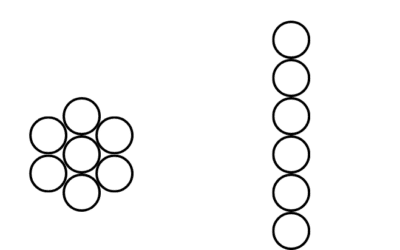
Single Fiber vs. Linear Fiber Bundle for Spectroscopy | Light Throughput Comparison
Fiber optic cables are a critical component of spectroscopy systems - directly influencing signal strength, measurement repeatability, and overall system performance. Regardless of the measurement...
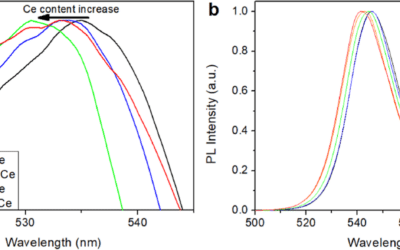
Photoluminescence Quantum Yield Enhancement of FAPbBr3 Thin Films via Ce Doping
Dmytro Vorontsov, Martin Ledinský, Aleš Vlk, Robert Hlaváč, Lucie Landová, Tereza Košutová, Karel Knížek, Anna Fučíková, Nada Mrkyvkova, Peter Siffalovic, Jan Valenta Abstract The photoluminescence...