Display Technology Measurement
Need a display measurement solution for your application? Our configurable thin film metrology systems deliver rapid, non-contact optical measurements for display research, manufacturing, quality control, and improved production consistency. Speak with our team to configure a system tailored to your measurement requirements.
StellarNet Display Technology Measurement Systems combine reflectance and transmission spectroscopy with modular optical measurement platforms to characterize display coatings, transparent conductive films, OLED materials, LCD components, and emerging MicroLED technologies. Designed to support modern display development, these flexible systems provide accurate thin film characterization to improve brightness, color accuracy, transparency, optical performance, device reliability, and overall display quality.
Common Display Thin Films
- Transparent Conductive Oxides (ITO) – Touchscreens & Transparent Electrodes
- OLED Thin Films – Organic Emissive & Transport Layers
- LCD Optical Films – Brightness Enhancement & Light Management
- Polarizers – Contrast & Light Polarization
- Color Filters – RGB Pixel Color Generation
- Anti-Reflective (AR) Coatings – Improved Display Visibility
- Thin Glass & Protective Coatings – Cover Glass & Display Protection
- MicroLED Thin Films – Next-Generation Display Technologies
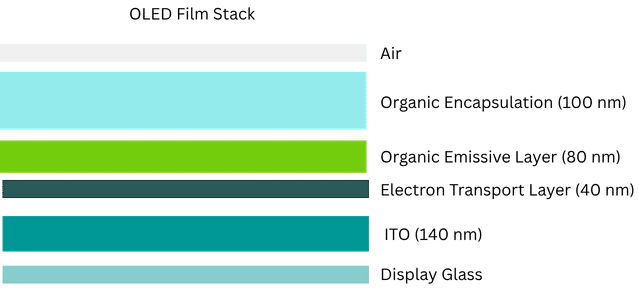
Cross-sectional OLED film stack illustrating transparent conductive oxide (ITO), organic transport and emissive layers, cathode, and substrate for thin film metrology, optical characterization, and display manufacturing.
Key Display Film Measurements
Accurate display measurement requires more than determining thin film thickness alone. Display engineers evaluate multiple optical and material properties to optimize brightness, contrast, color accuracy, touchscreen performance, and manufacturing consistency across LCD, OLED, and MicroLED technologies. Optical thin film measurement and display characterization help verify coating performance, improve process control, and ensure consistent display quality throughout production.
Typical display measurements include:
- Thin Film Thickness
- Reflectance
- Transmission
- Optical Uniformity
- Spectral Response
- Optical Constants (n & k)
- Display Color & Optical Characterization
- OLED, LCD & MicroLED Measurement
- Transparent Conductive Oxide (ITO) Characterization
- Display Process Monitoring & Quality Assurance
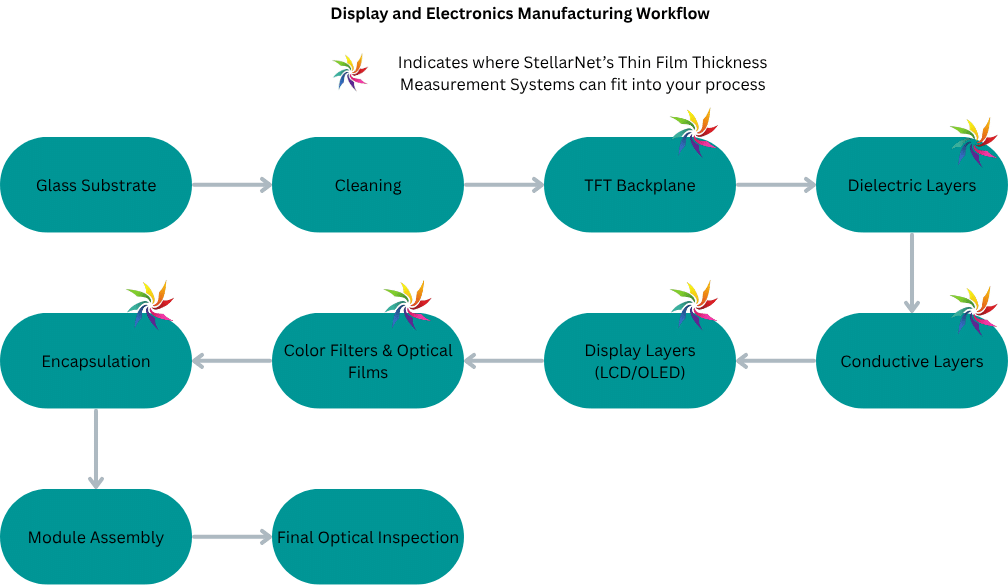
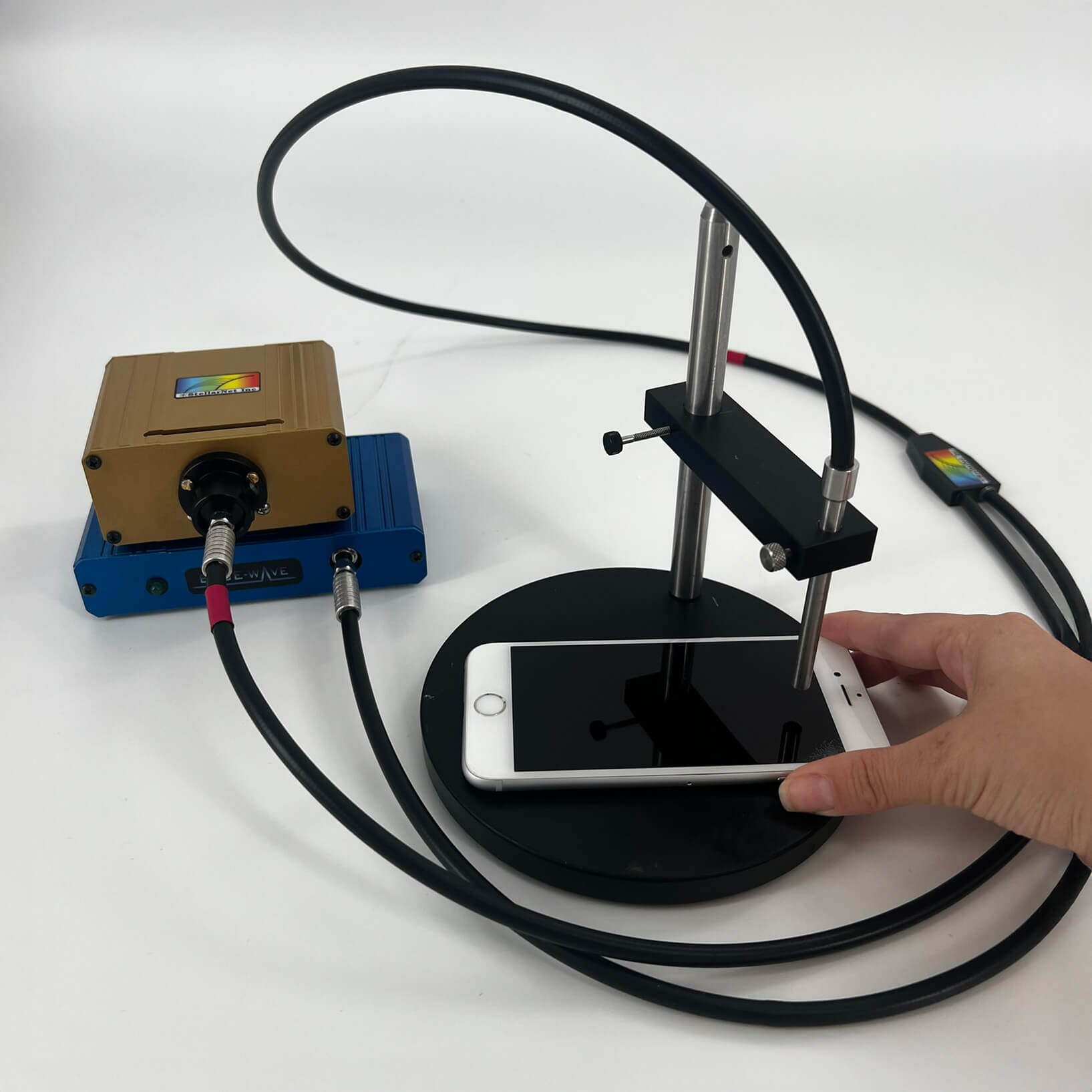
Display manufacturing workflow illustrating thin film deposition, transparent conductive oxides (ITO), OLED and LCD layer fabrication, MicroLED structures, color filters, anti-reflective coatings, optical characterization, process monitoring, and quality control using StellarNet thin film metrology systems.
Applications for Display Technology Measurement
OLED Display Multilayer Thickness Measurement
OLED displays consist of multiple ultra-thin organic functional layers deposited between transparent conductive electrodes. The thickness of the encapsulation layer, emissive layer, electron transport layer (ETL), and transparent electrode directly influences light output, color uniformity, efficiency, and device lifetime. Spectroscopic reflectometry combined with Transfer Matrix Method (TMM) analysis enables accurate, nondestructive measurement of these multilayer structures, supporting OLED display research, process development, and production quality assurance.
Typical Recipe
- Air
- Organic Encapsulation (100 nm)
- Organic Emissive Layer (80 nm)
- Electron Transport Layer (40 nm)
- ITO (140 nm)
- Display Glass (Bulk)
Recommended Spectrometer: 400–900 nm (TF-VIS)
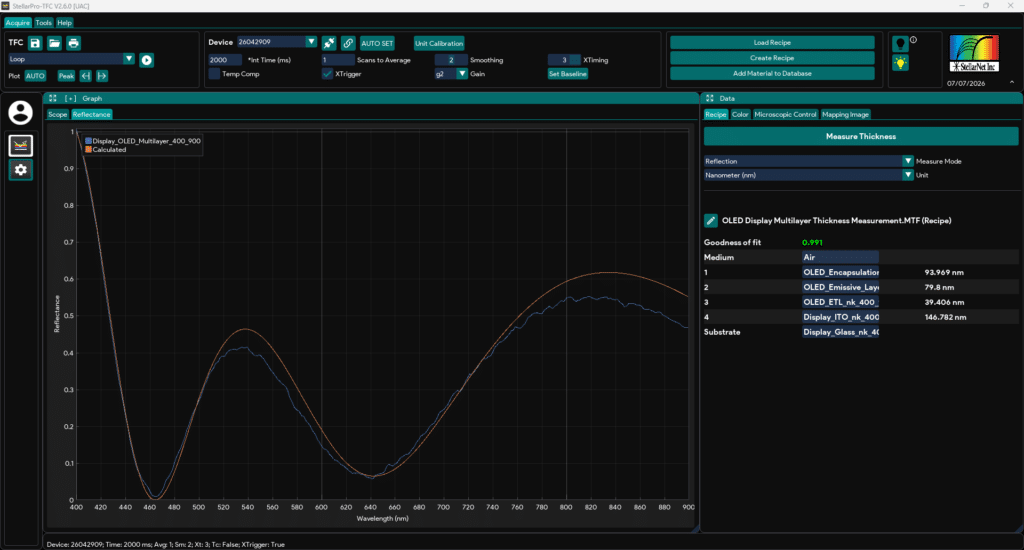
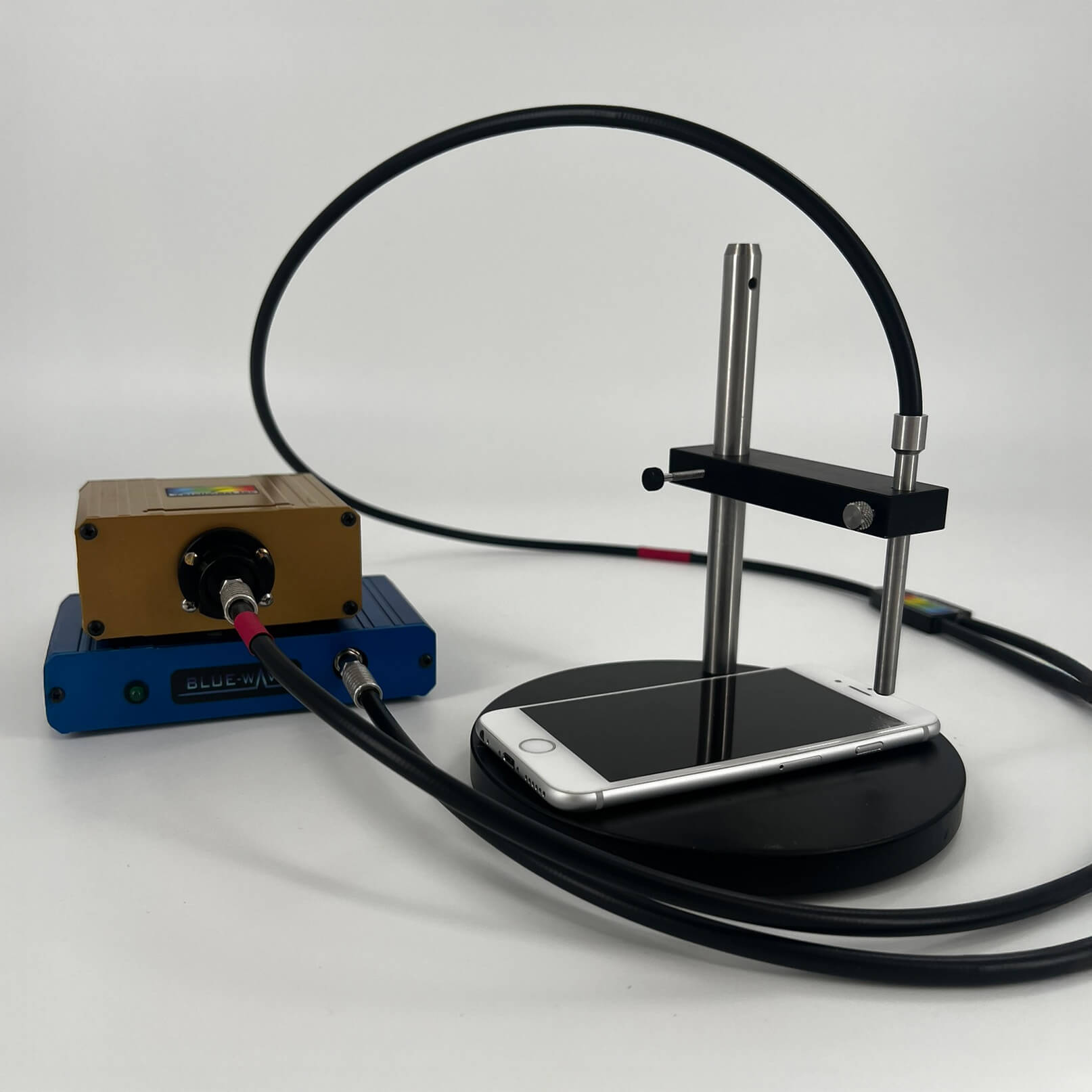
Optical characterization of an OLED display multilayer film stack including encapsulation layer, emissive layer, electron transport layer (ETL), display ITO, and display glass using a StellarNet Thin Film Measurement System (TF-VIS).
ITO Transparent Electrode Thickness Measurement
Indium Tin Oxide (ITO) is the industry-standard transparent conductive coating used in LCD, OLED, touchscreen, MiniLED, and MicroLED display manufacturing. The ITO layer must provide excellent optical transparency while maintaining low electrical resistance for efficient pixel operation and touch sensing. Precise thickness control is essential for achieving uniform brightness, color accuracy, conductivity, and display performance. Spectroscopic reflectometry provides rapid, non-contact measurement of ITO coatings on glass or polymer substrates, enabling process optimization and high-volume manufacturing quality control.
Typical Recipe
- Air
- ITO (130 nm)
- Display Glass (Bulk)
Recommended Spectrometer: 900–17000 nm (TF-NIR)
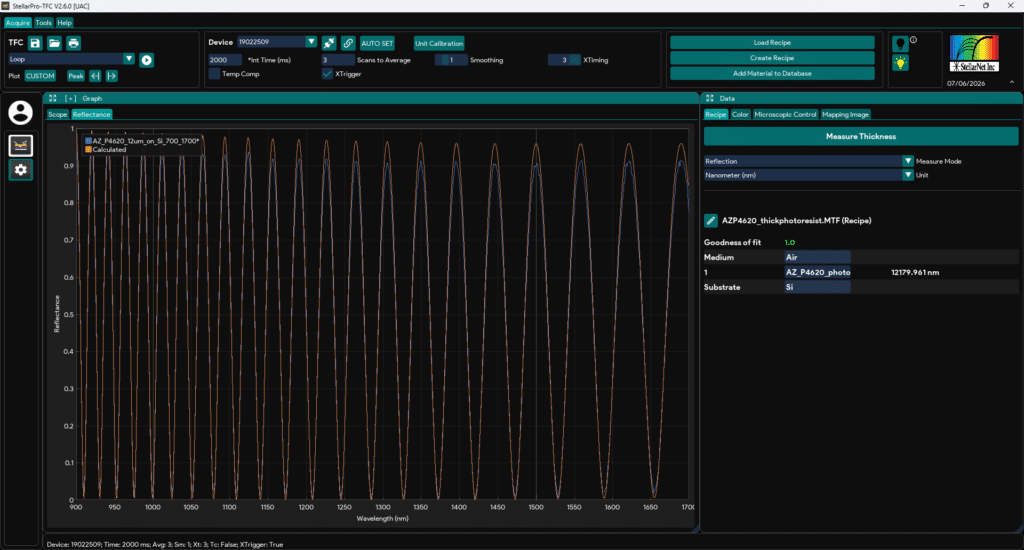
StellarNet Thin Film Measurement System (TF-NIR) measuring thick photoresist used during OLED, LCD, and MicroLED display manufacturing with optical reflectance spectroscopy for film thickness measurement, process monitoring, and quality control.
Anti-Reflection (AR) Display Coating Thickness Measurement
Anti-reflection (AR) coatings are commonly applied to smartphone displays, tablets, automotive displays, optical windows, camera covers, and AR/VR optics to minimize surface reflections and improve display visibility. Uniform coating thickness is critical for achieving low reflectance, high optical transmission, and excellent image quality under various lighting conditions. Spectroscopic reflectometry provides fast, accurate, and nondestructive measurement of AR coatings during manufacturing, ensuring consistent optical performance and product quality.
Typical Recipe
- Air
- SiO₂ (105 nm)
- Display Glass (Bulk)
Recommended Spectrometer: 350–900 nm (TF-UVIS)
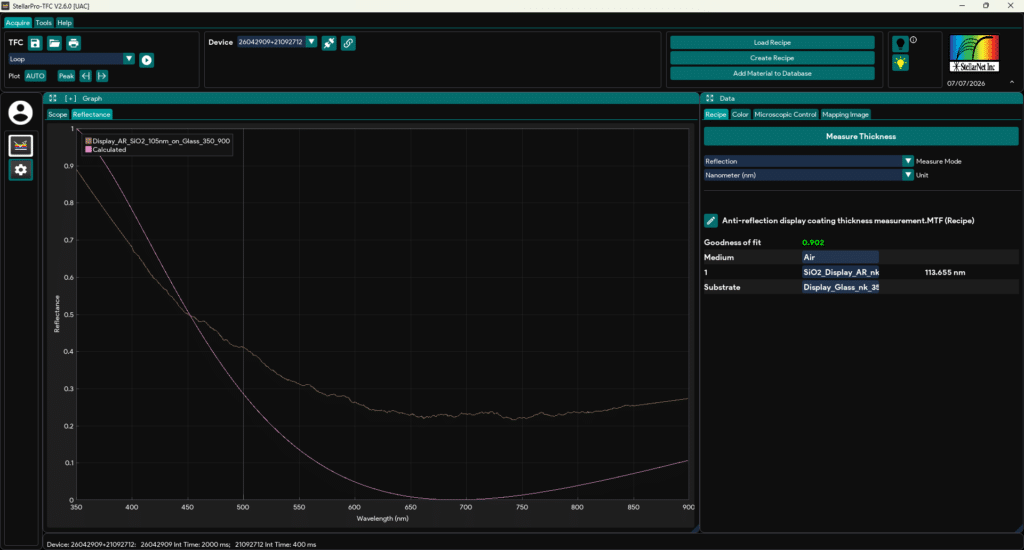
Optical measurement of an anti-reflective coating on display glass using TF-UVIS StellarNet Thin Film Measurement System for film thickness analysis and display quality control.
Hard Coat Protective Layer Thickness Measurement
Hard coat coatings protect display surfaces from scratches, abrasion, chemicals, and environmental wear while maintaining excellent optical clarity. These polymer-based coatings are widely used on smartphones, tablets, industrial touch panels, automotive displays, and consumer electronics. Because hard coat thickness affects durability, optical transmission, and surface performance, accurate thickness measurement is essential during production. Near-infrared spectroscopic reflectometry enables rapid, non-contact measurement of micron-scale protective coatings on glass or polymer substrates with excellent repeatability.
Typical Recipe
- Air
- UV Hard Coat (5 µm)
- Display Glass (Bulk)
Recommended Spectrometer: 500–1700 nm (TF-VIS-NIR)
StellarNet Recommended Thin Film Metrology Systems for Display Technology Applications
Every display technology application has unique measurement requirements based on display architecture, thin film materials, optical coatings, and performance specifications. StellarNet’s modular thin film metrology platform allows users to configure complete measurement systems using UV-VIS spectrometers, reflectance and transmission fixtures, stabilized light sources, fiber optic probes, and advanced thin film analysis software.
From transparent conductive oxides, OLED layers, and LCD optical films to MicroLED devices, color filters, and touchscreen coatings, our flexible systems support research, process development, display characterization, and production quality control. Our engineer-owned team works directly with customers to configure reliable, non-contact measurement solutions tailored to their display technology applications.
StellarNet TF™ Systems
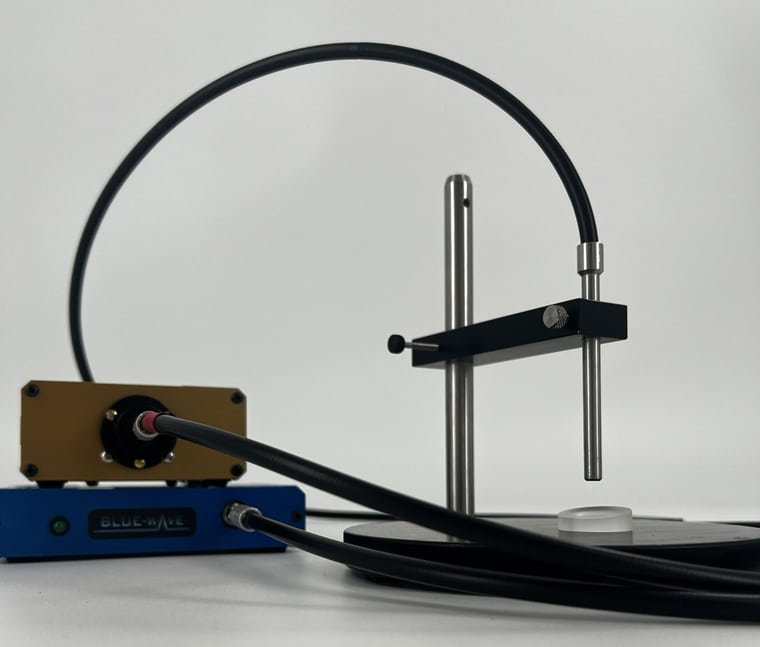
StellarNet TF™ Systems combine reflectance spectroscopy, precision optics, and intuitive StellarPro™-TFC, Thin-Film Metrology software, to deliver accurate, non-destructive film thickness measurements from approximately 1 nm to 300 µm. The modular architecture allows laboratories to configure the ideal system today while providing a straightforward upgrade path for future automation and advanced measurement capabilities.
TF-Micro™
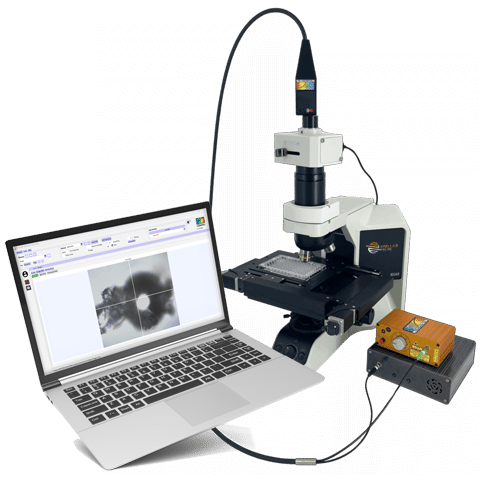
TF-Micro™ upgrades any compatible StellarNet TF™ System with a high-resolution microscope, enabling precision thin-film thickness measurements of microscopic features and small sample areas.
TF-Micro-AM
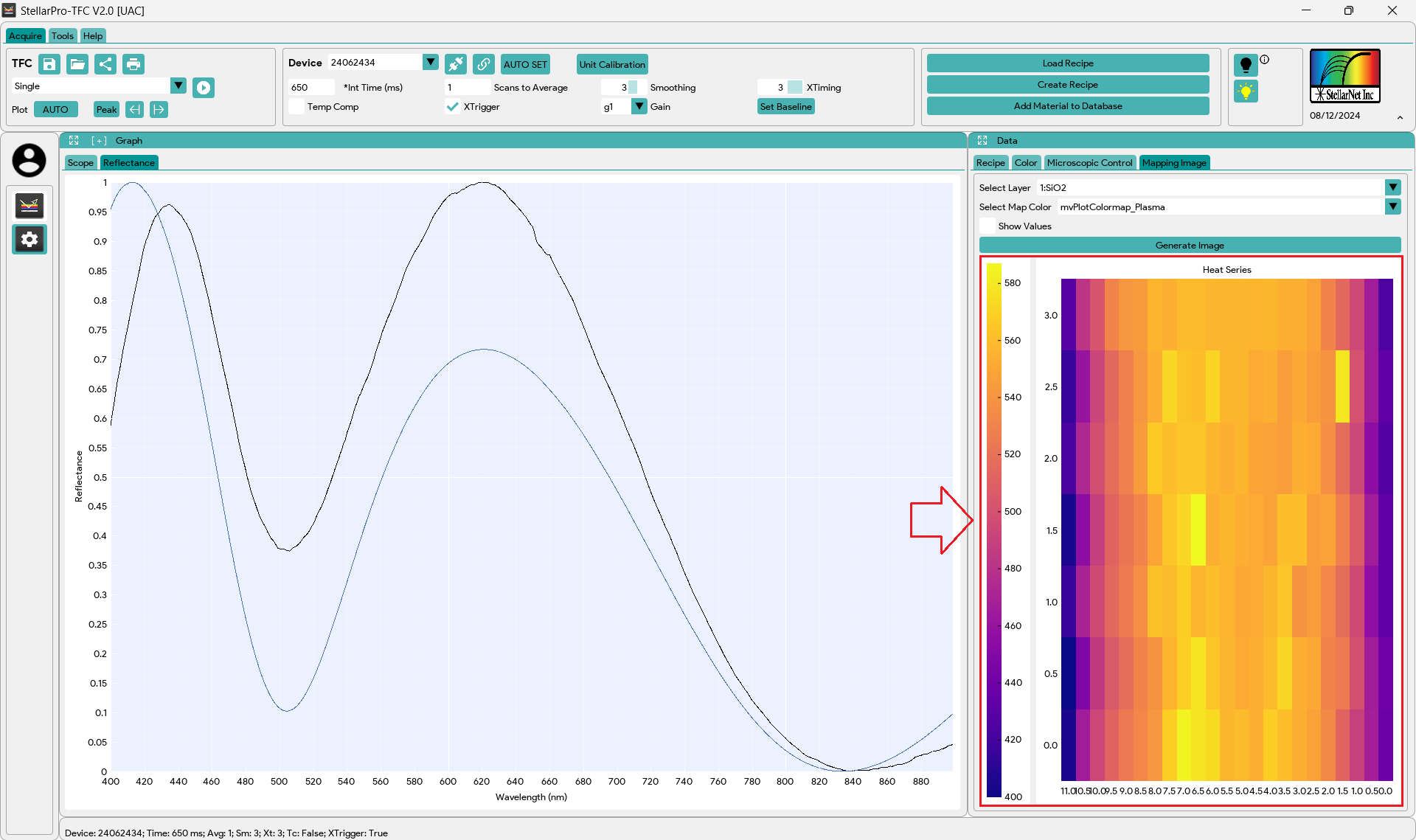
TF-Micro-AM™ adds programmable XY automation to compatible StellarNet TF™ Systems and TF-Micro™, enabling automated thickness mapping, repeatable positioning, and comprehensive measurement documentation for research and process development applications.
Thin Film Measurement Systems
| System | Range (nm) | Resolution | Thickness | Lamp type | Price |
|---|---|---|---|---|---|
TF-VIS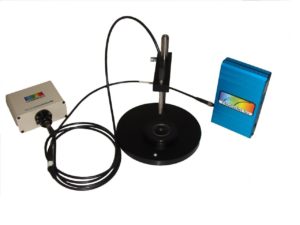 | 400-1000 | <2nm | 10nm-75um | Visible/NIR | $11,500 |
| TF-UVVIS | 200-1100 | <2.5nm | 1nm-75um | UV + Visible/NIR | $14,625 |
| TF-NIR | 900-1700 | <5nm | 100nm-300um | Visible/NIR | $22,655 |
| TF-VIS-NIR | 400-1700 | <2nm, 5nm>1000nm | 10nm-300um | Visible/NIR | $25,280 |
| TF-UVVIS-NIR | 200-1700 | <2nm, 5nm>1000nm | 1nm-300um | UV + Visible/NIR | $28,245 |
| TF-Micro | StellarNet configured Microscope equipped with 4,10, & 40x objectives, CMOS 1.3 Mpixel Camera, optical switch, and required coupling accessories | $11,550.00 |
| TF-Micro-AM | StellarNet configured Auto-Mapping Microscope equipped with 4,10, & 40x objectives, CMOS 1.3 Mpixel Camera, optical switch, and required coupling accessories | $30,975.00 |
Thin Film System Specifications
| Precision | 0.1Å or 0.01% (greater of) |
| Accuracy | 0.2% or 10A (greater of) Film stack dependent |
| Stability | 0.2A or 0.02% (greater of) |
| Spot size | 3mm standard, optional down to 3 µm |
| Sample size | Sample size from 1 mm |
| Computer OS | StellarPro-TFC Software designed for 32 and 64-bit OS |
Technical Information Request
BSA Mediated Stabilized Dispersion of Hydrophobic Organic Nanoparticles Produced by Pulsed Laser Fragmentation in Liquid
Akiko Sunada, Tomosumi Kamimura, and Ryohei Yasukuni | Journal of Laser Micro Nanoengineering | August 1, 2026 | 10.2961/jlmn.2026.02.2009 Abstract The complex synthesis of nanopharmaceuticals still faces hurdles regarding stability, sterilization, storage, and...