Can Spectroscopy Help Detect Food Contamination Earlier?
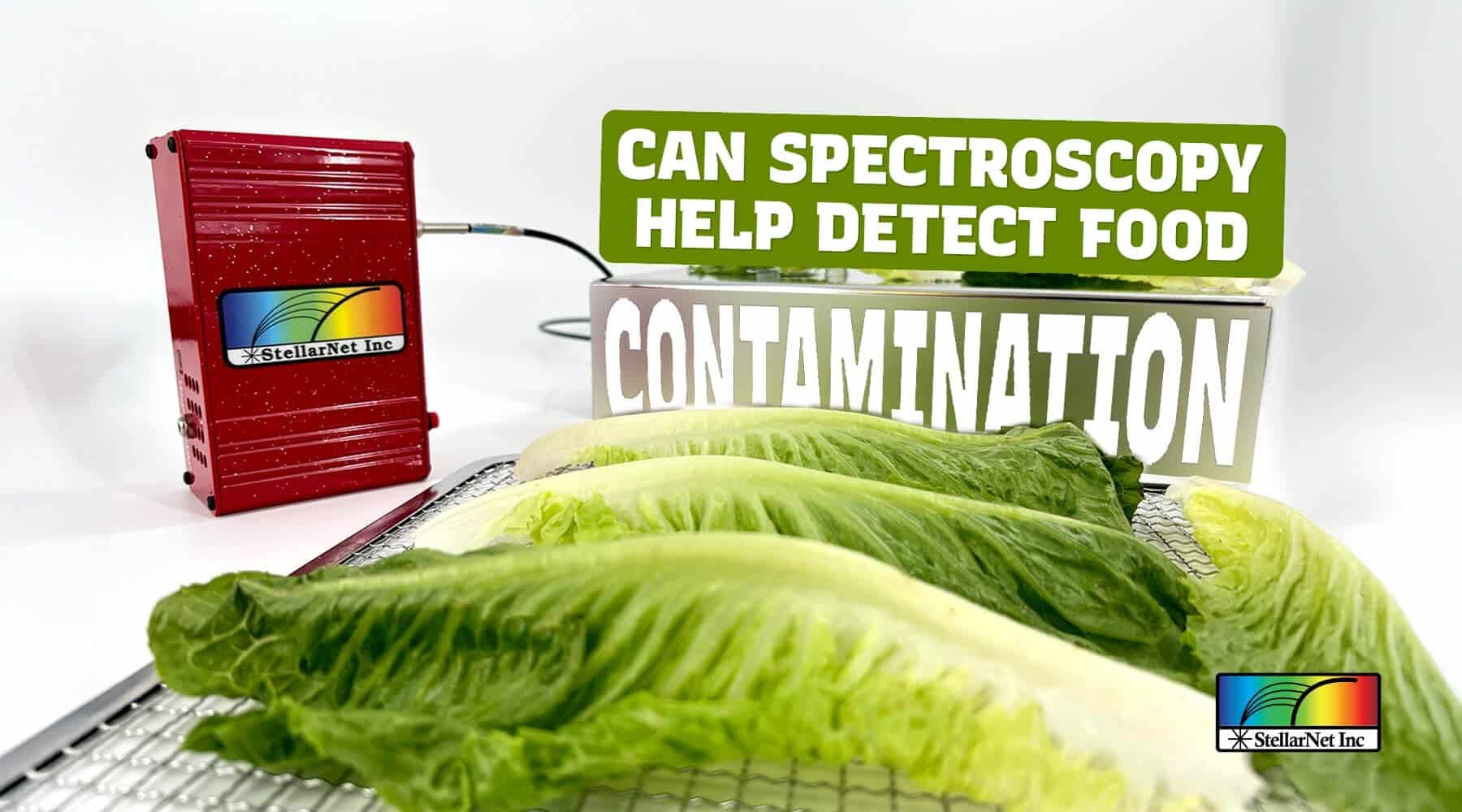
The 2026 Cyclospora outbreak linked to iceberg lettuce highlights a persistent challenge in food production: contamination can move through the supply chain before conventional testing identifies a problem. Emerging research suggests that NIR, Raman/SERS, chemometrics and machine learning may provide food producers with additional tools for faster screening and earlier investigation.
Using Light to Screen Food for Abnormalities
VIS-NIR spectroscopy measures how a sample absorbs and reflects light across different wavelengths. Changes in water, protein, fat, pigments and other chemical constituents produce changes in the measured spectrum. With compact spectrometers, fiber-optic probes and appropriate calibration models, these measurements can be performed rapidly and without destroying the sample.
The practical food-safety question isn’t necessarily “What pathogen is this?” It can be a much simpler first question: “Does what I am measuring look normal?”
USDA Research Takes Spectroscopy onto the Processing Floor
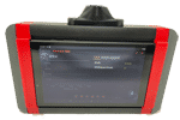
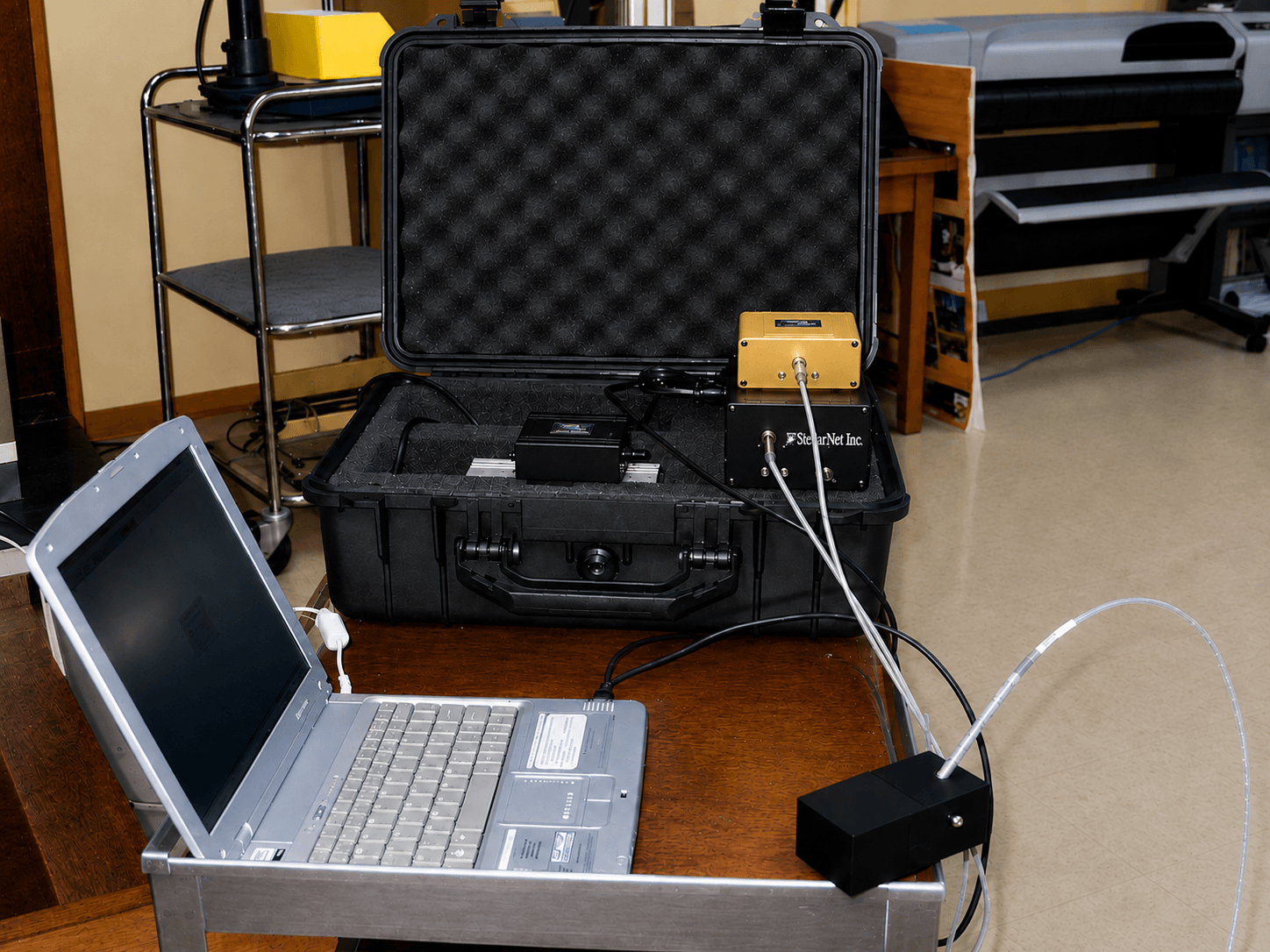
An early USDA Agricultural Research Service study demonstrated this concept in a commercial poultry processing facility. Researchers used portable visible and near-infrared spectroscopy systems incorporating StellarNet spectrometers, broadband illumination and fiber-optic probes to distinguish fecal and ingesta contamination from clean processing surfaces.
The system used a StellarNet BLACK-Comet-CXR for visible measurements and a DWARF-Star InGaAs NIR spectrometer for near-infrared measurements. The researchers reported identification of 100% of contaminant samples, while clean equipment surfaces were correctly identified at 92.5% using visible measurements and 95% using NIR.
New Research Combines NIR Spectroscopy with Machine Learning
More recent USDA research has pushed the concept further. In a 2026 study, researchers evaluated diffuse FT-NIR spectroscopy for differentiating strains of Salmonella, Escherichia coli O157:H7 and Listeria monocytogenes. Spectra from 1000–2400 nm were processed using spectral preprocessing and machine-learning classification.
Using a Savitzky-Golay first derivative combined with a support vector machine, the researchers reported 95.3% overall classification accuracy.
The experimental conditions matter. The bacteria were purified and dehydrated on filter paper rather than measured directly in complex foods on a production line. The study therefore should not be interpreted as demonstrating a ready-to-deploy NIR pathogen detector. It does, however, demonstrate how spectral information combined with machine learning can differentiate biological samples that may otherwise appear similar.
Raman and SERS Move Closer to Pathogen-Specific Detection
Raman spectroscopy approaches the problem differently. Instead of measuring broad reflectance characteristics, Raman spectroscopy produces molecular fingerprints associated with the chemical structure of a sample. Surface-enhanced Raman spectroscopy (SERS) can dramatically increase weak Raman signals using metallic nanostructures, commonly silver or gold.
Researchers are increasingly combining SERS with antibodies, aptamers, magnetic enrichment and microfluidics to selectively capture and detect microorganisms. Recent studies have demonstrated Raman/SERS workflows for E. coli, Salmonella and Listeria in real food matrices including lettuce, packaged salad, cheese, meat and chicken-meat juice. Some experimental systems have reported detection at very low bacterial concentrations.
AI and Chemometrics Turn Spectra into Decisions
A spectrometer produces data. The increasingly important question is how quickly that data can be converted into a useful decision.
Modern chemometric techniques can use PCA for clustering and outlier detection, PLS for quantitative prediction, supervised classification for identification and machine-learning algorithms for more complex spectral relationships.
StellarNet’s StellarPro™ spectroscopy software integrates spectral preprocessing, spectral matching, PLS calibration development, classification and chemometric model deployment directly within the instrument software.
Could Spectroscopy Provide an Earlier Warning?
Imagine a compact spectrometer positioned over incoming produce or integrated near a processing line. Additional optical measurements could monitor equipment surfaces, raw ingredients or finished products. Rather than waiting for spectroscopy to identify a specific microorganism, an unusual spectral result could trigger inspection, sanitation, additional sampling or validated microbiological testing.
Explore Food Spectroscopy at StellarNet
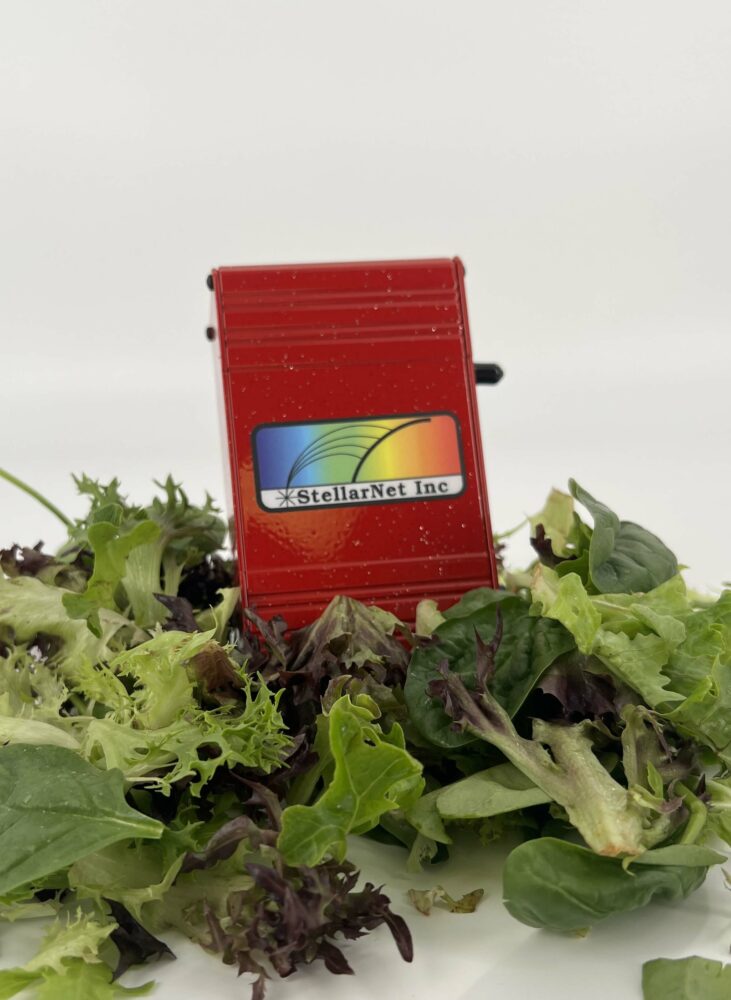
StellarNet develops compact NIR, Raman, UV-VIS and industrial spectroscopy systems for food research, ingredient analysis, quality control and emerging food-safety applications. Explore our Food Safety & Quality applications, NIR spectroscopy, Raman/SERS, industrial analyzers and integrated chemometrics to learn more about using optical spectroscopy for food analysis.
References
- Chao, K. et al. (2008). Portable visible/near-infrared spectroscopic system for detection of poultry processing surface contamination. Applied Engineering in Agriculture, 24(1), 49–55. DOI: 10.13031/2013.24148.
- U.S. Food and Drug Administration. (2026). Cyclospora Outbreak Linked to Iceberg Lettuce.
- Ozturk, B., Huang, L., Hwang, C.-A., & Sheen, S. (2026). Near-infrared spectroscopy and machine-learning classification of foodborne bacterial pathogens. Food Research International, 229, 118485. DOI: 10.1016/j.foodres.2026.118485.
- Asgari, S. et al. (2022). Optofluidic SERS detection of E. coli O157:H7 and Salmonella in romaine lettuce and packaged salad. International Journal of Food Microbiology, 383, 109947. DOI: 10.1016/j.ijfoodmicro.2022.109947.
- Jayan, H. et al. (2025). Microfluidic SERS detection of E. coli using aptamer-based recognition in food matrices. Food Chemistry. DOI: 10.1016/j.foodchem.2025.142800.
- He, et al. (2026). SERS-based detection of Listeria monocytogenes in food matrices. Analytical Chemistry, 98(5), 3758–3771. DOI: 10.1021/acs.analchem.5c05756.
- Immunomagnetic separation and droplet-shrinkage SERS detection of foodborne bacteria in chicken-meat juice. (2026). Sensors and Actuators B: Chemical, 457, 139663. DOI: 10.1016/j.snb.2026.139663.