
Fiber Optic UV-VIS, NIR & Raman Spectrometers
For over 30 years, StellarNet has engineered compact, high-performance spectrometers for scientific research, industrial process monitoring, OEM integration, and field-based spectroscopy applications. Our miniature fiber optic spectrometers deliver reliable spectral analysis across the UV, Visible, and Near-Infrared ranges for applications including Raman spectroscopy, fluorescence, absorbance, reflectance, transmission, color measurement, laser characterization, and materials analysis.
Designed for laboratory, production, and portable environments, StellarNet spectrometers combine rugged no-moving-part optical designs with powerful spectroscopy software and application expertise. From research-grade optical measurements to turnkey industrial analyzers, our spectroscopy systems help engineers, scientists, and manufacturers generate accurate spectral data with speed and precision.
Types of Spectrometers
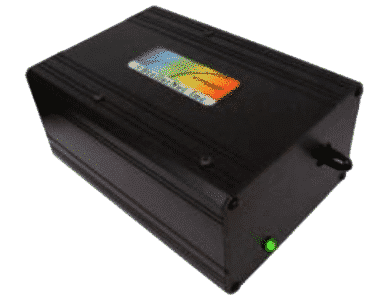
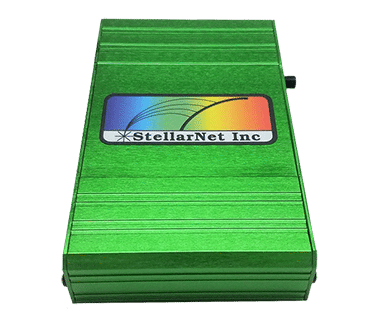
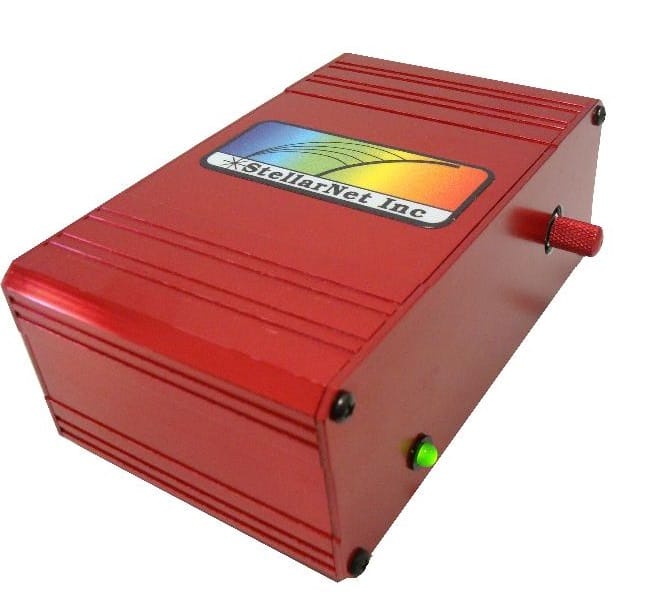
UV-VIS Spectrometers
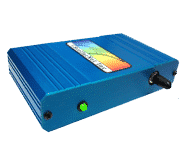
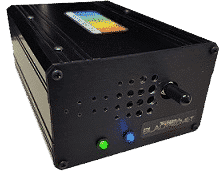
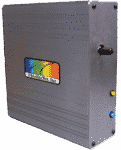
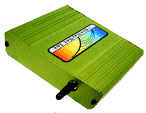
StellarNet UV-VIS spectrometers provide high-sensitivity spectral measurements for absorbance, radiometry, transmission, fluorescence, and color analysis applications. Compact fiber optic designs enable flexible integration into laboratory instruments, process systems, and portable field devices.
Common applications include:





NIR Spectrometers
Our Near-Infrared (NIR) spectrometers support rapid, non-destructive material analysis for food, agriculture, pharmaceuticals, cosmetics, nutraceuticals, petrochemical, and industrial process applications. StellarNet NIR systems are widely used for moisture, fat, protein, oil, and compositional analysis.
NIR spectroscopy enables:
| StellarNet Miniature NIR Spectrometer Models (comparison chart) | Wavelength |
|---|---|
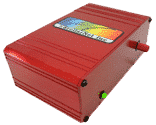  Minaiture NIR Models Minaiture NIR Models | 900 - 1700nm |
 RED-Wave Extended Range NIR Series RED-Wave Extended Range NIR Series | 900 - 2500nm |
 RED-Wave-Micro NIR Models RED-Wave-Micro NIR Models | 1750-2150nm |
Wide Range Spectrometers
StellarNet wide range spectrometer systems combine multiple detector technologies into a single synchronized platform for extended UV, Visible, and Near-Infrared spectral coverage. Dual detector spectrometers provide broad wavelength measurement capabilities across applications requiring continuous spectral analysis from the UV through NIR regions.
The Dual DSR Portable Series delivers extended wavelength coverage from 200–2500 nm by integrating complementary detector arrays into a compact portable spectroscopy system. These wide range spectrometers are ideal for applications involving:
- broadband optical measurements
- material characterization
- solar and photometric analysis
- reflectance and transmission measurements
- color and radiometric analysis
- and multi-region spectroscopy applications requiring both UV-VIS and NIR detection
| Dual Detector Spectrometer Systems | Wavelength |
|---|---|
 Dual DSR Portable Series Dual DSR Portable Series | 200 - 2500nm |
Raman Spectrometers
StellarNet Raman spectrometers provide molecular identification and material characterization for pharmaceutical, chemical, microplastics, mineral, and particle analysis applications. Raman spectroscopy enables rapid, non-destructive identification of compounds with minimal sample preparation.
Applications include:
| StellarNet Miniature Raman Spectrometer Models | Wavelength |
|---|---|
 Raman Models- 532nm, 785nm, 1064nm, custom Raman Models- 532nm, 785nm, 1064nm, custom | 200-4500 cm-1 |
 Quasar f/2 High Throughput Spectrometers Quasar f/2 High Throughput Spectrometers | 200-4500 cm-1 |
 HYPER-Nova High Performance Spectrometers HYPER-Nova High Performance Spectrometers | 200-4500 cm-1 |
 Mercury-OCT 500/800 Spectrometers Mercury-OCT 500/800 Spectrometers | 515-660nm;790-940nm |
High-Resolution & Research Spectrometers
For demanding spectroscopy applications requiring high optical resolution and sensitivity, StellarNet offers research-grade spectrometers engineered for precision laboratory measurements, laser characterization, plasma monitoring, and optical research.
Applications include:
- emission spectroscopy
- laser wavelength monitoring
- semiconductor research
- optical coatings
- and advanced materials analysis
| StellarNet High-Resolution & Research Models | Wavelength |
|---|---|
  High Resolution X Series High Resolution X Series | 200 - 1100nm |
 HYPER-Nova Series HYPER-Nova Series | 300 - 1100nm |
OEM Spectrometer Integration
StellarNet OEM spectrometer modules are designed for seamless integration into analytical instruments, embedded systems, industrial automation platforms, and custom spectroscopy solutions. Compact footprints, USB/Ethernet communication, and modular optical configurations simplify integration for developers and instrument manufacturers.
OEM capabilities include:
- custom wavelength ranges
- detector selection
- slit customization
- embedded spectroscopy integration
- and private-label analytical systems
| StellarNet OEM Spectrometer Models | Wavelength |
|---|---|
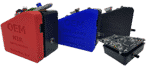 OEM Spectrometer Engines OEM Spectrometer Engines | 200-1150nm |
Why Choose StellarNet? We Engineer Intelligence From Light!
Since 1991, StellarNet has focused on engineering-driven spectroscopy solutions designed for real-world scientific and industrial environments. Our compact spectrometers combine rugged optical performance, flexible modularity, and application expertise to support customers worldwide.
Why customers choose StellarNet:
- Over 30 years of spectroscopy innovation
- Engineer-owned and operated
- Compact, rugged, no-moving-part optical designs
- UV, VIS, NIR, and Raman measurement technologies
- Flexible laboratory, industrial, field, and OEM configurations
- Extensive fiber optic probes, light sources, and accessories
- Powerful software for acquisition, analysis, and reporting
- Rapid customization and application-specific solutions
- US-based engineering, manufacturing, and support

Frequently Asked Questions About Spectrometers
What is a spectrometer?
A spectrometer is an optical instrument used to measure the intensity of light as a function of wavelength. Spectrometers are widely used in scientific research, industrial process monitoring, quality control, environmental testing, color measurement, and spectroscopy applications ranging from UV-VIS to NIR and Raman analysis.
What is a fiber optic spectrometer?
A fiber optic spectrometer uses optical fibers to deliver light from a sample to the spectrometer, enabling flexible measurements in laboratory, industrial, field, and OEM environments. Fiber optic designs allow users to remotely position probes, sampling accessories, and light sources while maintaining high-quality spectral measurements.
What is a USB spectrometer?
A USB spectrometer is a compact spectrometer that connects directly to a computer via a USB interface for power, communication, and data acquisition. USB spectrometers offer a portable and cost-effective solution for spectroscopy measurements in research, education, manufacturing, and embedded applications.
How does a diffraction grating spectrometer work?
A diffraction grating spectrometer separates light into its individual wavelengths using a precision optical grating. The resulting spectrum is measured by a detector array, allowing users to analyze spectral features, identify materials, and quantify optical properties across UV, visible, and near-infrared wavelength regions.
What are compact spectrometers used for?
Compact spectrometers are used in applications where size, portability, and integration flexibility are important. Common uses include process monitoring, environmental testing, LED measurement, absorbance analysis, fluorescence measurements, OEM integration, and portable analytical instruments.
What are the advantages of fiber optic spectrometers?
Fiber optic spectrometers provide flexible sampling, modular system configurations, remote measurement capability, and easy integration with probes, light sources, and accessories. These advantages make them well suited for laboratory, industrial, OEM, and field-deployed spectroscopy systems.
What industries use spectrometers?
Spectrometers are used across a wide range of industries including pharmaceuticals, biotechnology, food and agriculture, environmental monitoring, semiconductor manufacturing, materials science, petrochemicals, lighting, optics, and academic research.
What is the difference between a miniature spectrometer and a traditional benchtop spectrometer?
Miniature spectrometers utilize compact optical designs and modern detector technologies to provide high-performance spectral measurements in a significantly smaller footprint than traditional laboratory instruments. This enables portable, field-deployable, and OEM-integrated spectroscopy solutions without sacrificing measurement flexibility.
When were compact fiber optic spectrometers first introduced?
Compact fiber optic spectrometers became commercially available in the late 1980s and early 1990s with the introduction of miniature diffraction grating spectrometers using linear-array detectors and fiber optic inputs. These innovations significantly reduced the size and cost of spectroscopy instrumentation while expanding access to spectroscopy across research, industrial, and educational applications.
Why are modern spectrometers smaller than older laboratory systems?
Advances in diffraction gratings, detector arrays, fiber optics, electronics, and software have enabled modern spectrometers to deliver high-performance measurements in compact, USB-powered designs. These developments have expanded the use of spectroscopy from dedicated laboratories into industrial production lines, portable instruments, OEM devices, and field applications.
Can spectrometers be integrated into OEM instruments?
Yes. Many spectrometers are designed for OEM integration and can be incorporated into analytical instruments, process monitoring systems, biomedical devices, environmental sensors, and custom measurement platforms. Compact form factors and fiber optic interfaces make integration straightforward for many applications.
Find the Right Spectrometer for Your Application
From absorbance and fluorescence measurements to material identification, composition analysis, color testing, and light measurement, StellarNet spectrometers provide flexible solutions for a wide range of analytical applications. Our portfolio of UV-VIS, NIR, and Raman spectrometers supports laboratory research, industrial quality control, process monitoring, OEM integration, and field-based measurements with compact, high-performance optical designs.
Search our Spectrometer Knowledgebase
Spectrometer Learning Center
Check out all of our spectrometer manuals, technical specification, drawings, communication protocols, SDK info and much more!
Spectrometer Customer Applications
Technical Information Request
Study of the photopolymerization process of luminescent labeled photocurable compositions in liquid and gas media
Malgorzata Noworyta, Maciej Pilch, Dawid Kiesiewicz, Renata Klaput, and Joanna Ortyl | Chemical and Process Engineering New Frontiers | July 21, 2026 | 10.24425/cpe.2026.158129 Abstract Although photocurable compositions are widely used in 3D printing, protective...