Jana Caloudova, Dani Dordevic, Martina Fikselova, Bohuslava Tremlova, Martin Kulma, Katerina Sebelova, Zdenka Javurkova, and Matej Pospiech | Processes | July 18, 2026 | 10.3390/pr14142337
Abstract
The growing market for insect-based food and feed ingredients raises concerns about authenticity, labelling transparency, and regulatory compliance, highlighting the need for rapid screening methods capable of distinguishing selected insect-derived materials. In this preliminary feasibility study, Raman spectroscopy combined with partial least squares discriminant analysis (PLS-DA) was evaluated for the fingerprinting and differentiation of PBS-extractable components from nine insect species. Extracts of 96 dried insect samples prepared in phosphate-buffered saline (PBS, pH 9.4) were analysed, yielding 358 insect spectra after quality control; PBS spectra were included as a technical control class. The overall correct classification rate (CCR) reached 61.6%, indicating moderate classification performance rather than validated species-level authentication. Apis mellifera drones achieved 100.0% CCR, while Hermetia illucens and Tenebrio molitor both reached 80.0%. Complete misclassification of Shelfordella tartara as Blaptica dubia indicated strong spectral similarity between closely related cockroach species. VIP score analysis identified the 1700–1800 cm−1 region, corresponding primarily to lipid ester carbonyl vibrations, as the most discriminatory spectral range. The results suggest that Raman spectroscopy can provide taxon-related biochemical fingerprints of PBS-extractable insect components, while also highlighting the need for expanded reference libraries, improved sampling strategies, and validation in complex food matrices to further develop its potential as a screening approach.
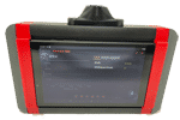
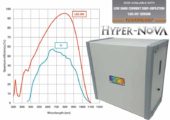
StellarNet equipment used: HR-TEC-X2-785 Raman spectrometer
How it was used: The system collected Raman fingerprints from 96 insect extracts for species-discrimination modeling.