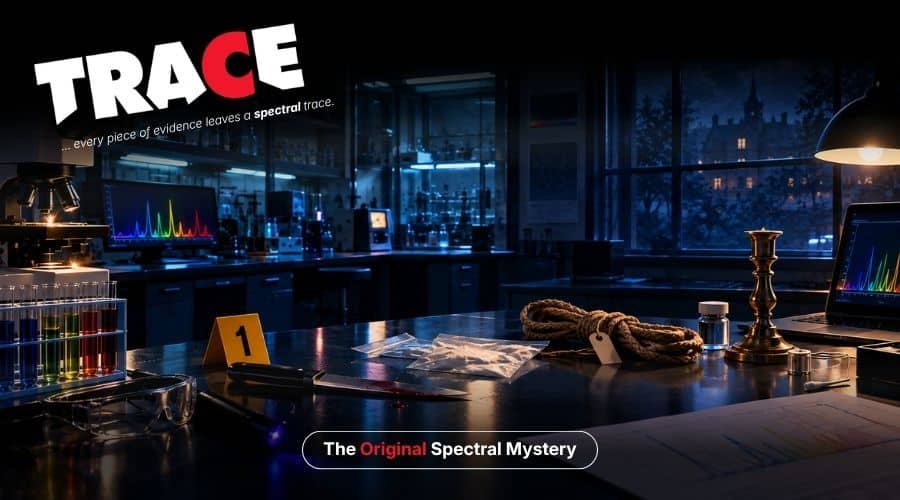
It was a frightful afternoon at StellarNet, and the team decided to play a new board game: TRACE. TRACE is a spectroscopy-inspired whodunit game filled with suspicious substances, questionable alibis, and spectral evidence. During each turn, players accuse a coworker, select a location, and identify a possible instrument of mischief. Instead of simply turning over a card, however, the StellarNet team must investigate the physical evidence using spectroscopy. Would the evidence support the accusation—or would the spectrum tell a different story?
Turn One: The Case of the Sticky Knife
David studied the game board before announcing his accusation.
“I think it was Stephanie, in the kitchen, with the knife!”
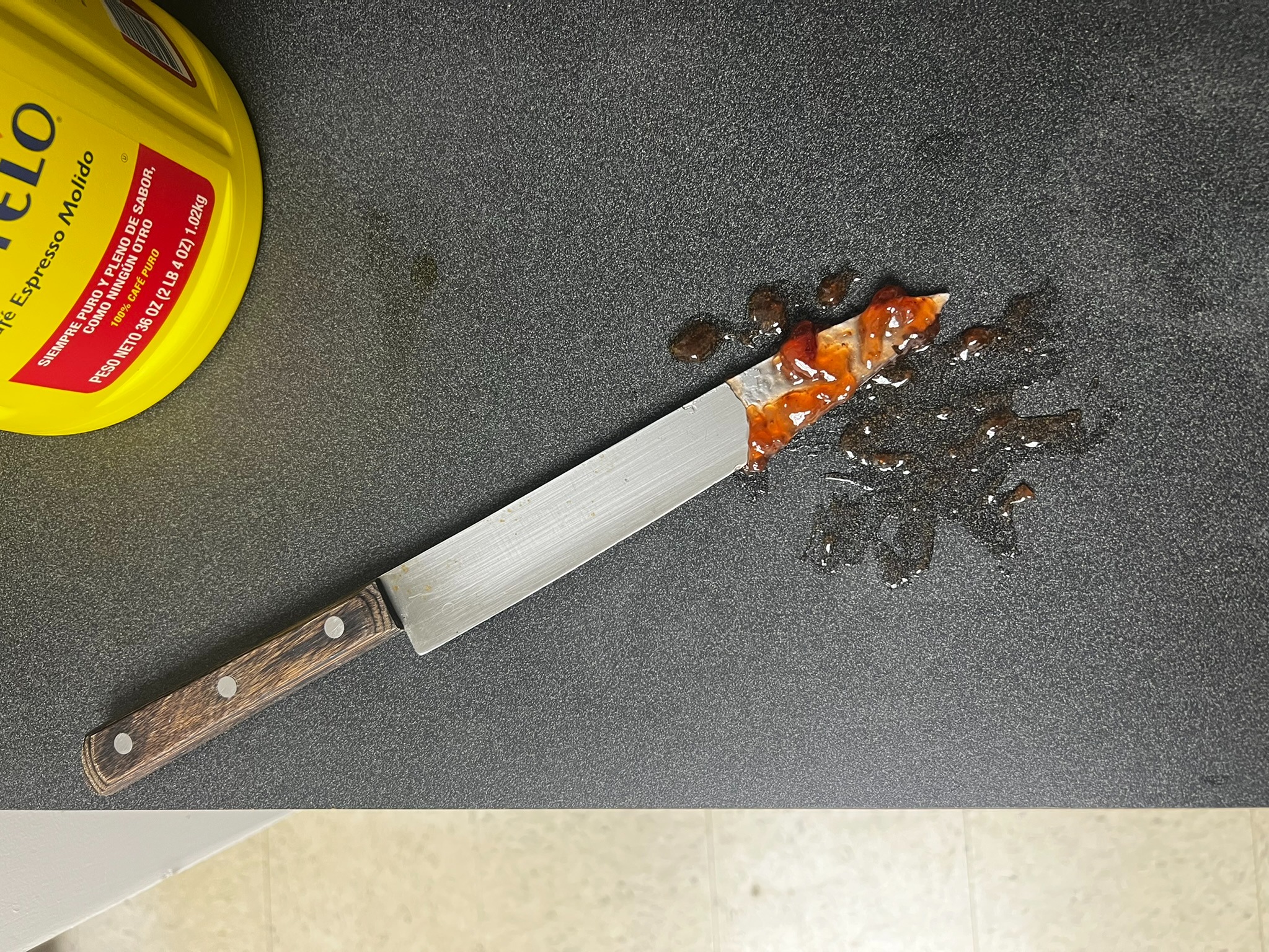
The team hurried to the kitchen, only to find a sticky situation. Sitting on the counter was a knife covered in a mysterious red substance.
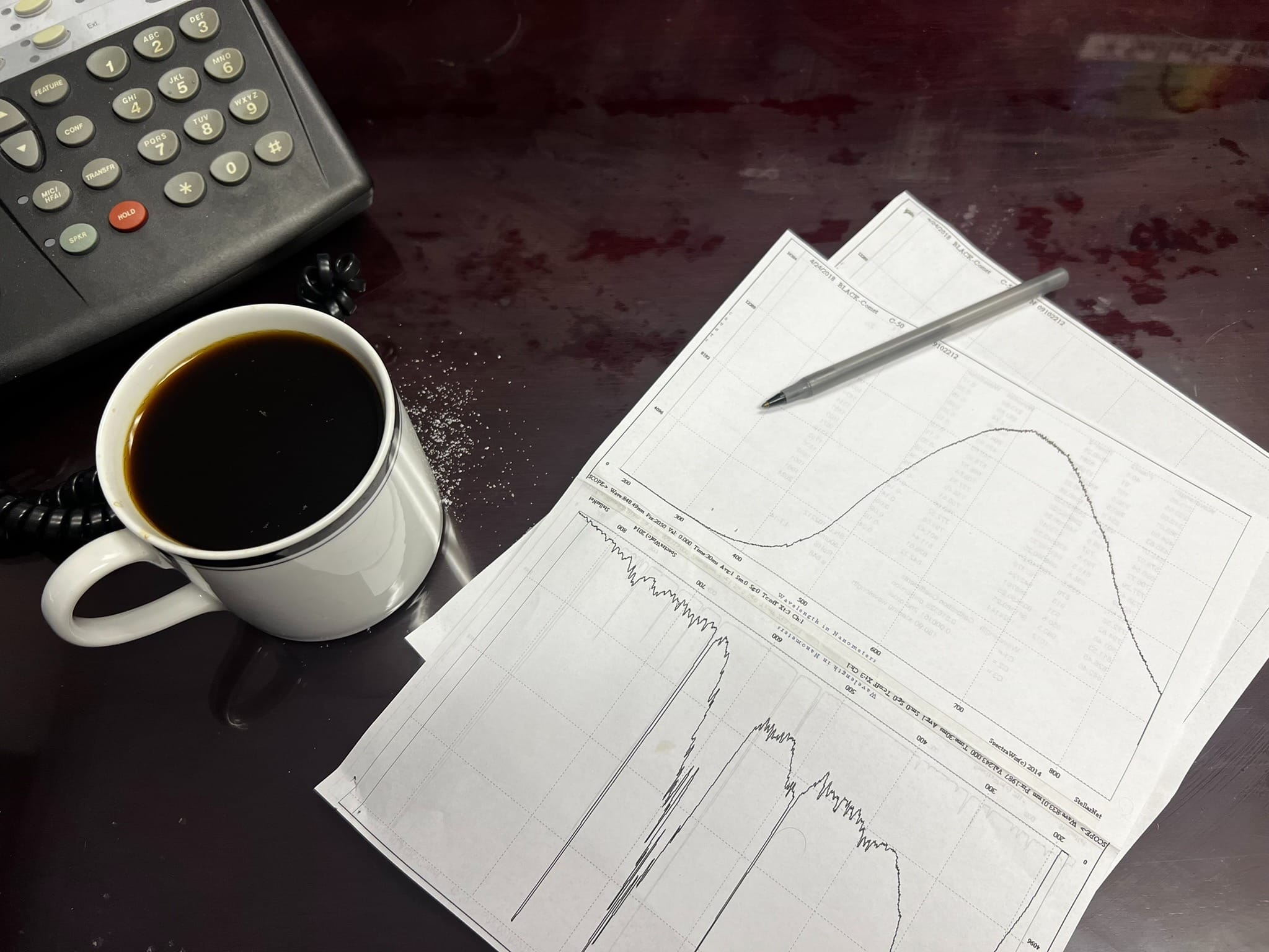
To prove her innocence, Stephanie decided to compare the residue with known samples of blood, ketchup, and strawberry jelly using UV-VIS absorbance spectroscopy.
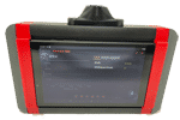
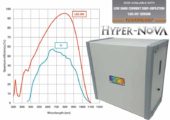
She pulled out a BLACK-Comet spectrometer coupled with an SL5-CUV UV-VIS light source and prepared samples of anything red she could find in the kitchen—including strawberry jelly from someone’s lunch and leftover ketchup from one of the company barbecues. The resulting spectra were compared with the characteristic absorbance profile of hemoglobin.
Different compounds absorb different wavelengths of light, producing spectral features that can help distinguish substances that may look similar to the human eye. The mysterious residue lacked the characteristic absorbance profile expected from hemoglobin. Instead, it matched the strawberry jelly.
Stephanie was innocent!
It looked like the team had merely caught Mark in the middle of making a peanut butter and jelly sandwich.
With the first mystery solved, it was Stephanie’s turn. The team returned to the TRACE game board and prepared for another accusation.
Turn Two: No One Was Sleeping Easy
Stephanie examined the suspects, rooms, and possible evidence before making her selection.
“I think it was Kim, in the conference room, with the poison!”
The team entered the conference room and discovered a coffee mug sitting beside a pile of mysterious white powder.
Was it baking soda? Sugar? Caffeine powder—or something more sinister?
The team turned to Raman spectroscopy to identify the unknown substance. Raman spectroscopy measures how laser light interacts with a sample’s molecular vibrations. Because different substances produce different patterns of Raman peaks, the resulting spectrum acts like a molecular fingerprint. An unknown spectrum can then be compared with spectra from known reference materials.
After testing the suspicious powder and comparing its Raman fingerprint with the reference spectra, the team found a match: caffeine.
Kim wasn’t serving poisoned coffee. Someone had simply been adding an extra—and perhaps questionable—dose of caffeine powder to their own cup.
Another suspect had been cleared.
It was now Kim’s turn, so everyone headed back to the game board.
Turn Three: Knot Quite Tied Together
Kim considered the remaining possibilities and made her accusation.
“I think it was David, in the shipping room, with the rope!”
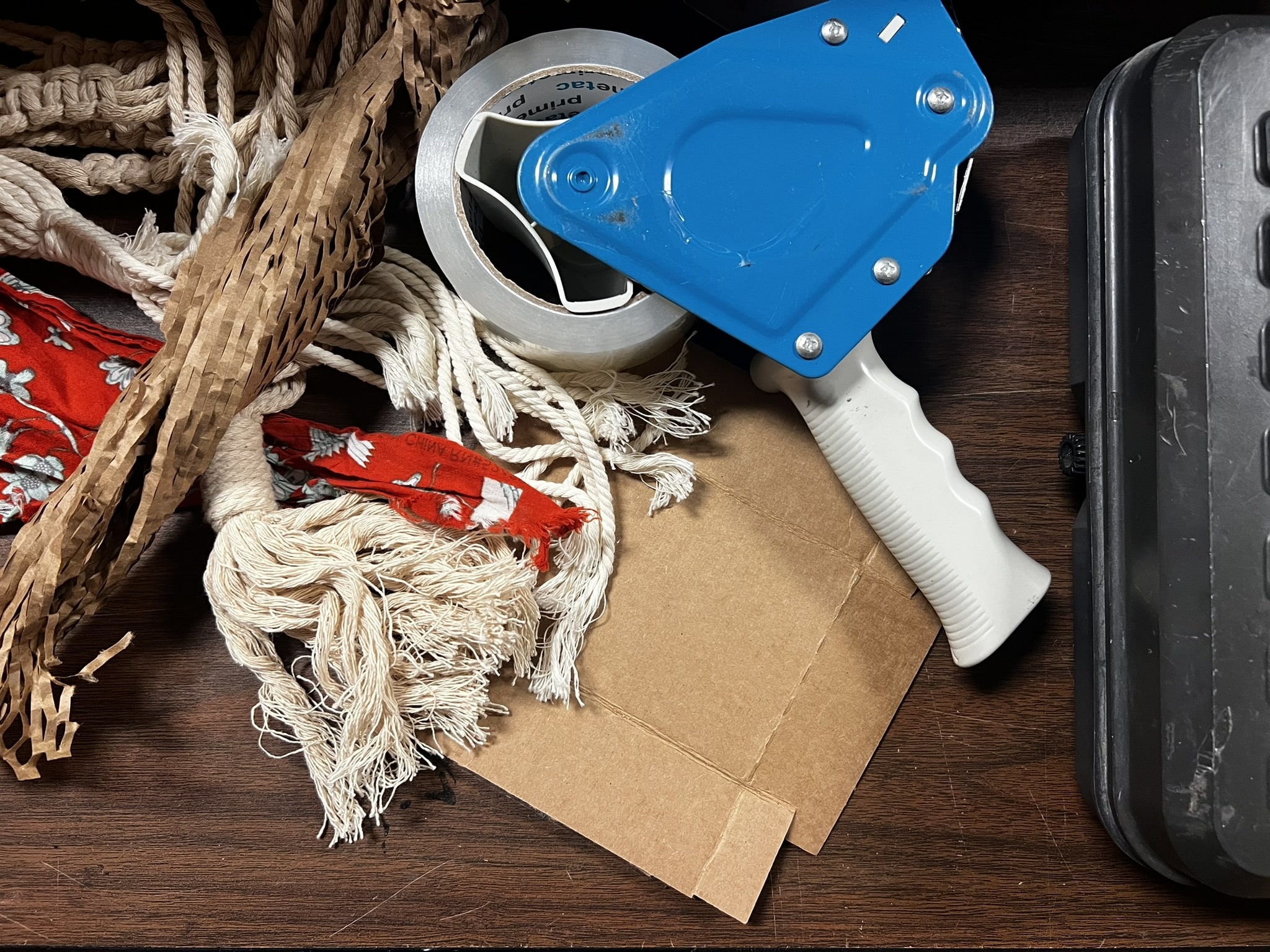
The team went to the shipping area and examined the rope. Looking closely with a magnifying glass, David spotted a small piece of material tangled among its fibers. It looked different from the rope itself—but where had it come from?
Was it a fiber from a suspect’s clothing, or was there a less suspicious explanation?
The team used near-infrared spectroscopy to investigate. NIR spectroscopy can help distinguish organic materials and polymers through their characteristic molecular absorption features. Materials such as cotton, nylon, polyester, acrylic, plastic films, and packaging materials can produce different NIR spectral responses.
David collected reference samples from clothing and packaging materials found around the shipping area. The unknown material was then measured and compared with those references.
The result was conclusive: the material wasn’t from a suspect’s clothing at all. It was a small piece of specialty packing tape that Angie regularly used in the shipping room.
David was officially off the hook.
Case Closed
After three accusations and three spectral investigations, the evidence was finally clear: Stephanie hadn’t been caught red-handed, Kim wasn’t serving poisoned coffee, and David hadn’t tied anyone up in Shipping.
The mysterious red substance was jelly, the suspicious powder was an extra dose of caffeine, and the material tangled in the rope was traced back to an ordinary piece of packing tape.
There was no crime at StellarNet—just a series of questionable workplace decisions and one very dramatic board game.
The team returned to the conference room, where Mark finished his peanut butter and jelly sandwich and everyone agreed to stop accusing their coworkers—at least until the next round.
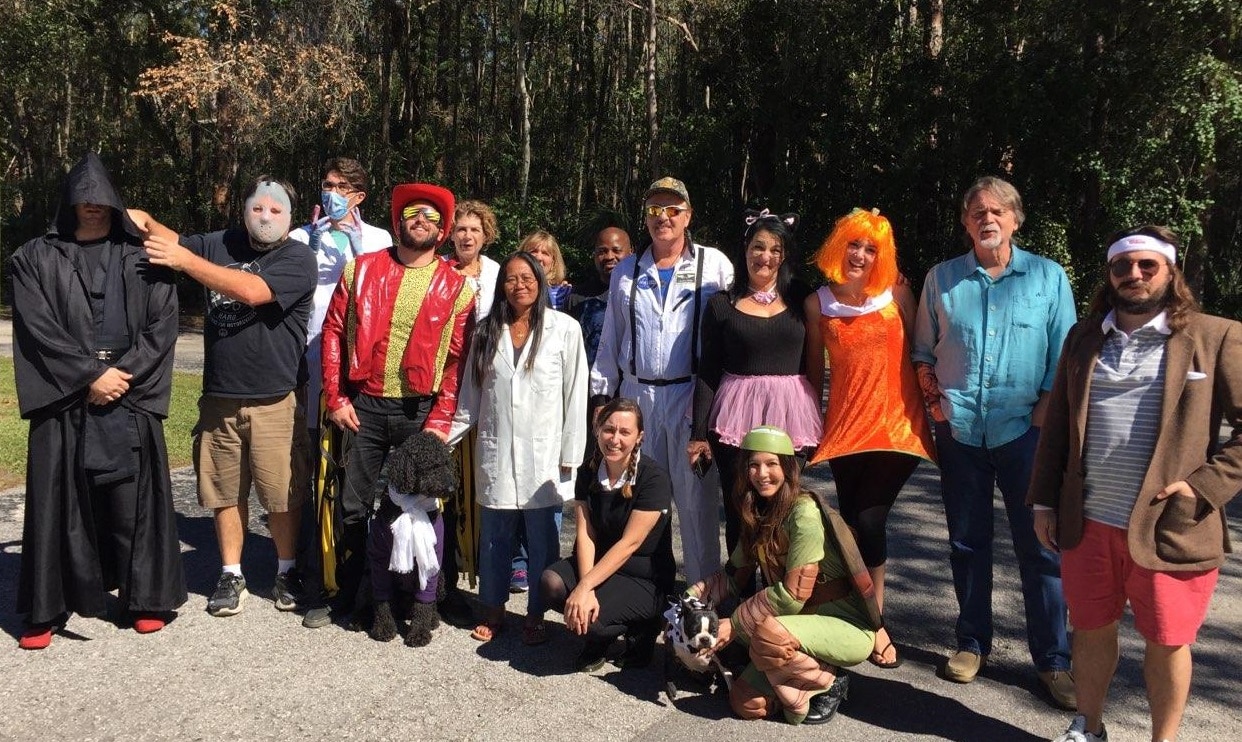
Case closed! With spectroscopy, every clue leaves a TRACE.