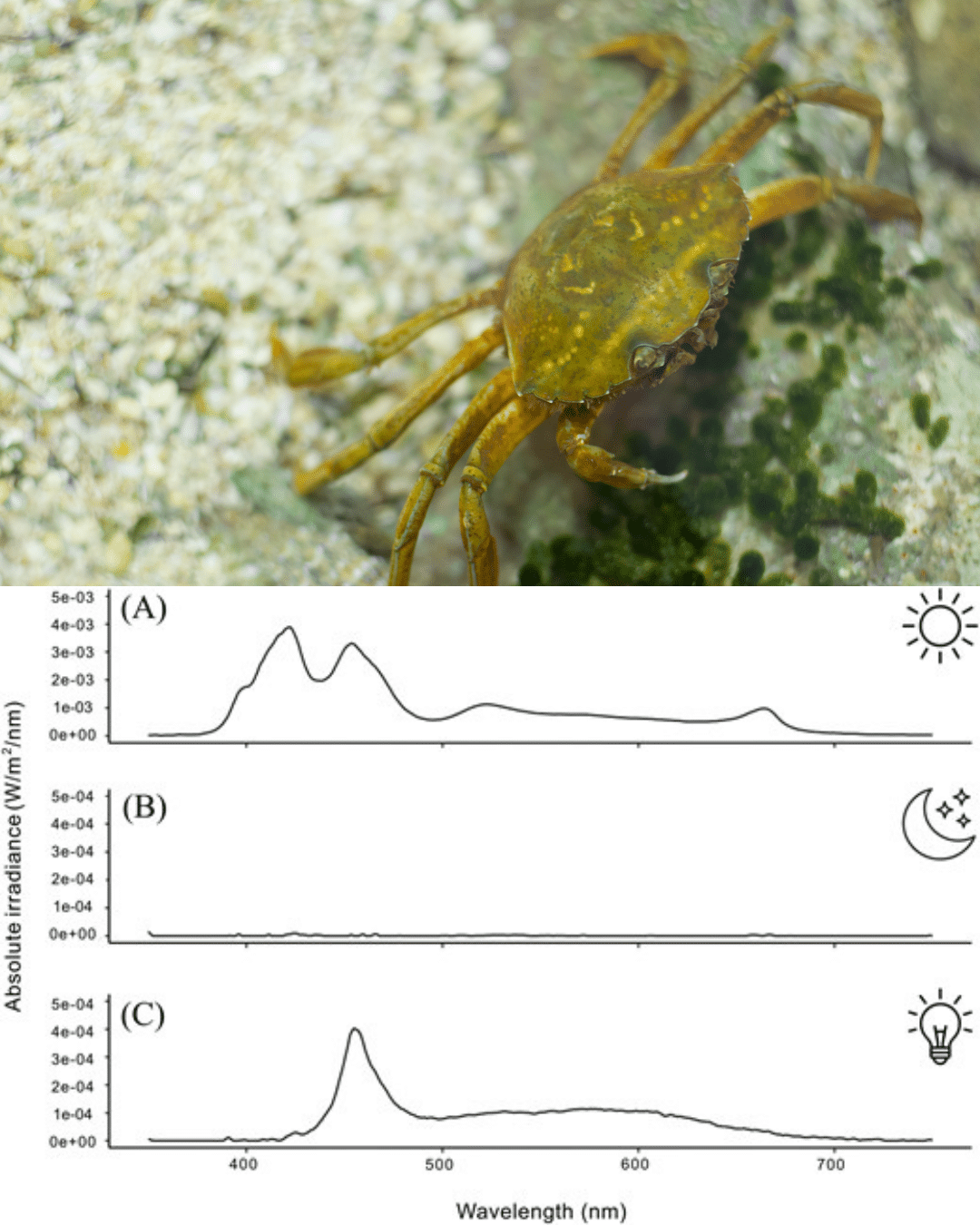
Biological rhythms of species are chiefly governed by natural cycles in temperature and light. Disruptions to these cycles, such as through the introduction of artificial light at night, interrupt the natural transition from day to night and decouples the synchronisation of biological rhythms in behaviour and physiology to the 24-h light cycle. We investigated the impact of constant and intermittent exposure to bright LED lighting on the refuge use of the intertidal common shore crab, Carcinus maenas Linnaeus, 1758. Constant exposure to bright LED light at night increased the total amount of time C. maenas sheltered within a refuge and caused a shift in circadian activity from nocturnal to more cathemeral, presumably to compensate for the loss in nocturnal foraging time. Conversely, intermittent exposure to bright LED lighting (1 minute of illumination every hour for 10 hours) did not affect the total time C. maenas spent inside a refuge, but did cause disproportionate fluctuations in refuge-seeking behaviour throughout the night. Our findings support the use of intermittent lighting as a potential strategy to mitigate some of the ecological impacts of light pollution on intertidal crustaceans.