2026 SpectraWizard’s Spectroscopy Application Challenge Results
The SpectraWizard’s Spectroscopy Application Challenge has come to a close! 🌍✨ Spectroscopists from across the globe went head-to-head for a shot at $5,000 in StellarCash. We’re thrilled to announce the winning spectroscopy application below — and don’t miss our Back to School Spectrometer Special, running now through the end of September!
A huge thank you to all who entered. With so many incredible submissions, choosing the winners was no easy task. We’re excited to finally share this standout application with you! Be sure to follow us on social media for all the latest updates.
1st Place: Ryosuke Nishikubo, Akinori Saeki & Ms. Tingting Liu
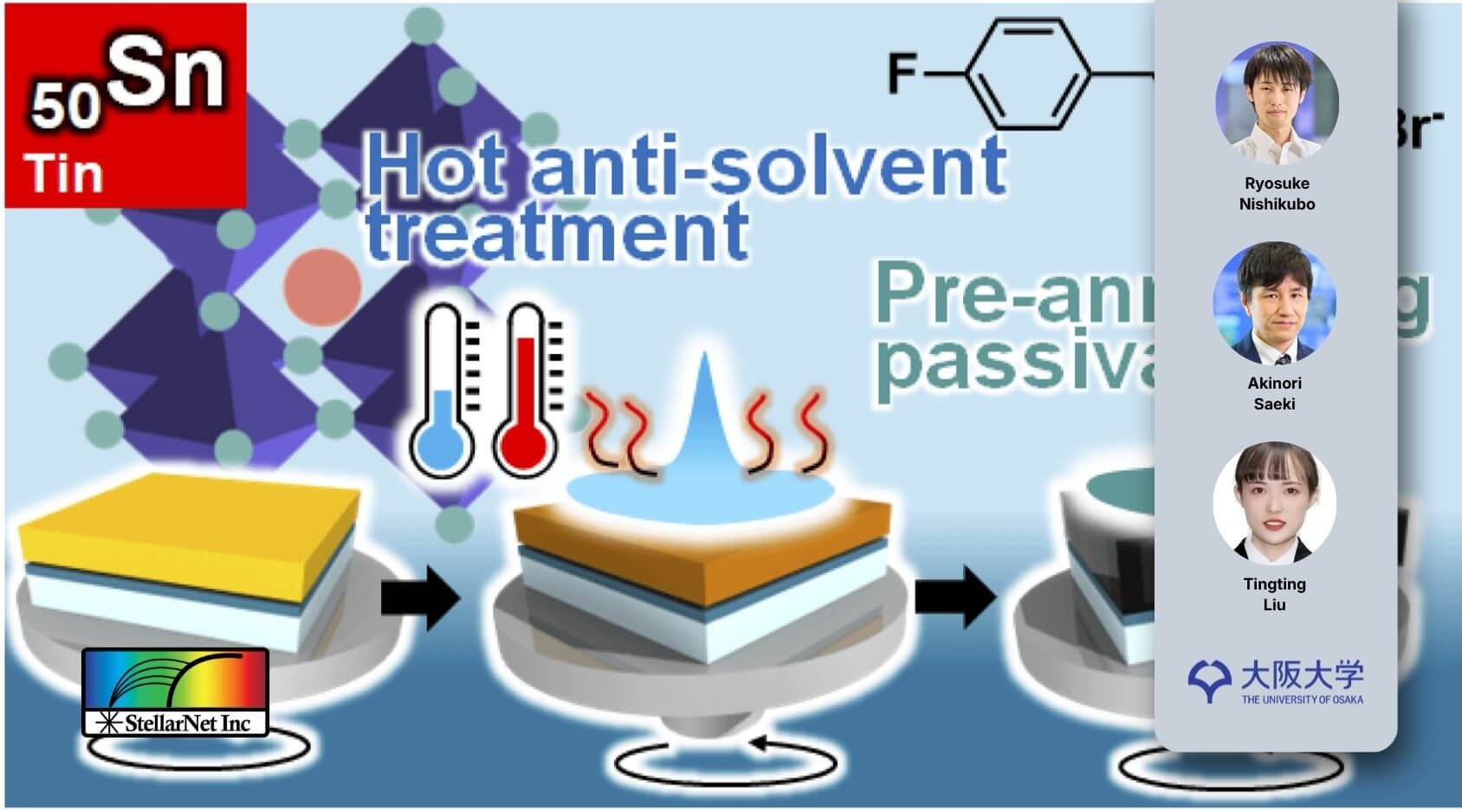
Temperature-controlled anti-solvent engineering enables the fabrication of reproducible and stable tin-based perovskite solar cells by decoupling the kinetic fragility
Bio: Dr. Ryosuke Nishikubo is a Lecturer in the Department of Applied Chemistry at The University of Osaka, where he conducts research in the Saeki Laboratory. His work focuses on organic–inorganic hybrid materials, perovskite solar cells, optoelectronic devices, and the development of in-situ measurement techniques. His recent research uses real-time UV-VIS absorption and photoluminescence spectroscopy to understand how perovskite thin films form during processing, helping researchers develop more efficient, stable, and reproducible solar cells.
Dr. Ryosuke Nishikubo, Dr. Akinori Saeki, and Ms. Tingting Liu advance tin-based perovskite solar cells through temperature-controlled anti-solvent engineering, providing greater control over how the materials crystallize. Their approach combines controlled thermal processing with passivation to reduce defects, improve film quality, and enhance device performance. Importantly, in-situ UV–Vis absorption and photoluminescence spectroscopy enables the team to monitor changes in the perovskite during formation, revealing insights into crystallization, grain growth, and electronic properties. By connecting real-time optical measurements with material processing, their work demonstrates a powerful approach to developing more efficient, stable, and reproducible solar-cell technologies.
2nd Place: Alexander McKillop & Marissa Weichman
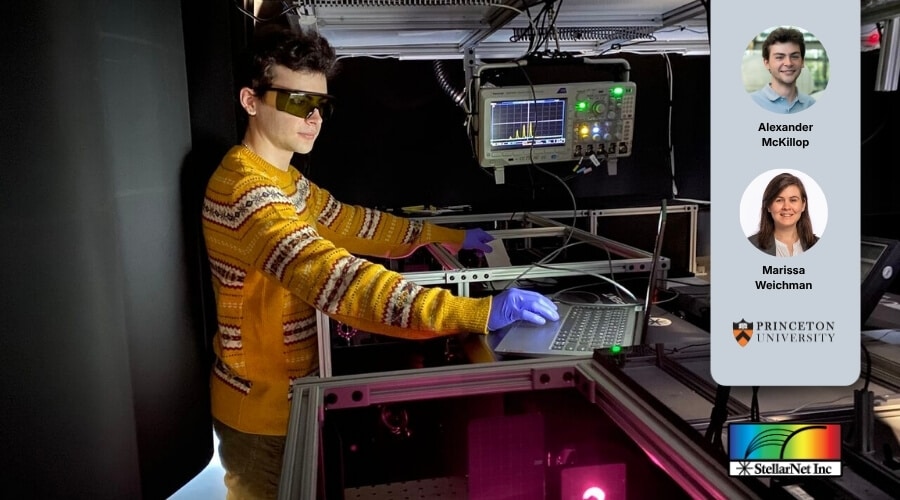
Direct Readout of Excited-State Lifetimes in Chlorin Chromophores under Electronic Strong Coupling
Alexander McKillop and Marissa Weichman investigate how molecules behave under electronic strong coupling, a regime where light and matter interact strongly within an optical cavity. Using ultrafast pump–probe spectroscopy, their work directly measures excited-state lifetimes to examine how strong light–matter interactions influence molecular behavior. By comparing molecules under strong coupling with those outside the cavity, the team provides new insight into fundamental photophysical processes and challenges assumptions about how optical cavities alter excited-state dynamics. Their research demonstrates how advanced time-resolved spectroscopy can provide a direct window into molecular processes at extremely short timescales.
3rd Place: Vladimir Pozdin & Alper Bozkurt
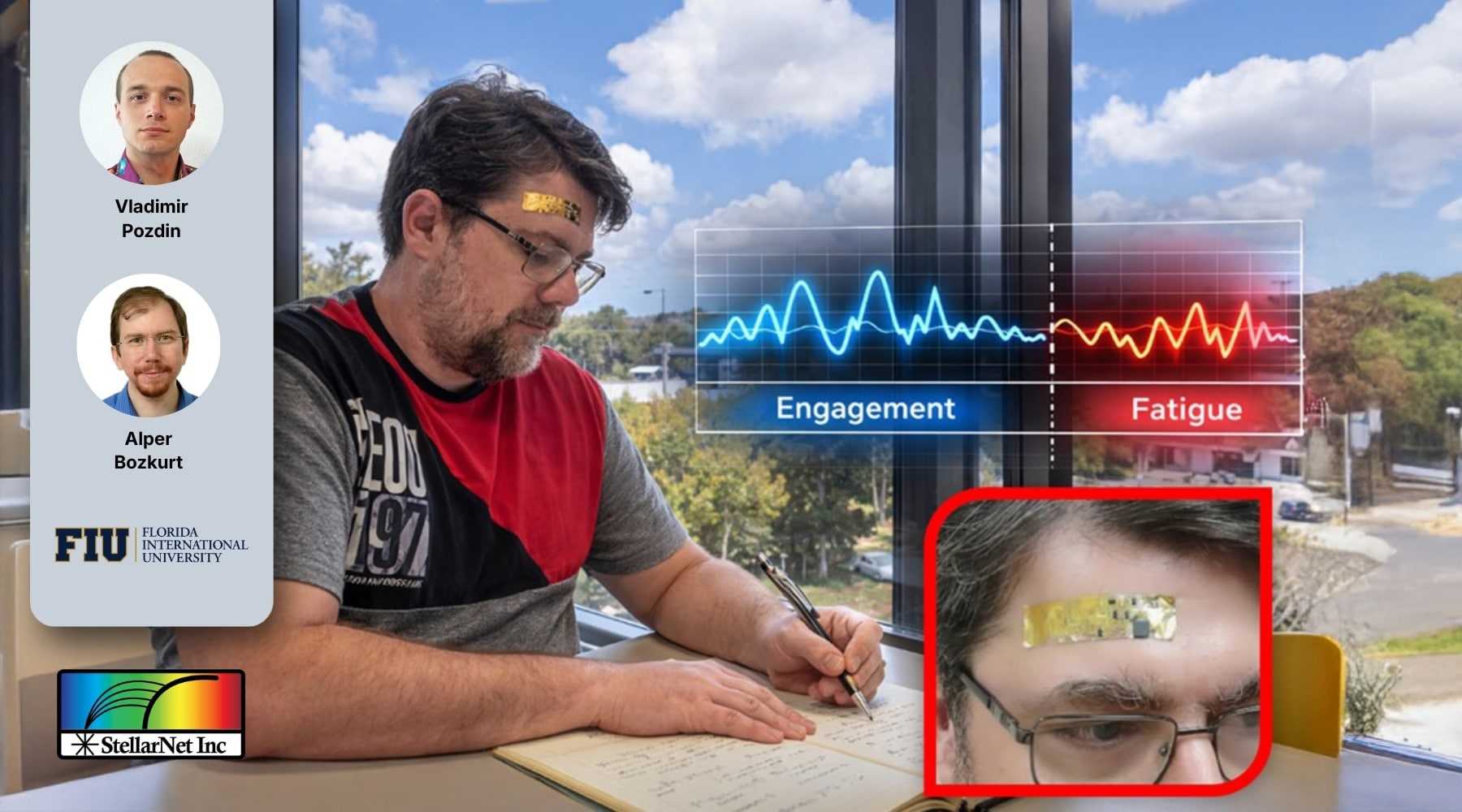
Wearable Wireless Functional Near-Infrared Spectroscopy System for Cognitive Activity Monitoring
Vladimir Pozdin and Alper Bozkurt developed a compact, wireless wearable functional near-infrared spectroscopy system designed to monitor brain activity and cognitive performance outside the traditional laboratory. By combining NIR light sources, optical sensing, onboard electronics, and wireless connectivity into a wearable platform, their system enables real-time monitoring with greater freedom of movement. The technology uses changes in oxygenated and deoxygenated hemoglobin to measure physiological responses associated with brain activity and cognitive tasks. This portable approach expands the potential of NIR spectroscopy for studying cognition, fatigue, and human performance in real-world environments.
GREEN-Wave Award for Conservation Innovation: Sam Mathes & Mississippi State University Conservation Physiology Lab
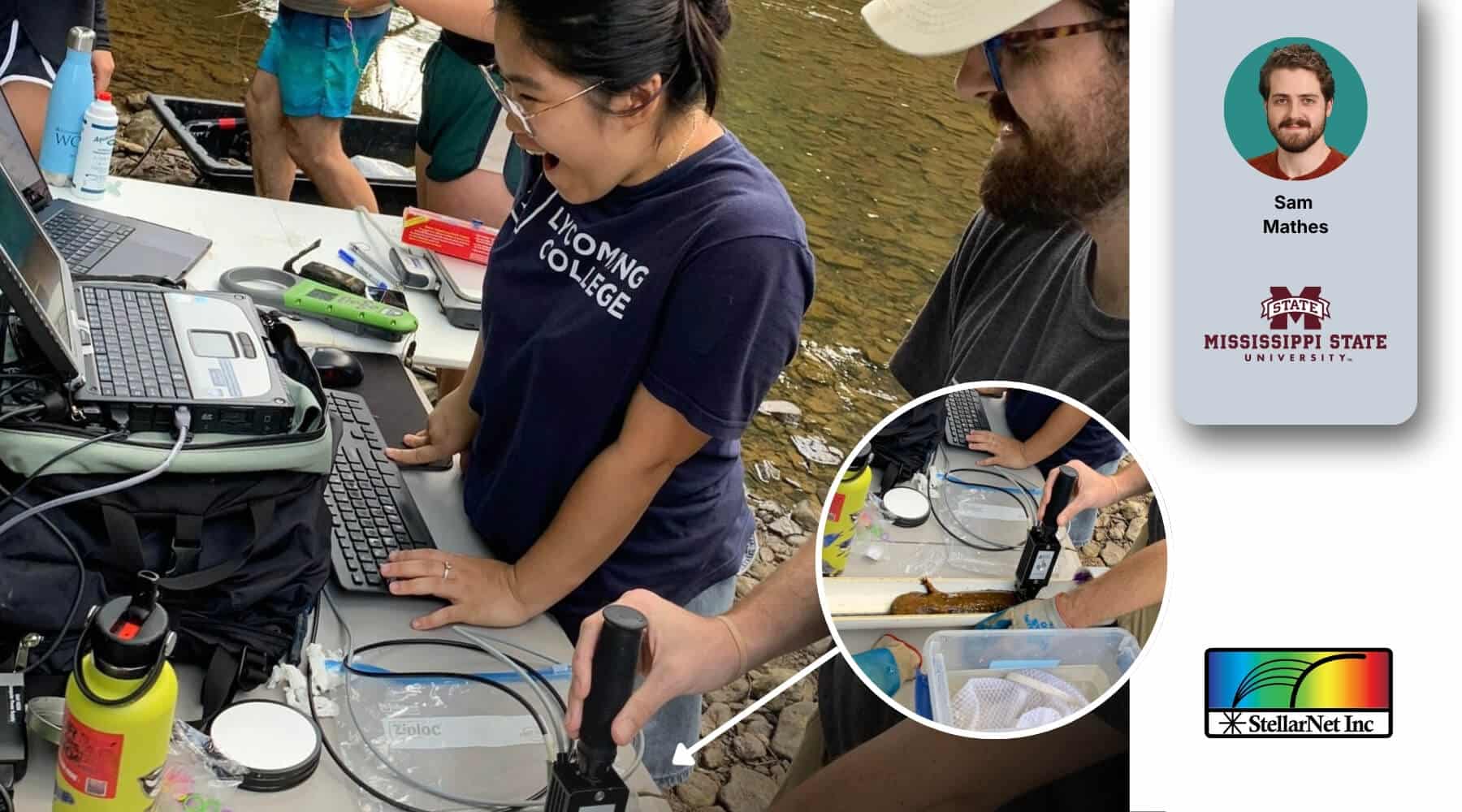
Field Validation of Near-Infrared Spectroscopy for Noninvasive Physiological Monitoring in Eastern Hellbenders
Sam Mathes of Mississippi State University’s Conservation Physiology Lab is exploring how near-infrared spectroscopy and machine learning could provide a rapid, noninvasive way to assess the health of eastern hellbenders—North America’s largest amphibian and a species increasingly threatened by habitat loss, poor water quality, and disease.
By scanning the animal’s skin, researchers aim to identify spectral patterns associated with sex, stress, reproductive condition, and disease without relying on invasive blood sampling or extensive handling. Preliminary studies successfully distinguished sex in captive hellbenders with 85% accuracy and detected experimentally induced stress with 73% accuracy. Mathes’s current research brings this technology into the field, pairing NIR measurements from wild hellbenders with established physiological and disease-screening methods.
This innovative approach earned the inaugural GREEN-Wave Award for Conservation Innovation for demonstrating how spectroscopy could give researchers and wildlife managers a practical new tool for monitoring vulnerable amphibian populations while minimizing stress to the animals.
Thank you to everyone who applied to the SpectraWizard’s Spectroscopy Application Challenge this year!
Be sure to Like us on Linkedin to get all of our fun and informational spectroscopy updates!
Compact Spectrometer Technologies
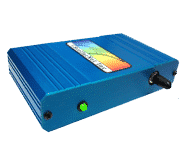
UV-VIS
190-1150nm
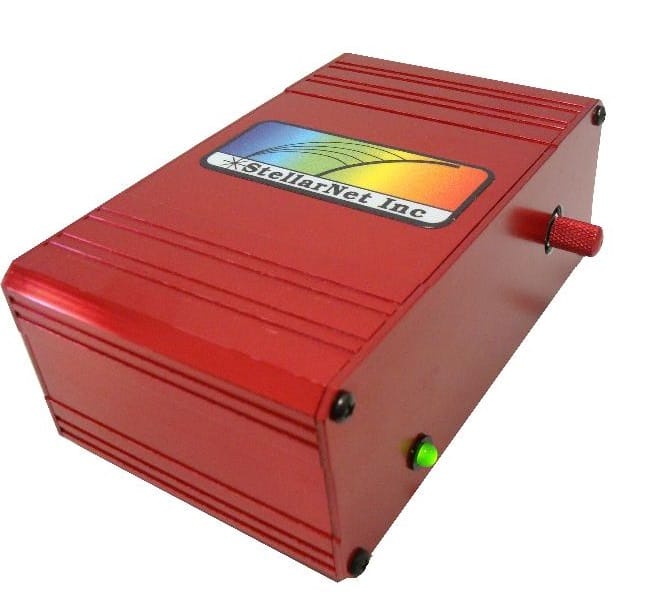
Near Infrared
900-2500nm
Raman
532, 785, 1064nm

Educational
low cost / simple interface