Food Safety & Quality
Featured Articles
Can Spectroscopy Help Detect Food Contamination Earlier?
The 2026 Cyclospora outbreak linked to iceberg lettuce highlights a persistent challenge in food production: contamination can move through the supply chain before conventional testing identifies a problem. Emerging research suggests that NIR, Raman/SERS, chemometrics and machine learning may provide food producers with additional tools for faster screening and earlier investigation.
Predicting Avocado Ripeness with NIR Spectroscopy
Knowing when an avocado is ready for market can be challenging without cutting into the fruit. This application demonstrates how near-infrared spectroscopy and chemometric analysis can predict avocado ripeness quickly and non-destructively, providing a potential tool for monitoring fruit quality and improving consistency throughout the supply chain.
Taking NIR Spectroscopy to the Strawberry Field
What can spectroscopy reveal about strawberries in the field? This application follows a portable NIR spectroscopy system into a strawberry field to demonstrate how rapid, non-destructive measurements can help evaluate fruit quality and collect valuable data outside of the laboratory.
Customer Research & Publications
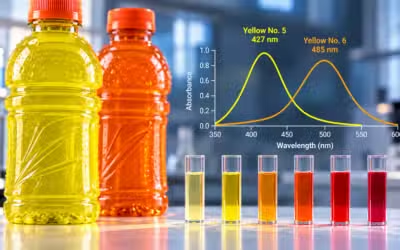
Gatorade Recall: How Visible Spectroscopy Can Help Verify Food Dyes in Beverages
Established UV-Vis methods provide a rapid approach to identifying and quantifying synthetic color additives in sports drinks, helping manufacturers strengthen formulation and labeling quality...
Species Discrimination of Edible and Feed Insects via Raman Spectroscopy of PBS Extractable Components
Jana Caloudova, Dani Dordevic, Martina Fikselova, Bohuslava Tremlova, Martin Kulma, Katerina Sebelova, Zdenka Javurkova, and Matej Pospiech | Processes | July 18, 2026 | 10.3390/pr14142337 Abstract...
Root zone improvements in spinach through commercial biostimulants application vary among cultivars
Md Noor E Azam Khan, Fahmida Fiza, Joseph G. Masabni, and Genhua Niu | Frontiers in Plant Science | July 13, 2026 | 10.3389/fpls.2026.1830913 Abstract Improvements in root-zone conditions can...
Multiscale Multispectral Hyperspectral Data for Estimating Coffee Yield Using Machine Learning Algorithms
George Deroco Martins, Lucas Henrique Vicentini Viana de Carvalho, Filipe Vieira da Silva, Rayssa Santos Barbosa, and Maria Cecilia Lemes Santos | ISPRS Annals of the Photogrammetry Remote Sensing...
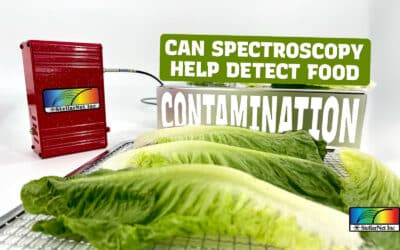
Application Note: Cyclospora Food Saftey
The 2026 Cyclospora outbreak linked to iceberg lettuce highlights a persistent challenge in food production: contamination can move through the supply chain before conventional testing identifies a...
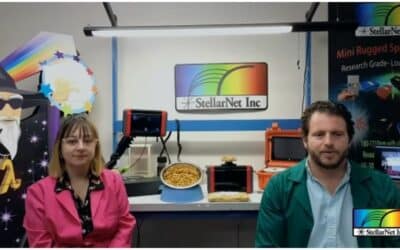
Featured in Pet Food Media on NIR Ingredient Verification
StellarNet President Jason Pierce was recently featured in Pet Food Media with the article “Looking Beyond Pass/Fail: New Approaches to Ingredient Verification in Pet Food Manufacturing.” As pet...
Spectroscopy Applications
Astronomy, Space & Remote Sensing
Advanced & quantum materials
Thin Films & Optical Coatings
Pharmaceuticals & Nutraceuticals
Biomedical & Life Sciences
Environmental & Microplastics
Industrial & Process Analysis
Lighting, Displays & Radiometry
Food Safety & Quality Spectrometers
Learn More
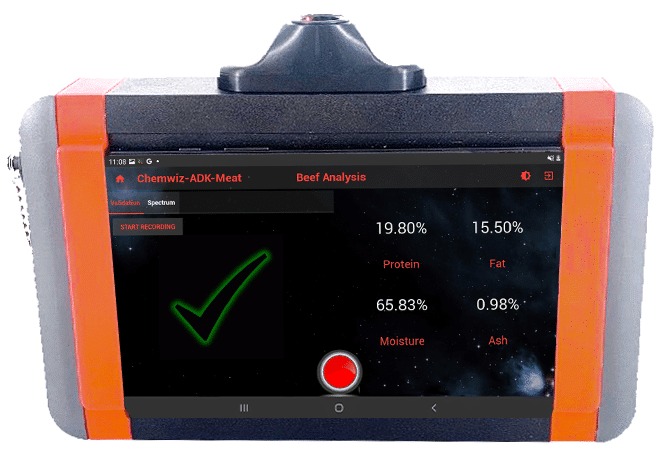
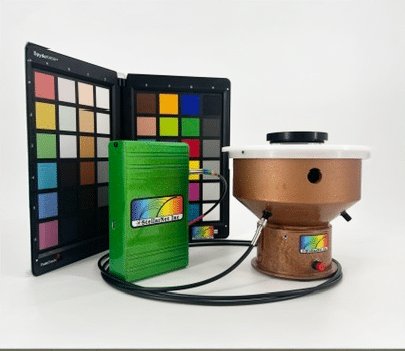
Explore Raman, UV-VIS, and NIR spectroscopy through practical guides, application notes, videos, technical resources, and real-world research. Learn how spectroscopy can be used for food quality and safety, ingredient identification, composition analysis, adulteration screening, color measurement, and quality control. These Learning Centers provide practical resources to help researchers and food manufacturers better understand their measurements and apply spectroscopy throughout food research, ingredient verification, and production.
- NIR Learning Center — Discover NIR spectroscopy for food composition analysis, ingredient verification, adulteration screening, and rapid quality control measurements.
- Raman Learning Center — Explore Raman spectroscopy for food and ingredient identification, authenticity testing, adulteration detection, and molecular analysis.
- UV-VIS Learning Center — Learn about UV-VIS spectroscopy for food color measurement, absorbance and transmission analysis, quality evaluation, and food research applications