Food Quality Inspection
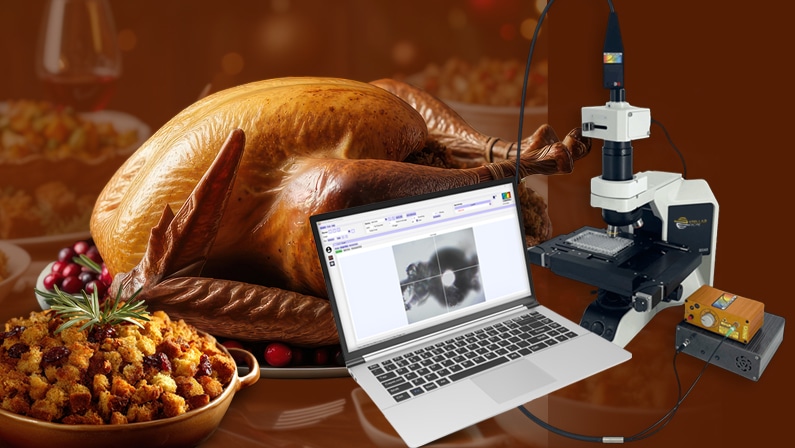
This Thanksgiving, StellarNet is serving up science with a side of flavor! Our new StellarScope Raman Particle Analyzer helps food manufacturers ensure every batch of bread, roll, and spice meets the highest quality standards. With Raman spectroscopy, you can non-destructively measure wheat flour particle size, protein quality, and ingredient uniformity. All critical factors for achieving that perfect texture and aroma in your favorite holiday stuffing.

One of our newest customers, King’s Hawaiian Bread Rolls, plans to use StellarNet technology to analyze and control flour and dough consistency. Their signature sweet rolls aren’t just a favorite—they’re a clear example of how real-time Raman analytics help bakers maintain quality and reduce waste.
From incoming ingredient verification to finished product QC, StellarNet’s portable Raman systems bring laboratory precision straight to the factory floor.
Raman Particle Analysis & Image Segmentation
Wanting a home-made Thanksgiving, the SpectraWizard set off on baking his own bread rolls for the traditional dinner. Desiring a streamlined baking process, the mise en place was set and he was ready to begin. Unfortunately, for the SpectraWizard, he forgot the most important thing about baking – no big sleeves! As he began making his mixtures, he saw that he spilled a crystalline substance into the corn starch. “Is this sugar or salt?” he cried. The Spectral Sorceress heard him in distress and reminded him that he has the power of light within him! TO THE LABORATORY!
The Sorceress and Wizard teamed up to figure out if these rolls were going to be salty or sweet. Using the StellarSCOPE-AM/PA for particle analysis, the SpectraWizard took a sample and placed it onto a microscope slide. Using the high-resolution imaging, the SpectraWizard was able first confirm particle boundaries for clean spectral capture. Using a segmentation algorithm the software highlights each particle and centers the target for Raman alignment. The Wizard and Sorceress used the detailed particle properties and morphologies and chose the outlier, depending on centroid targeting which precisely aligns the Raman laser to the chosen particle. Once the Raman spectra was taken, the Sorceress showed the Wizard the Raman spectral matching which uses a library of known samples and predicts the best fit. After a few button clicks, the Wizard and Sorceress confirm that the Wizard mixed sugar into his cornstarch.
Working as a team, the Wizard and Sorceress were able to run a full QA/QC review on the unknown mixture. Together, the workflow of—segmentation → targeting → Raman → match—provides a complete verification process.
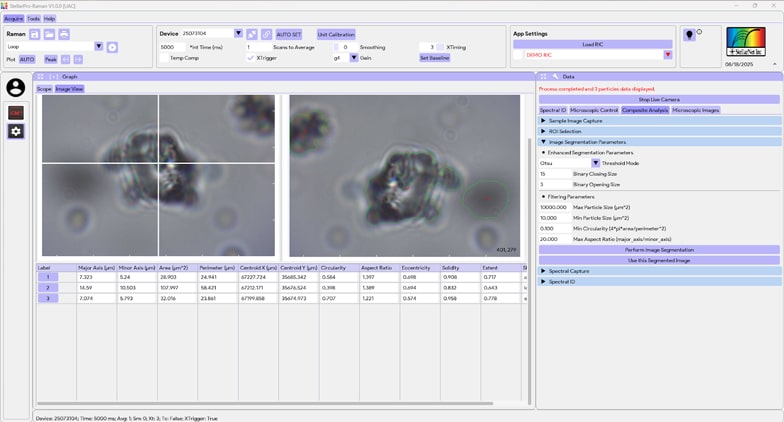
Image: Raman Particle Analysis of Sugar including Circularity, Major and Minor Axis, Area, and more
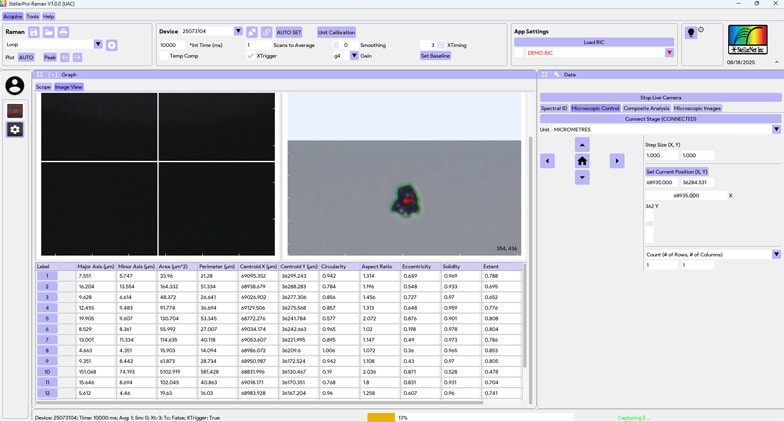
Image: Corn starch Image Annotated
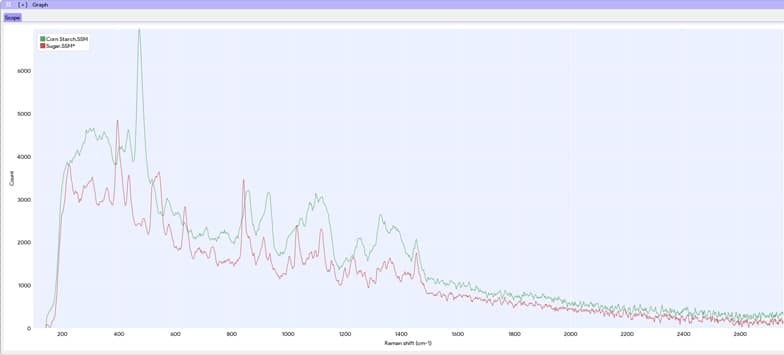
Image: Sugar and Corn starch Raman Spectra
Happy Thanksgiving From the StellarNet Team!

To celebrate, here’s a quick Hawaiian Roll Stuffing Recipe you can try at home:
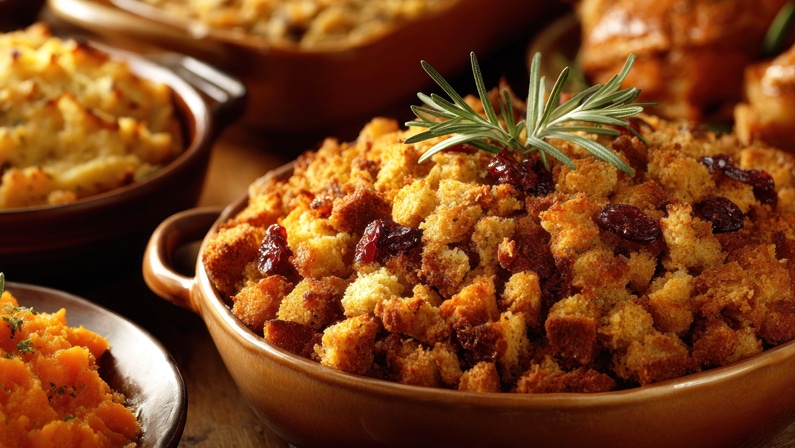
Directions:
- Cut 12 Hawaiian rolls into 1-inch cubes and lightly toast.
- In a skillet, sauté 1 cup of onion, 1 cup celery, and 2 tbsp butter until fragrant.
- Combine with the toasted bread, 1 cup chicken broth, 1 tsp dried sage, and salt & pepper to taste.
- Bake at 350°F for 25 minutes until golden.
- Just like our Raman analyzers—delivering the perfect blend of ingredients and reliable results every time.