Spectroscopy Applications
Explore how researchers, manufacturers, and quality-control laboratories use StellarNet spectrometers to solve real-world measurement challenges. Our compact UV-Vis, VIS-NIR, NIR, and Raman spectroscopy systems support applications across food safety, pharmaceuticals, advanced materials, thin films, biomedical research, environmental monitoring, industrial process analysis, radiometry, and space science.
Browse the application areas below to discover customer research, technical articles, spectroscopy methods, and practical solutions for absorbance, transmission, reflectance, fluorescence, Raman, radiometric, and chemometric analysis.
Key Application Areas
Food Safety & Quality
Advanced & quantum materials
Thin Films & Optical Coatings
Pharmaceuticals & Nutraceuticals
Biomedical & Life Sciences
Environmental & Microplastics
Industrial & Process Analysis
Lighting, Displays & Radiometry
Featured Spectroscopy Applications -
Astronomy, Space & Remote Sensing
Astronomy spectroscopy gives researchers a way to study light from objects and environments far beyond the laboratory. StellarNet systems support astronomical spectroscopy for research into stars, planets, meteors, and atmospheric phenomena. Spectral measurements can reveal information that cannot be seen through imaging alone. Compact instruments also open new possibilities for space spectroscopy and CubeSat missions where size and flexibility matter. From meteor and aurora research to remote sensing and educational astronomy, StellarNet provides accessible spectroscopy tools for exploring our planet and the universe beyond it.
Astronomy, Space & Remote Sensing
Wildlife & Ecology Spectroscopy
Spectroscopy provides powerful tools for studying how animals perceive light, display coloration, communicate, and interact with their environments. From ultraviolet vision in birds and insects to underwater light conditions in marine ecosystems, UV-Vis-NIR spectroscopy helps researchers characterize the optical properties of biological structures and natural habitats.
Wildlife & Ecology Spectroscopy
Looking for something else?

Synthesis and down-conversion luminescence investigation of CaF2:Yb:Ce powders for photonics
SV Kuznetsov, AS Nizamutdinov, MN Mayakova… - Journal of Fluorine …, 2019 Abstract Single-phase solid solutions based on calcium fluoride doped with ytterbium and cerium trivalent ions were...
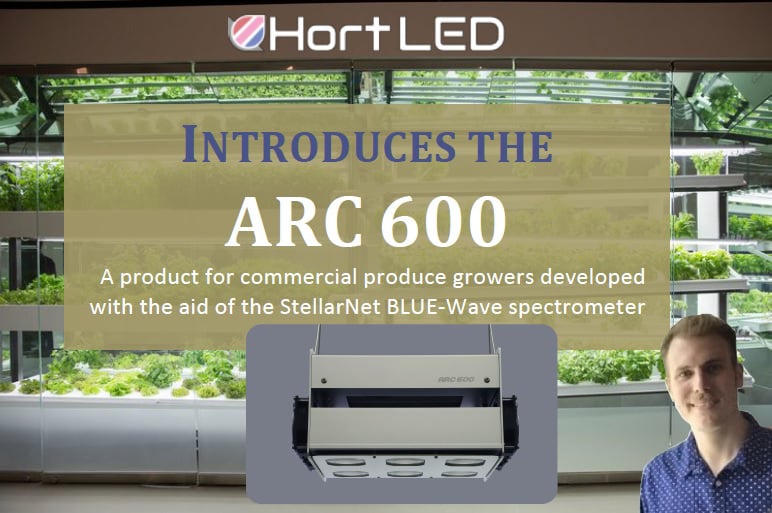
Customer Spotlight: HortLED Develops LED Grow Lights for Commercial Growers with aid of a BLUE-Wave Spectrometer
HortLED is introducing the ARC 600, a scientifically developed LED grow light designed for commercial cultivation. “Commercial growers tend to focus on two points when selecting new lighting,”...

Photonics West 2019 Review – New StellarNet Spectrometer Products and Features
Earlier this month, StellarNet, Inc. revealed a variety of awesome new spectrometer products and features at the Photonics West conference in San Francisco Feb 2-7. Get your popcorn ready and watch...
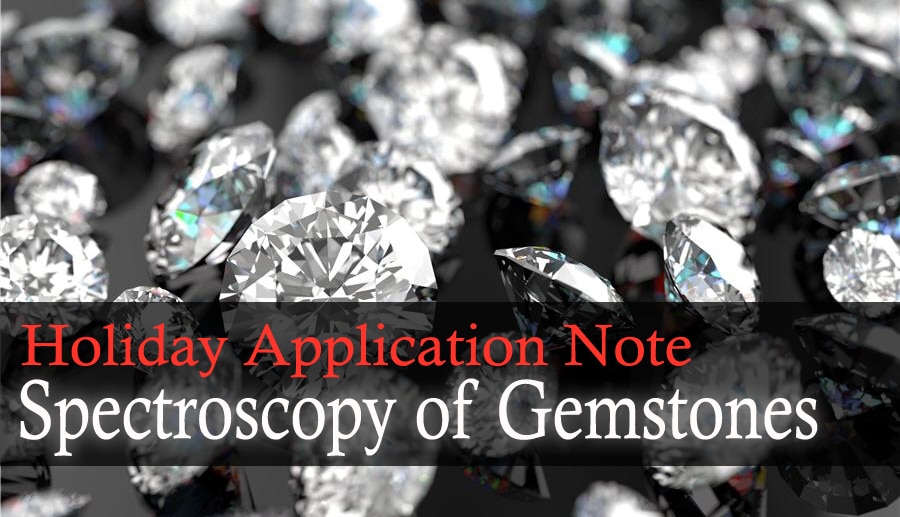
Spectroscopy of Gemstones- Is a Diamond Forever?
Tis the Season! A Diamond is Forever? You’re about to ask the biggest question of your life, on one knee, in front of her entire family, on Christmas Eve. You’re nervous. Your mind starts to go to...
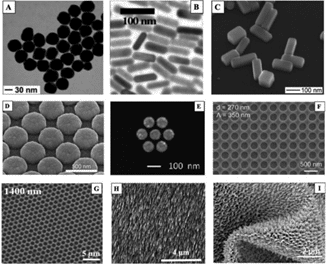
Introduction to Surface Enhanced Raman Spectroscopy (SERS) Part 1
Overview: Last month’s technical note titled “Raman Fundamentals for Miniature Spectrometers” introduced the physical principals of Raman spectroscopy and typical experimental set-ups using Raman...
Modulation of halotropic growth in rough bluegrass (Poa trivialis L.) by flavonoids and light
DP Petrella, EH Han, EJ Nangle, JC Scheerens… - … and Experimental Botany, 2018 Abstract Halotropism is a form of adaptive directional growth in which roots grow away from areas of high salt...