Food Safety & Quality
Featured Articles
Can Spectroscopy Help Detect Food Contamination Earlier?
The 2026 Cyclospora outbreak linked to iceberg lettuce highlights a persistent challenge in food production: contamination can move through the supply chain before conventional testing identifies a problem. Emerging research suggests that NIR, Raman/SERS, chemometrics and machine learning may provide food producers with additional tools for faster screening and earlier investigation.
Predicting Avocado Ripeness with NIR Spectroscopy
Knowing when an avocado is ready for market can be challenging without cutting into the fruit. This application demonstrates how near-infrared spectroscopy and chemometric analysis can predict avocado ripeness quickly and non-destructively, providing a potential tool for monitoring fruit quality and improving consistency throughout the supply chain.
Taking NIR Spectroscopy to the Strawberry Field
What can spectroscopy reveal about strawberries in the field? This application follows a portable NIR spectroscopy system into a strawberry field to demonstrate how rapid, non-destructive measurements can help evaluate fruit quality and collect valuable data outside of the laboratory.
Customer Research & Publications
Atmospheric Cold Plasma and Peracetic Acid–Based Hurdle Intervention To Reduce Salmonella on Raw Poultry Meat
S CHAPLOT, B YADAV, B JEON, MS ROOPESH - Journal of Food Protection, 2019 Abstract In Canada, Salmonella-related foodborne illness accounts for more than 88,000 cases annually. Poultry products...
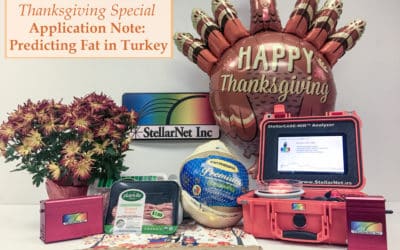
Thanksgiving Application Note: Predicting Fat Content in Turkey using NIR Spectroscopy
Why Turkey on Thanksgiving? These tasty birds are large enough that they can feed a table full of hungry family, and unlike chickens or cows, they don't serve much utilitarian purpose like laying...
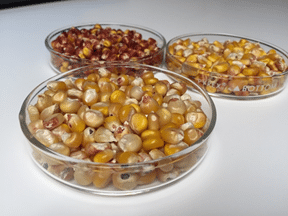
Predicting composition of shelled corn (Zea mays) – A Feasibility Study with the StellarCASE-NIR Near-Infrared Analyzer
Introduction If you’ve driven through the mid-western United States, you’ll have noticed that corn is an important and prevalent crop. Corn covers about 90 million acres of farmland in the U.S. and...
The effect of biostimulants on the yield and quality of broccoli heads during storage
A Kałużewicz, T Spiżewski, W Krzesiński, A Zaworska - Nauka Przyroda Technologie Department of Vegetable Crops Poznań University of Life Sciences Abstract Background. Biostimulants are widely used...
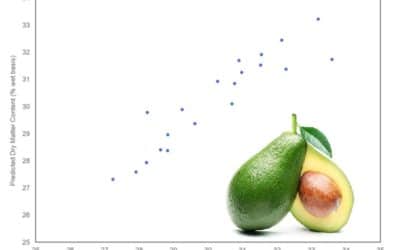
Application Note – Predicting Ripeness of Avocados with a Near-Infrared Spectrometer System
Introduction The ripeness of an avocado affects its flavor, aroma, color and texture. Ripeness, however, is difficult to determine because the fruit ripens without obvious changes in external...
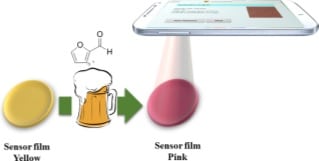
A toast to spectroscopy: How Compact Spectrometers are used in ethanol product research
Alcoholic beverages seem like a simple concept at first: take something sugary, throw in some yeast, and ta da! The sugars are fermented into ethanol. But the reality is more complex, even for mass...
Spectroscopy Applications
Astronomy, Space & Remote Sensing
Advanced & quantum materials
Thin Films & Optical Coatings
Pharmaceuticals & Nutraceuticals
Biomedical & Life Sciences
Environmental & Microplastics
Industrial & Process Analysis
Lighting, Displays & Radiometry
Food Safety & Quality Spectrometers
Learn More
Explore Raman, UV-VIS, and NIR spectroscopy through practical guides, application notes, videos, technical resources, and real-world research. Learn how spectroscopy can be used for food quality and safety, ingredient identification, composition analysis, adulteration screening, color measurement, and quality control. These Learning Centers provide practical resources to help researchers and food manufacturers better understand their measurements and apply spectroscopy throughout food research, ingredient verification, and production.
- NIR Learning Center — Discover NIR spectroscopy for food composition analysis, ingredient verification, adulteration screening, and rapid quality control measurements.
- Raman Learning Center — Explore Raman spectroscopy for food and ingredient identification, authenticity testing, adulteration detection, and molecular analysis.
- UV-VIS Learning Center — Learn about UV-VIS spectroscopy for food color measurement, absorbance and transmission analysis, quality evaluation, and food research applications