Food Safety & Quality
Featured Articles
Can Spectroscopy Help Detect Food Contamination Earlier?
The 2026 Cyclospora outbreak linked to iceberg lettuce highlights a persistent challenge in food production: contamination can move through the supply chain before conventional testing identifies a problem. Emerging research suggests that NIR, Raman/SERS, chemometrics and machine learning may provide food producers with additional tools for faster screening and earlier investigation.
Predicting Avocado Ripeness with NIR Spectroscopy
Knowing when an avocado is ready for market can be challenging without cutting into the fruit. This application demonstrates how near-infrared spectroscopy and chemometric analysis can predict avocado ripeness quickly and non-destructively, providing a potential tool for monitoring fruit quality and improving consistency throughout the supply chain.
Taking NIR Spectroscopy to the Strawberry Field
What can spectroscopy reveal about strawberries in the field? This application follows a portable NIR spectroscopy system into a strawberry field to demonstrate how rapid, non-destructive measurements can help evaluate fruit quality and collect valuable data outside of the laboratory.
Customer Research & Publications
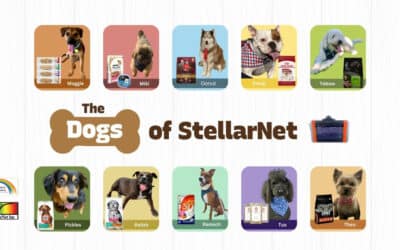
The Dogs of StellarNet and the ChemWiz-ADK™ NIR Feed and Pet Food Analyzers
Celebrate National Dog Day on August 26th! This National Dog Day, we’re highlighting how advanced NIR spectroscopy helps pet food manufacturers create consistent, high-quality products for the...
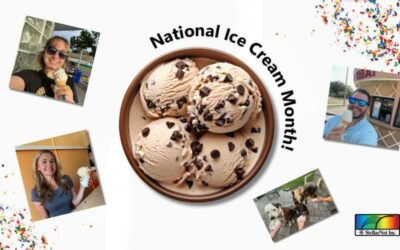
National Ice Cream Month
Near-Infrared (NIR) spectroscopy (NIR Spectrometers) is a valuable tool for quality control in the production of soft serve ice cream powders. It offers several advantages for measuring various...
Surface-Enhanced Raman Spectroscopy for Acrylamide Detection Using Gold Nanoparticles on Titanium Oxide Nanowires: A Green Analytical Method
Maria Tarapoulouzi, Marios Stavrou, Marios Constantinou, Aliki Souzou, Lygia Eleftheriou, Chrysafis Andreou Abstract Acrylamide (Aam) is a potentially carcinogenic compound formed in heat-processed,...

The SpectraWizard’s Father’s Day Spectroscopy BBQ
It’s almost Father's Day, and like most people at this time of year, the SpectraWizard is excited to celebrate with a barbecue. In fact, he’s so excited that he’s hosting one and you are invited! ...
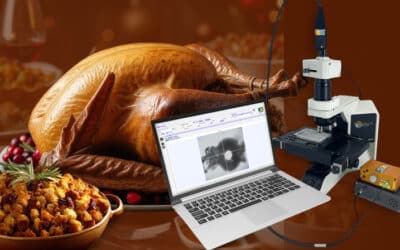
A Spectral Feast: StellarNet’s Thanksgiving Spectroscopy Special
Food Quality Inspection This Thanksgiving, StellarNet is serving up science with a side of flavor! Our new StellarScope Raman Particle Analyzer helps food manufacturers ensure every batch of bread,...
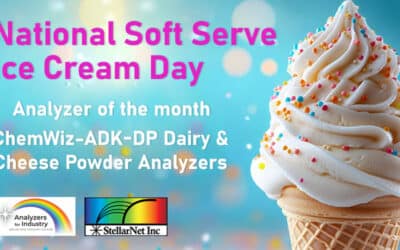
August Analyzer of the Month: Soft Serve Ice Cream Day
Near-Infrared (NIR) spectroscopy (NIR Spectrometers) is a valuable tool for quality control in the production of soft serve ice cream powders. It offers several advantages for measuring various...
Spectroscopy Applications
Astronomy, Space & Remote Sensing
Advanced & quantum materials
Thin Films & Optical Coatings
Pharmaceuticals & Nutraceuticals
Biomedical & Life Sciences
Environmental & Microplastics
Industrial & Process Analysis
Lighting, Displays & Radiometry
Food Safety & Quality Spectrometers
Learn More
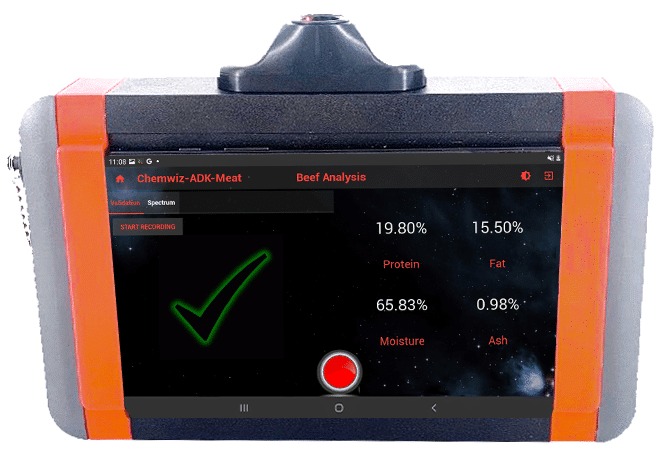
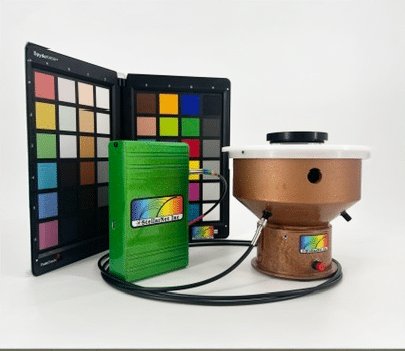
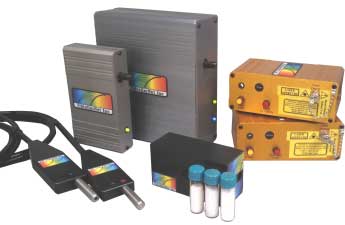
Explore Raman, UV-VIS, and NIR spectroscopy through practical guides, application notes, videos, technical resources, and real-world research. Learn how spectroscopy can be used for food quality and safety, ingredient identification, composition analysis, adulteration screening, color measurement, and quality control. These Learning Centers provide practical resources to help researchers and food manufacturers better understand their measurements and apply spectroscopy throughout food research, ingredient verification, and production.
- NIR Learning Center — Discover NIR spectroscopy for food composition analysis, ingredient verification, adulteration screening, and rapid quality control measurements.
- Raman Learning Center — Explore Raman spectroscopy for food and ingredient identification, authenticity testing, adulteration detection, and molecular analysis.
- UV-VIS Learning Center — Learn about UV-VIS spectroscopy for food color measurement, absorbance and transmission analysis, quality evaluation, and food research applications