Abstract
Acrylamide (Aam) is a potentially carcinogenic compound formed in heat-processed, starch-rich foods, posing significant food safety concerns even at low dietary exposures. Food safety regulations mandate regular testing for Aam at the point of food production; however, current analytical methods for Aam are time-consuming and costly. In this study, we developed a green, label-free analytical method based on surface-enhanced Raman spectroscopy (SERS) using gold nanoparticles (Au NP) grown on titanium oxide (TiO2) nanowires (NWs) as the active substrate. The TiO2 NWs provide a scaffold with high surface-area for uniform Au NP placement, producing a substrate that enhances the Raman signal of Aam through plasmonic effects. A portable, low-cost Raman spectrometer was used for data acquisition. The method demonstrated a broad detection range from 10 μM to 10 mM, relevant to the regulatory benchmarks for common foods. The analytical performance of the sensor was validated using chemometrics. This study establishes a sustainable and effective SERS-based approach for future monitoring of Aam in food, supporting improved food safety and public health protection.
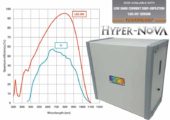
StellarNet: Raman measurements were performed using a point-and-shoot Raman spectrometer (Raman-HR-TEC-785, StellarNet Inc.) with a 785 nm diode laser (Ramulaser). The Raman spectra were collected with 3000 ms time integration at 240 mW output power with a 210 µm laser spot diameter. The collected SERS spectra consisted of wavenumbers from 124 to 2805 cm−1.