Spectroscopy Applications
Explore how researchers, manufacturers, and quality-control laboratories use StellarNet spectrometers to solve real-world measurement challenges. Our compact UV-Vis, VIS-NIR, NIR, and Raman spectroscopy systems support applications across food safety, pharmaceuticals, advanced materials, thin films, biomedical research, environmental monitoring, industrial process analysis, radiometry, and space science.
Browse the application areas below to discover customer research, technical articles, spectroscopy methods, and practical solutions for absorbance, transmission, reflectance, fluorescence, Raman, radiometric, and chemometric analysis.
Key Application Areas
Food Safety & Quality
Advanced & quantum materials
Thin Films & Optical Coatings
Pharmaceuticals & Nutraceuticals
Biomedical & Life Sciences
Environmental & Microplastics
Industrial & Process Analysis
Lighting, Displays & Radiometry
Featured Spectroscopy Applications -
Astronomy, Space & Remote Sensing
Astronomy spectroscopy gives researchers a way to study light from objects and environments far beyond the laboratory. StellarNet systems support astronomical spectroscopy for research into stars, planets, meteors, and atmospheric phenomena. Spectral measurements can reveal information that cannot be seen through imaging alone. Compact instruments also open new possibilities for space spectroscopy and CubeSat missions where size and flexibility matter. From meteor and aurora research to remote sensing and educational astronomy, StellarNet provides accessible spectroscopy tools for exploring our planet and the universe beyond it.
Astronomy, Space & Remote Sensing
Wildlife & Ecology Spectroscopy
Spectroscopy provides powerful tools for studying how animals perceive light, display coloration, communicate, and interact with their environments. From ultraviolet vision in birds and insects to underwater light conditions in marine ecosystems, UV-Vis-NIR spectroscopy helps researchers characterize the optical properties of biological structures and natural habitats.
Wildlife & Ecology Spectroscopy
Looking for something else?
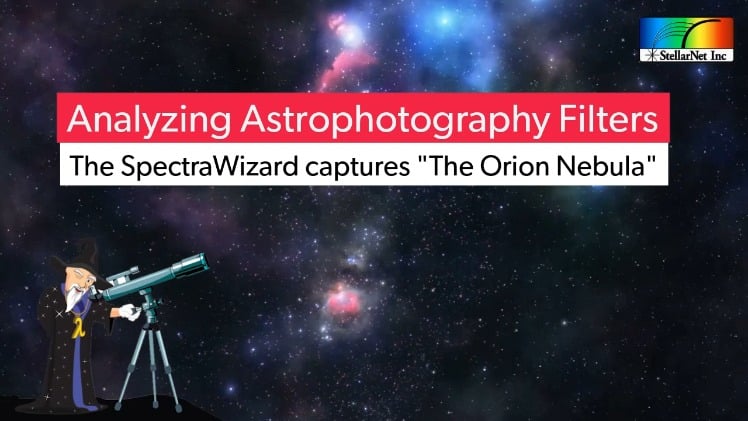
Analyzing Astrophotography Filters- The SpectraWizard captures the Orion Nebula
After analyzing the spectrum of Sirius and Betelgeuse, the SpectraWizard decided to take a shot with astrophotography. His journey takes him to the Great Orion Nebula where he creates a superimposed...
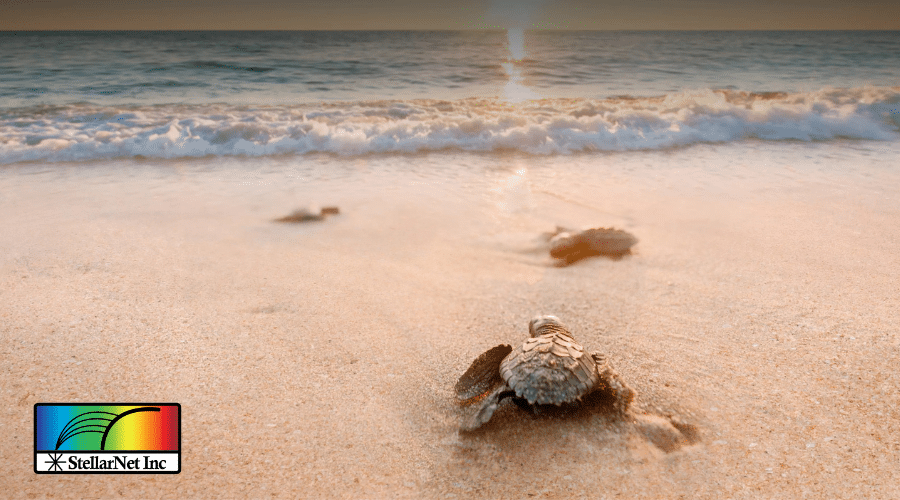
Why Turtle Safe Lighting Matters for Sea Turtle Survival + An Interview with FWC Experts
Why Turtle Safe Lighting Matters for Sea Turtle Survival + An Interview with FWC Experts Artificial lighting along coastlines is a well-documented threat to sea turtle populations. Species such as...
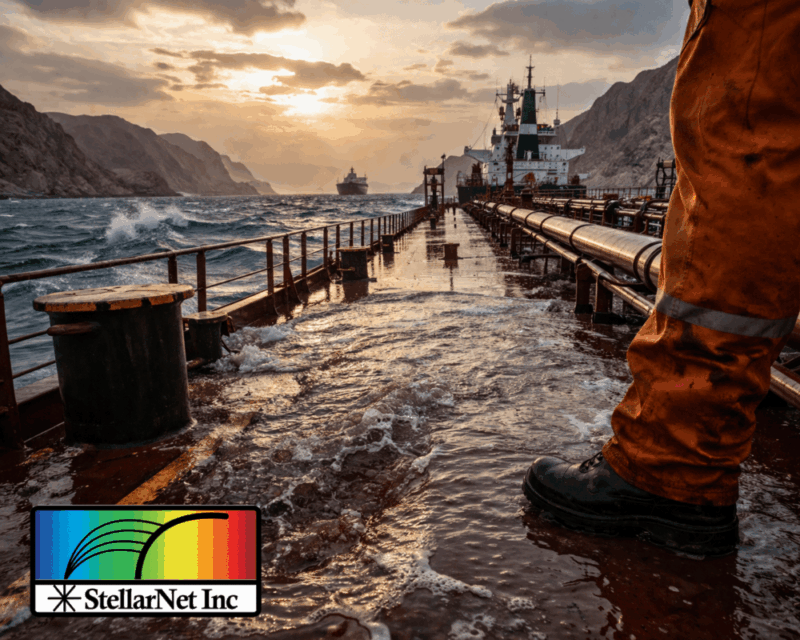
Invisible Losses in Oil Shipping: How Moisture Analysis Impacts Crude Oil Cargo Value at Sea
Invisible Losses in Oil Shipping: How Moisture Analysis Impacts Crude Oil Cargo Value at Sea Moisture is a common and often underestimated component of crude oil that directly impacts product value,...
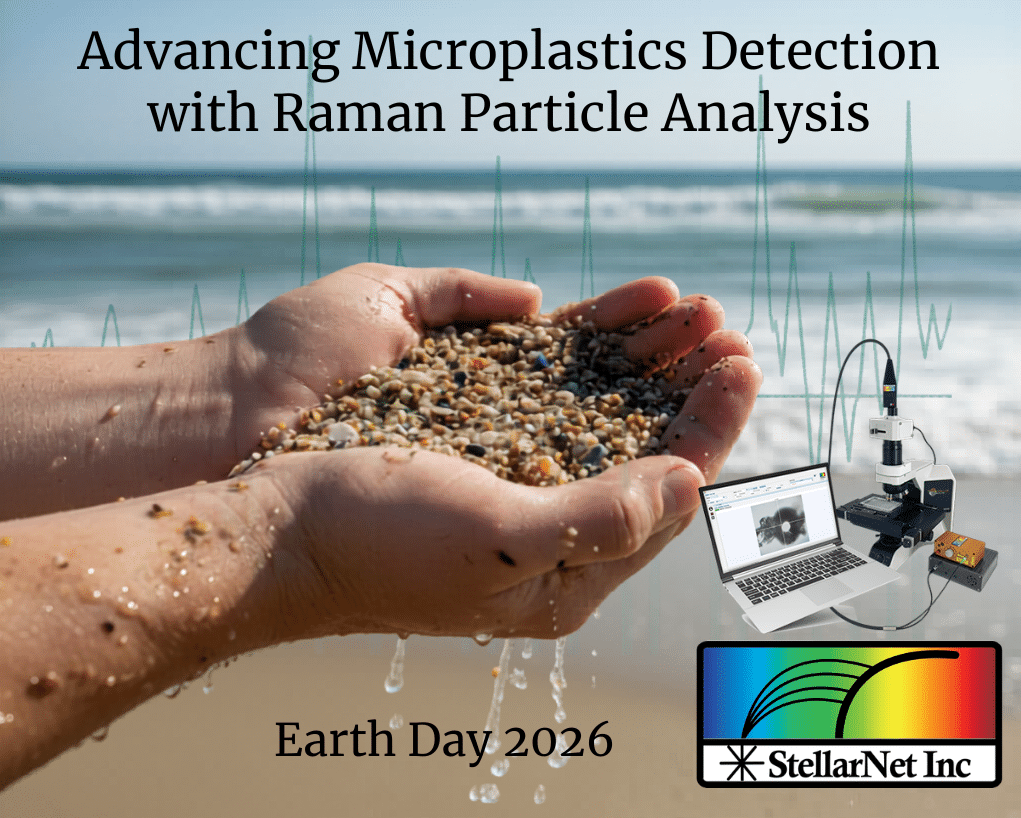
Earth Day 2026: Advancing Microplastics Detection with Raman Particle Analysis
Introduction: A Growing Environmental Challenge As global attention turns toward sustainability and environmental stewardship, microplastics have emerged as one of the most pervasive and least...

2026 April Lyrid Meteor Shower Spectroscopy with StellarNet
The Lyrid meteor shower and spectroscopy intersect in the study of meteors' chemical composition and physical properties. When a meteor from the Lyrid shower enters Earth's atmosphere, it heats up...
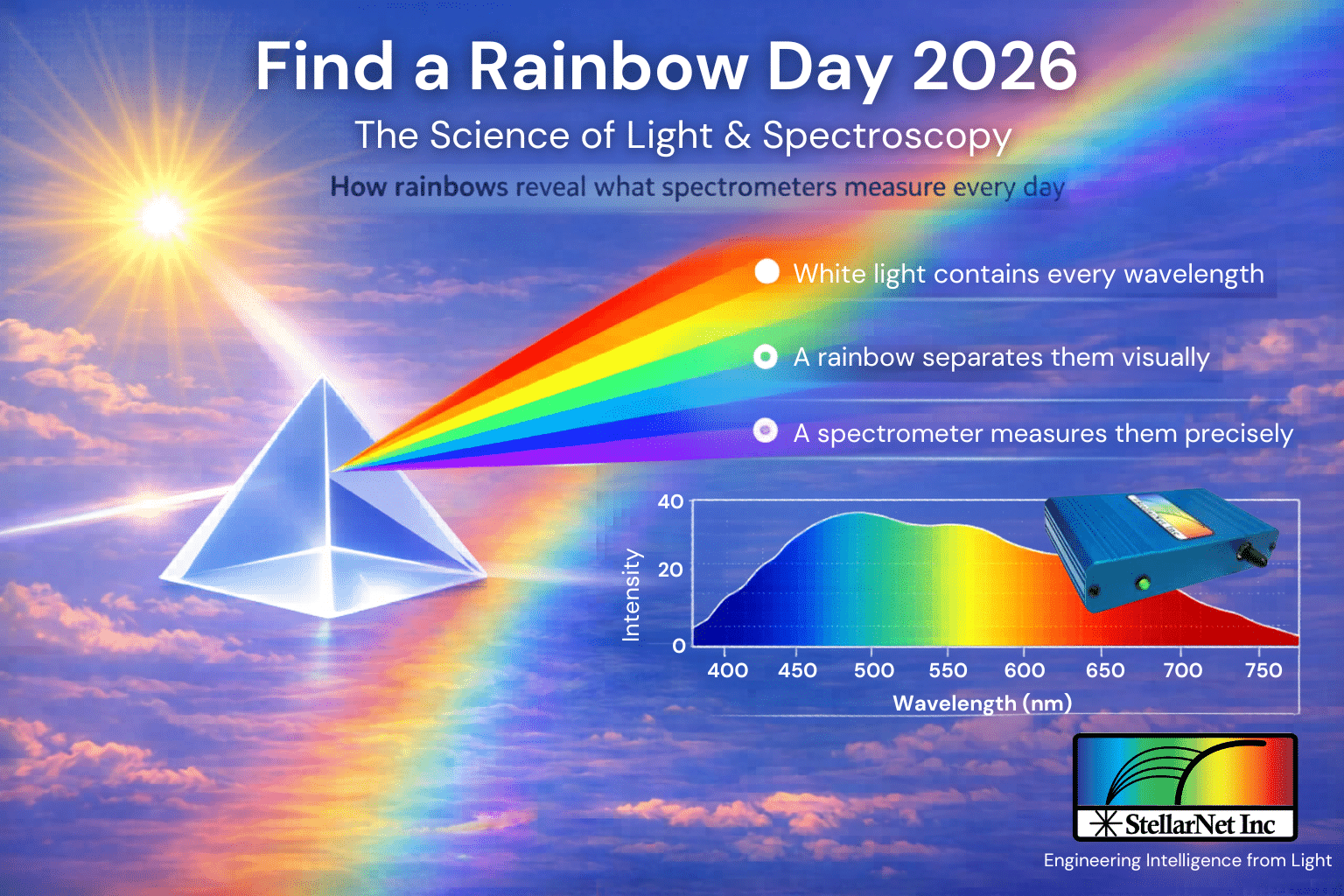
Find a Rainbow Day Spectroscopy
The Science Behind Rainbows Rainbows form when sunlight interacts with water droplets in the atmosphere. As light enters a droplet, it refracts (bends) due to the change in medium from air to water,...