Why Turtle Safe Lighting Matters for Sea Turtle Survival + An Interview with FWC Experts
Artificial lighting along coastlines is a well-documented threat to sea turtle populations. Species such as the loggerhead sea turtle and green sea turtle rely on natural light cues for nesting and hatchling orientation. Disruptions to the spectral composition and intensity of coastal lighting can lead to disorientation, reduced nesting success, and increased mortality. To “shellibrate” World Turtle Day, StellarNet is doing a deep dive into how light measurement, turtle safe lighting, and sea turtle conservation go hand-in-hand.
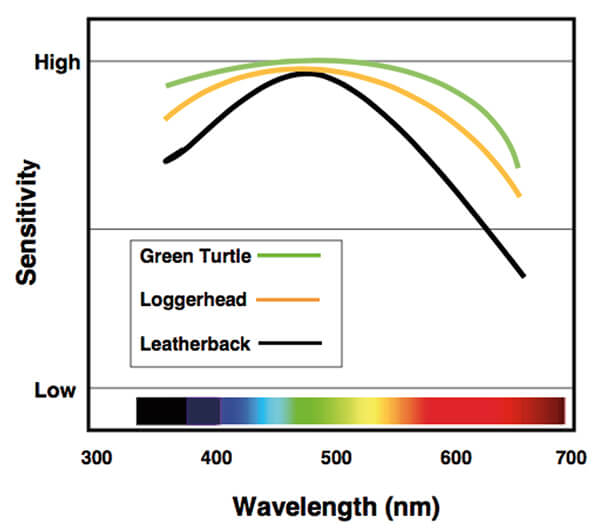
Hatchling sea turtles rely on a hardwired behavior that tells them to move towards the bright, blue horizon. Sea turtles have a visual system that has broad spectral sensitivity – including wavelengths that humans cannot see. Sea turtles are sensitive in the UV (350nm) to green light (~560nm) with a peak sensitivity in the blue-green region (450-550nm). The photoreceptors of sea turtles are specialized for detecting very low light levels.
Why Light Matters
As more artificial lighting is added to shorelines, the disruption to sea turtle nesting increases. This artificial light can cause misorientation and disorientation.
Misorientation is consistent movement in the wrong direction.
Disorientation is non-linear or erratic movement.
These outcomes increase energy expenditure, lengthen the time hatchlings are exposed to predators, and increases the risk of dehydration. Hatchlings already have an extremely low survival rate.
Artificial lighting is not just a nuisance—it is a quantifiable environmental variable that directly impacts reproductive success.
What are the Requirements for Turtle Friendly Lighting?
- Keep it LOW
- Fixtures should be mounted as low as possible
- bulbs must provide the lowest waggage necessary for the needed purpose
- Keep it SHIELDED
- Fixtures must be completely downward directed
- Fixtures must shield the bulb, lamp, or glowing lens from the bench
- Keep it LONG
- Bulbs must produce only long-wavelength light (560nm or greater so amber or red)
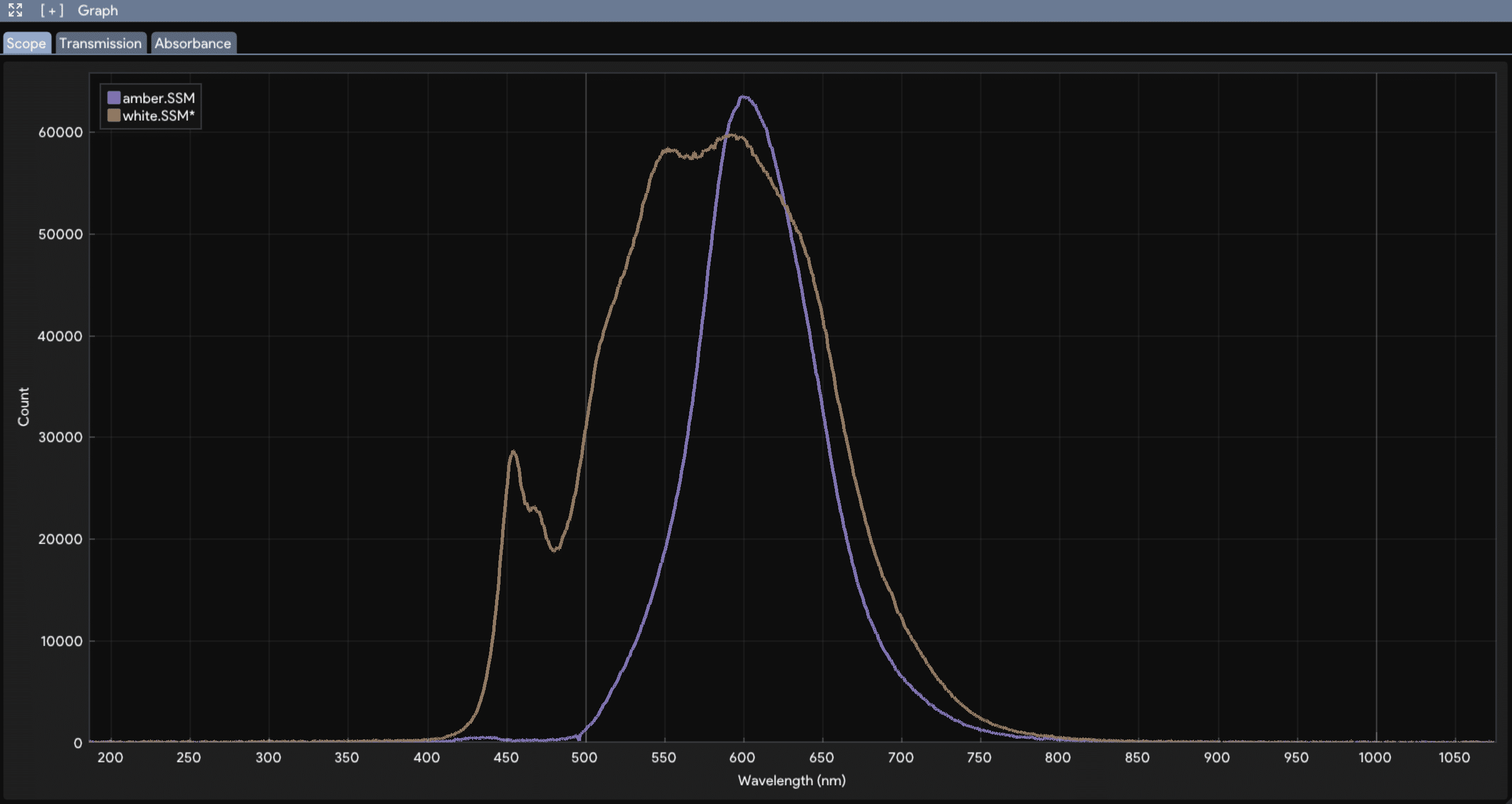
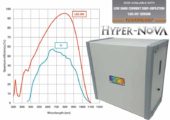
Overlay of spectral output of white LED bulb and amber bulb
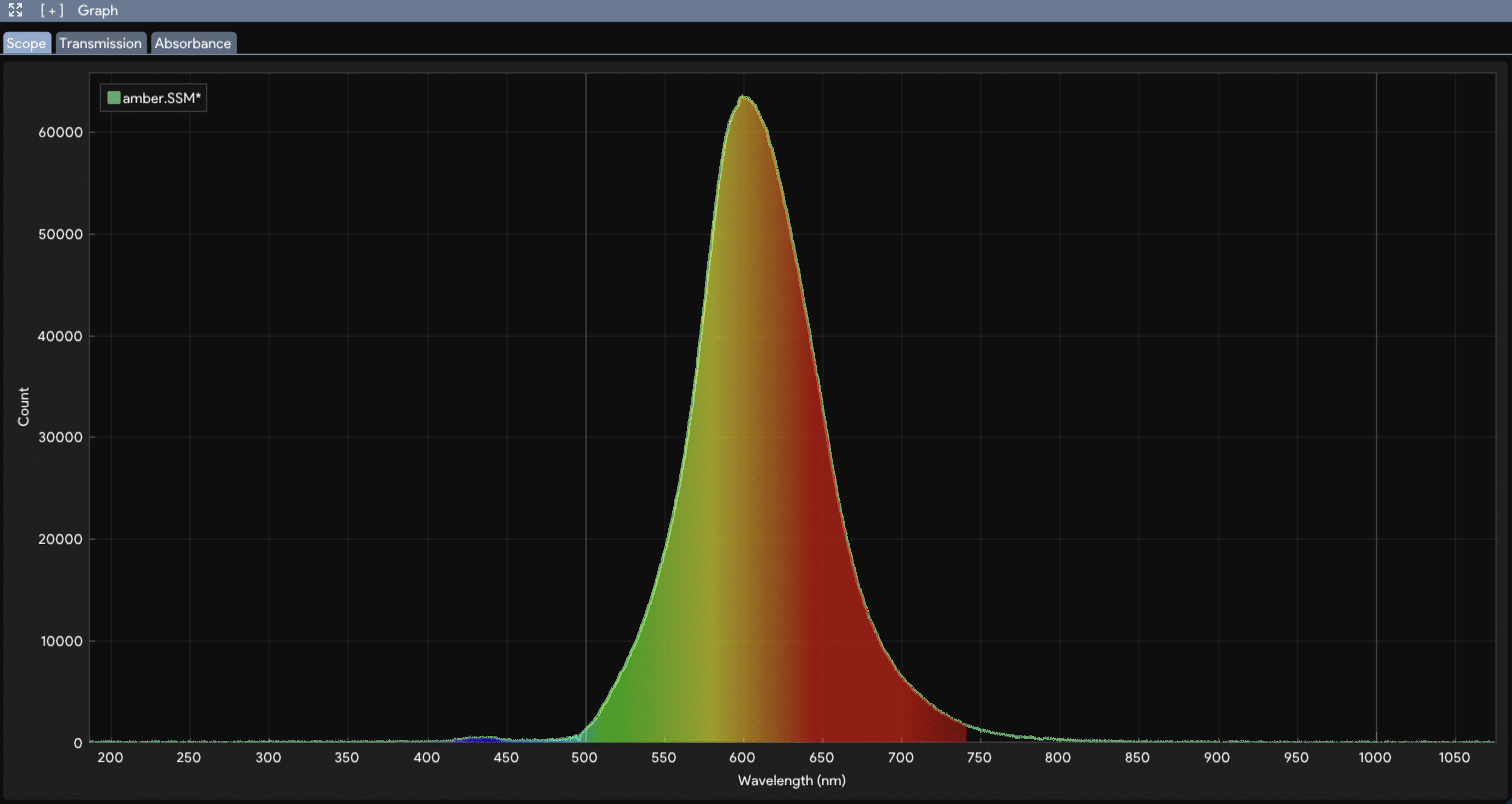
Amber bulb spectral output – notice that the output has little to no blue light
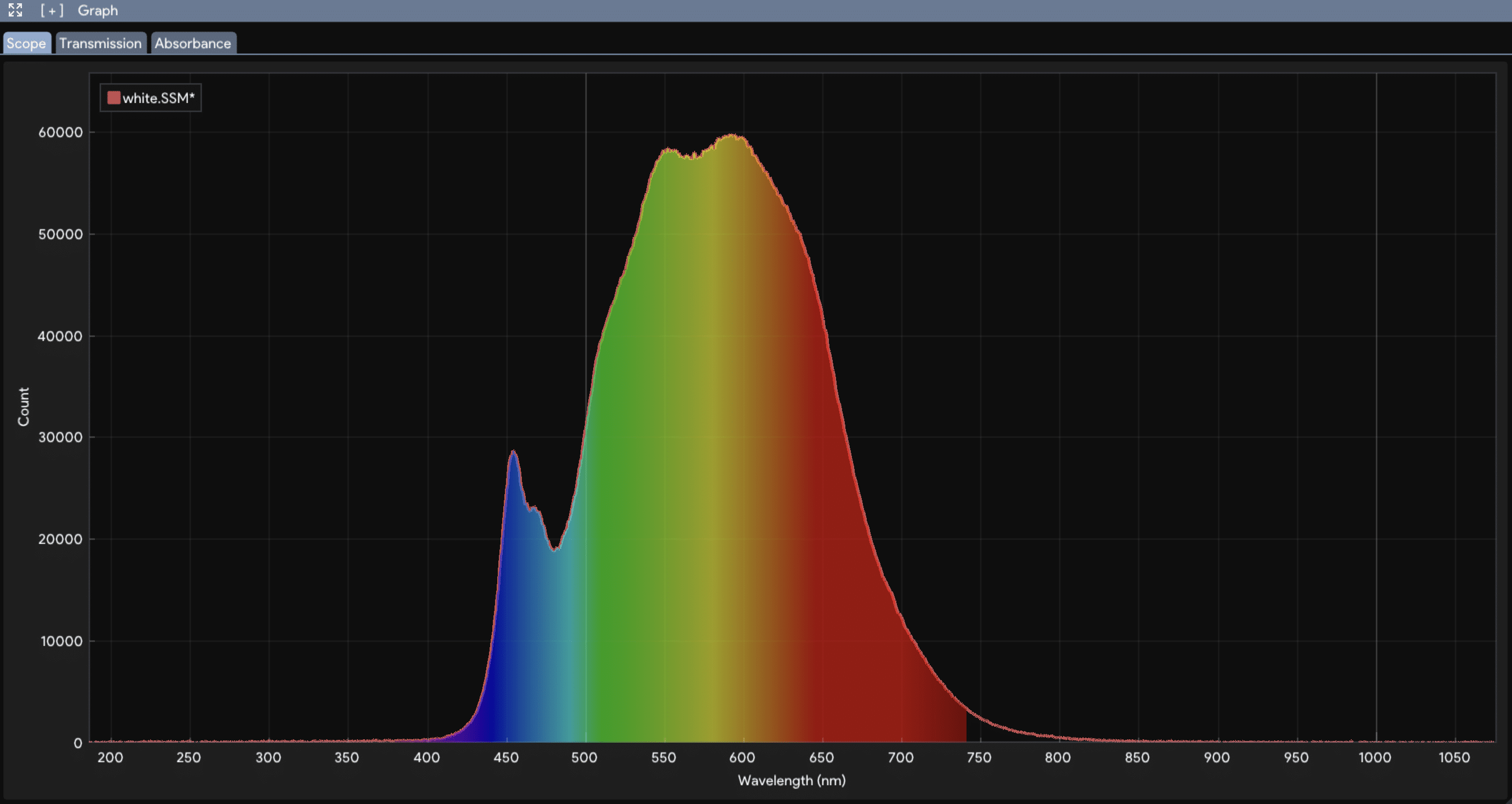
White bulb spectral output
How Spectroscopy Is Applied
A UV-VIS spectrometer, such as the BLACK-Comet can measure the intensity of light across a spectral range that is important to turtles.
- Identify peaks in blue/UV emission
- Quantify compliance with turtle-friendly lighting ordinances
- Compare lighting technologies (LED vs. low-pressure sodium)
- Biologically weighted light analysis
- Spectral data can be post-processed using weighting functions based on sea turtle photoreceptor sensitivity.
Field Measurements in Coastal Environments
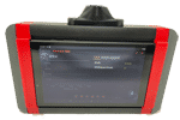
Portable fiber optic spectrometers enable accurate light measurements directly in the field, helping communities better evaluate and manage coastal lighting conditions. Instruments such as the StellarRAD can be used to perform beachfront lighting audits and monitor illumination around sensitive sea turtle nesting sites.
These portable systems also allow users to measure ambient lighting conditions before and after retrofit projects, providing valuable data for assessing compliance, reducing environmental impact, and supporting dark-sky and wildlife protection efforts.
At StellarNet, we’ve been Developing Intelligence from Light for over three decades. Spectroscopy transforms light from a subjective environmental factor into a quantifiable variable. How can StellarNet help you turn light into answers? Reach out today!
Interview with FWC Experts:
StellarNet reached out to the experts at the Florida Fish and Wildlife Conservation Commission to get their expert opinions on how lighting and sea turtle conservation are intertwined.
- Based on your field experience, which wavelengths of light appear most disruptive to sea turtle nesting or hatchling orientation?
- The FWC recommends the use of long wavelength lights sources (e.g., red, orange, amber; wavelengths greater than ~560 nm) as they are the least disruptive to sea turtles compared to short wavelength light sources (e.g., purple, blue, green, white). However, long wavelength light sources are still visible to sea turtles; therefore, we recommend long wavelength lights sources to also be shielded, low mounted, and be mindful about the wattage to minimize impacts to sea turtles. FWC’s Sea Turtle Lighting Guidelines can
help property owners select lighting that minimizes impacts to sea turtles.
- The FWC recommends the use of long wavelength lights sources (e.g., red, orange, amber; wavelengths greater than ~560 nm) as they are the least disruptive to sea turtles compared to short wavelength light sources (e.g., purple, blue, green, white). However, long wavelength light sources are still visible to sea turtles; therefore, we recommend long wavelength lights sources to also be shielded, low mounted, and be mindful about the wattage to minimize impacts to sea turtles. FWC’s Sea Turtle Lighting Guidelines can
- Do you primarily measure light intensity (e.g., lux), or do you capture spectral data as well?
- The FWC’s Sea Turtle Program measures light intensity as well as spectral distribution data.
- What types of lighting sources most commonly create issues (e.g., LEDs, streetlights, residential lighting)?
- Any light source, visible from or adjacent to the beach, that is bright, unshielded, or short wavelength can cause impacts to sea turtles. This can include a variety of fixture types.
- Are modern LED systems improving or worsening conditions for sea turtles?
- As LED technology advances, it can provide the opportunity for manufacturers to design fixtures that align with wildlife lighting research and sea turtle conservation needs. FWC has observed long-wavelength fixtures that meet FWC’s Sea Turtle Lighting Guidelines, local lighting ordinances, and human safety standards. FWC’s Wildlife Lighting Certification Program allows manufacturers to submit fixtures for evaluation against established criteria. Lighting technologies continue to evolve, and improvements in fixture design can help reduce impacts to sea turtles while also addressing human health and safety needs.
- How effective are current “turtle-safe” lighting regulations in practice?
- Lighting that follows FWC’s Sea Turtle Lighting Guidelines can be a great tool in reducing lighting impacts to sea turtles. The FWC’s Sea Turtle Program reviews disorientation data to both identify potential areas that need lighting improvements and areas where compliant lighting is helping to reduce disorientations. Many municipalities have adopted FWC’s Model Lighting Ordinance or developed their own Sea Turtle Lighting Ordinance; this is a great way for local municipalities to make a big impact on sea turtles and help reduce disorientations.
- Where do compliance efforts most often fall short (design, installation, enforcement)?
- For state permit applications, FWC reviews and approves a certified lighting plan for projects. This is a great first step in ensuring lighting that minimizes impacts to sea turtles is approved. If any installed lighting is not included in the approved lighting plan, the state permitting agency works to bring that property into compliance with their approved plan. Many municipalities review local projects for compliance with their local lighting ordinance. Local code enforcement works to ensure those projects are in compliance, as well as, enforce the lighting ordinance on existing properties. As you can see compliance is often a team effort and can involve multiple levels. Educating designers, contractors, property owners, municipalities, manufacturers, and applicants, can help all the pieces work together to minimize lighting impacts to sea turtles. We encourage all municipalities to develop a lighting ordinance or to adopt FWC’s Model Lighting Ordinance and to develop an enforcement process. We understand every municipality is different and has varying capacities for enforcement. If anyone has questions about developing a lighting ordinance or other lighting questions, please reach out to SeaTurtleLighting@MyFWC.com.
- Do you believe current turtle-safe lighting standards are scientifically sufficient, or are they primarily practical compromises?
- The FWC’s Sea Turtle Program uses the best available science to provide lighting recommendations and develop lighting guidelines. FWC staff review lighting and nesting data, work to identify research needs, and conduct research, when possible, to help the science keep up with the advancing lighting technology. FWC also works to balance minimizing impacts to sea turtles with meeting human safety standards.
- If you could redesign coastal lighting guidelines from scratch, what would you change?
- One of the greatest challenges is retrofitting existing coastal development to minimize lighting impacts to sea turtles. Earlier development and implementation of sea turtle lighting guidelines and long-wavelength lighting technologies across Florida’s coastlines likely would have reduced impacts over time. Continued collaboration among researchers, manufacturers, local governments, property owners, and regulatory agencies remains important for improving lighting practices while accommodating human use and safety needs.
Interested in our SpectroRadiometers?
Tell us about your application.
"*" indicates required fields