
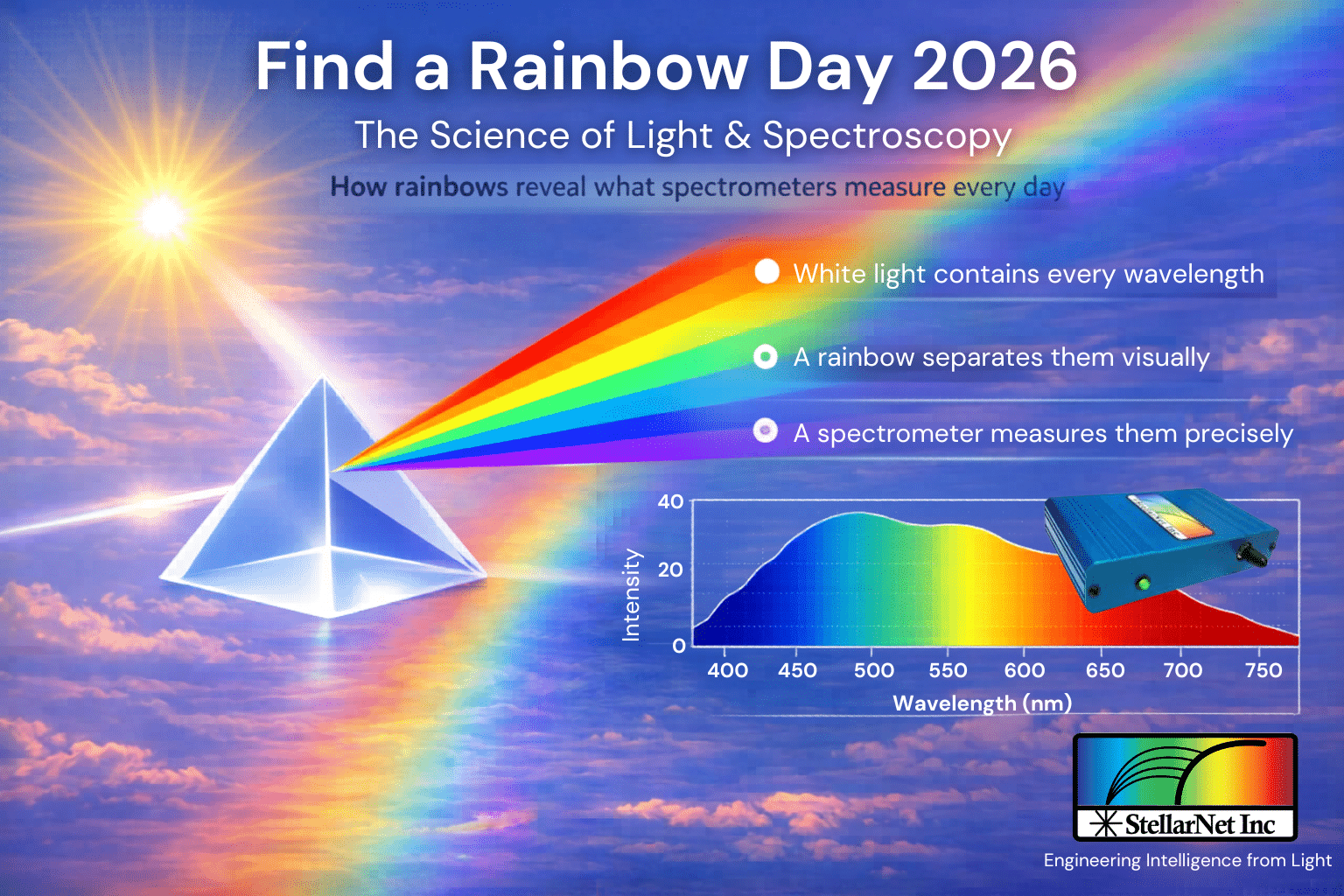
The Science Behind Rainbows
The position of a rainbow depends on the observer’s perspective and the location of the sun. Typically, rainbows appear when the sun is behind the observer and the light is refracted at an angle of about 42 degrees. If conditions are just right, a double rainbow can occur, with the second, fainter arc appearing outside the primary one due to an additional internal reflection within the raindrop.
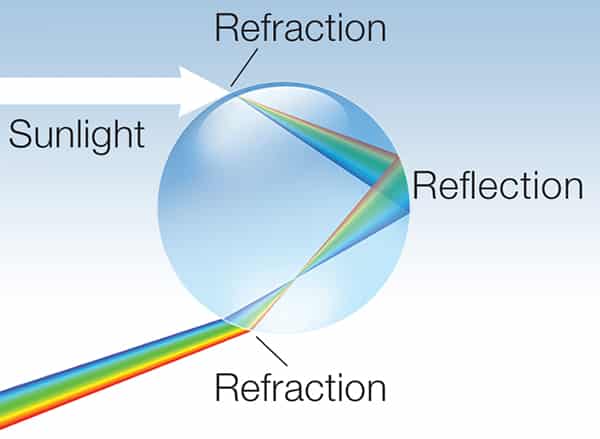
Cite: Ask BOM: how do rainbows form?
Spectroscopy and Rainbows
This technique is used across various fields, from environmental analysis and chemical identification to food safety and pharmaceutical research. Just as a rainbow reveals the different colors hidden within white light, a spectrometer unveils critical information about the composition of substances.
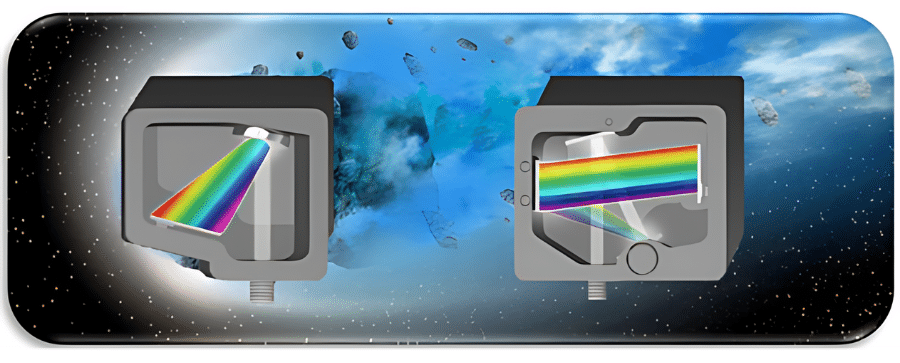
Concave-grating spectrometer vs. Czerny-turner
Fun ways to celebrate Find a Rainbow Day
Experiment with light: Use a prism or diffraction grating to split light into its spectrum, replicating the rainbow effect indoors.
Explore spectroscopy: If you have access to a spectrometer, try analyzing different light sources and materials to see their unique spectral fingerprints.

Happy National Find a Rainbow Day!
At StellarNet, we celebrate the beauty of light and the science that helps us understand it. Whether in the sky or in the lab, rainbows remind us of the incredible insights that spectroscopy can provide. Whether it’s a photo of a rainbow or a spectrum captured with a StellarNet spectrometer, share your discoveries on social media and tag us!