Spectroscopy Applications
Explore how researchers, manufacturers, and quality-control laboratories use StellarNet spectrometers to solve real-world measurement challenges. Our compact UV-Vis, VIS-NIR, NIR, and Raman spectroscopy systems support applications across food safety, pharmaceuticals, advanced materials, thin films, biomedical research, environmental monitoring, industrial process analysis, radiometry, and space science.
Browse the application areas below to discover customer research, technical articles, spectroscopy methods, and practical solutions for absorbance, transmission, reflectance, fluorescence, Raman, radiometric, and chemometric analysis.
Key Application Areas
Food Safety & Quality
Advanced & quantum materials
Thin Films & Optical Coatings
Pharmaceuticals & Nutraceuticals
Biomedical & Life Sciences
Environmental & Microplastics
Industrial & Process Analysis
Lighting, Displays & Radiometry
Featured Spectroscopy Applications -
Astronomy, Space & Remote Sensing
Astronomy spectroscopy gives researchers a way to study light from objects and environments far beyond the laboratory. StellarNet systems support astronomical spectroscopy for research into stars, planets, meteors, and atmospheric phenomena. Spectral measurements can reveal information that cannot be seen through imaging alone. Compact instruments also open new possibilities for space spectroscopy and CubeSat missions where size and flexibility matter. From meteor and aurora research to remote sensing and educational astronomy, StellarNet provides accessible spectroscopy tools for exploring our planet and the universe beyond it.
Astronomy, Space & Remote Sensing
Wildlife & Ecology Spectroscopy
Spectroscopy provides powerful tools for studying how animals perceive light, display coloration, communicate, and interact with their environments. From ultraviolet vision in birds and insects to underwater light conditions in marine ecosystems, UV-Vis-NIR spectroscopy helps researchers characterize the optical properties of biological structures and natural habitats.
Wildlife & Ecology Spectroscopy
Looking for something else?
Optical Interference
Optical Interference Optical interference occurs when light reflected from multiple thin film interfaces combines to produce constructive and destructive interference patterns. These interference...
Multilayer Thin Films
Multilayer Thin Films Many advanced optical and electronic devices contain multiple thin film layers, each engineered to perform a specific optical or electrical function. These multilayer stacks...
Thin Film Modeling
Thin Film Modeling Thin film modeling is the process of mathematically simulating how light interacts with one or more thin film layers. By comparing measured spectra with theoretical optical...
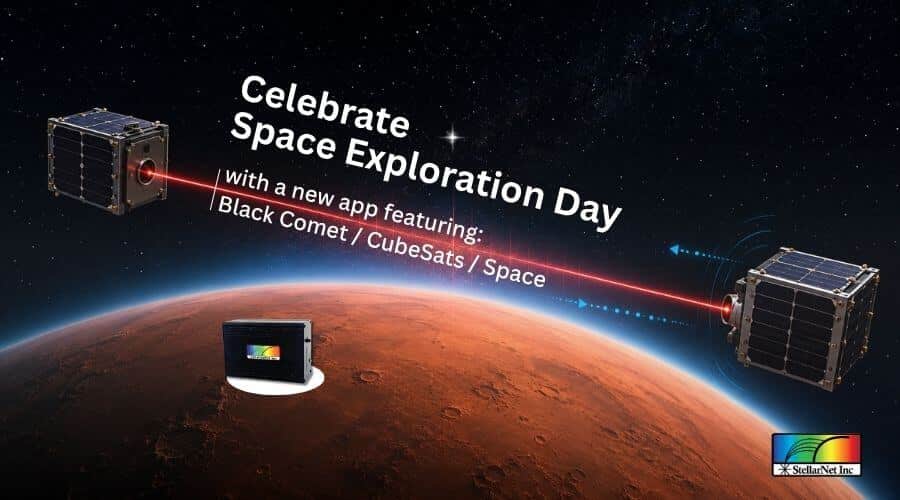
Space Exploration Day
View our Spectrometer Lineup Spectrometer Learning Center Research Spotlight : Enabling the Next Generation of Planetary Atmospheric Spectroscopy Space exploration has entered a new era of compact,...
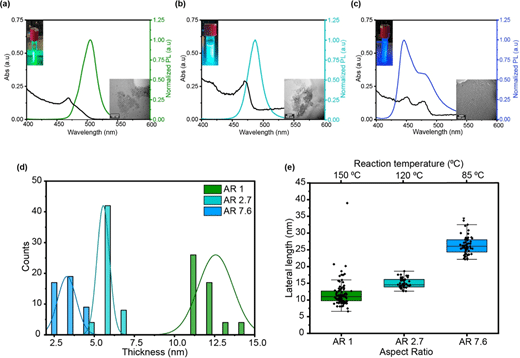
Horizontally Aligned Dipole Emission through Solvent Controlled Fusing of Perovskite Nanocubes and Nanoplates into 1D Nanowires
Mounika Dudala, Leonna Gaither, Carissa N. Eisler Abstract Colloidal lead halide perovskite nanocrystals (NCs) are a promising class of materials for light-emitting applications, yet their external...
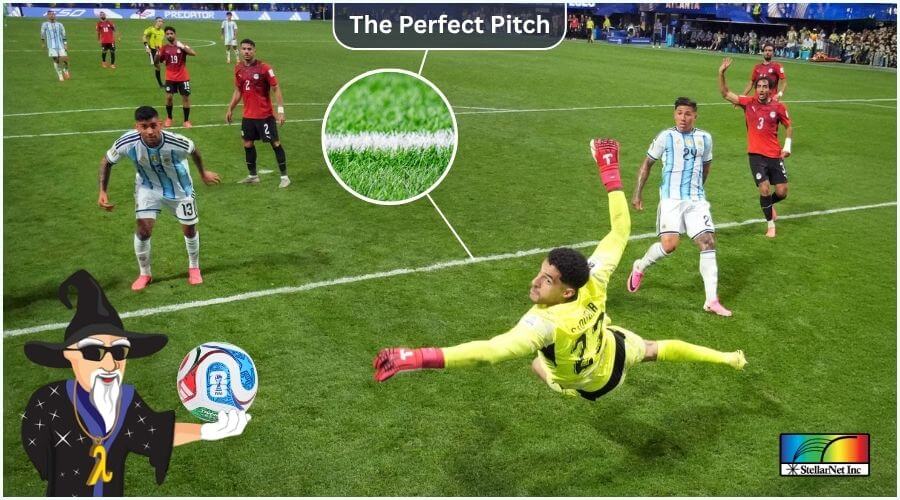
Spectroscopy and the Perfect Pitch
View Radiometers Radiometers Learning Center Before the first whistle blows at the soccer match, spectroscopy is already at work. By measuring the light reaching the turf canopy, researchers using...