Spectroscopy Applications
Explore how researchers, manufacturers, and quality-control laboratories use StellarNet spectrometers to solve real-world measurement challenges. Our compact UV-Vis, VIS-NIR, NIR, and Raman spectroscopy systems support applications across food safety, pharmaceuticals, advanced materials, thin films, biomedical research, environmental monitoring, industrial process analysis, radiometry, and space science.
Browse the application areas below to discover customer research, technical articles, spectroscopy methods, and practical solutions for absorbance, transmission, reflectance, fluorescence, Raman, radiometric, and chemometric analysis.
Key Application Areas
Food Safety & Quality
Advanced & quantum materials
Thin Films & Optical Coatings
Pharmaceuticals & Nutraceuticals
Biomedical & Life Sciences
Environmental & Microplastics
Industrial & Process Analysis
Lighting, Displays & Radiometry
Featured Spectroscopy Applications -
Astronomy, Space & Remote Sensing
Astronomy spectroscopy gives researchers a way to study light from objects and environments far beyond the laboratory. StellarNet systems support astronomical spectroscopy for research into stars, planets, meteors, and atmospheric phenomena. Spectral measurements can reveal information that cannot be seen through imaging alone. Compact instruments also open new possibilities for space spectroscopy and CubeSat missions where size and flexibility matter. From meteor and aurora research to remote sensing and educational astronomy, StellarNet provides accessible spectroscopy tools for exploring our planet and the universe beyond it.
Astronomy, Space & Remote Sensing
Wildlife & Ecology Spectroscopy
Spectroscopy provides powerful tools for studying how animals perceive light, display coloration, communicate, and interact with their environments. From ultraviolet vision in birds and insects to underwater light conditions in marine ecosystems, UV-Vis-NIR spectroscopy helps researchers characterize the optical properties of biological structures and natural habitats.
Wildlife & Ecology Spectroscopy
Looking for something else?
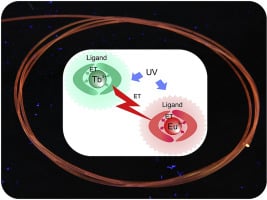
Spectroscopic investigation of Tb(tmhd)3 – Eu(tmhd)3 co-doped poly(methyl methacrylate) fibre
P Miluski, M Kochanowicz, J Zmojda, T Ragin… - Optical Materials, 2018 Abstract The article presents energy transfer observed in poly (methyl methacrylate) co-doped by trivalent terbium and europium...
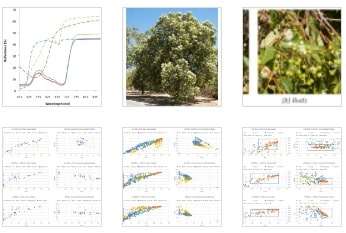
Simple remote sensing detection of Corymbia calophylla flowers using common 3 –band imaging sensors
T Campbell, P Fearns - Remote Sensing Applications: Society and …, 2018 Abstract With Apis mellifera (the European Honey Bee) having an average forage radius of less than one kilometre from their...

Thanksgiving Application Note: Predicting Fat Content in Turkey using NIR Spectroscopy
Why Turkey on Thanksgiving? These tasty birds are large enough that they can feed a table full of hungry family, and unlike chickens or cows, they don't serve much utilitarian purpose like laying...
Technical Note – Raman Fundamentals for Miniature Spectrometers
Raman Spectroscopy in the Classroom Using Raman Spectroscopy to Detect Art Forgeries Exploring Chemical Bonding Using Raman Spectroscopy Modular Raman Systems View Sample Spectra 532 – 785 – 1064...

Customer Spotlight: StellarNet partners with Brewmetrix to create an in-house QC device for brewers
Bringing the QC Lab into the Brewery Brewmetrix is on a mission to eliminate the hassle and chemicals involved in the quality control (QC) of the brewing process. “The vision is to have a...

The Importance of Calibrated Uniform Light Sources in Imaging Array Quality Control
StellarNet, Inc. Tampa, Fl USA 10/15/2018 Array Detector Defects and Nonuniformities: All array detectors, both 1D and 2D, will inevitably suffer from defects and pixel-to-pixel nonuniformities due...