Spectroscopy Applications
Explore how researchers, manufacturers, and quality-control laboratories use StellarNet spectrometers to solve real-world measurement challenges. Our compact UV-Vis, VIS-NIR, NIR, and Raman spectroscopy systems support applications across food safety, pharmaceuticals, advanced materials, thin films, biomedical research, environmental monitoring, industrial process analysis, radiometry, and space science.
Browse the application areas below to discover customer research, technical articles, spectroscopy methods, and practical solutions for absorbance, transmission, reflectance, fluorescence, Raman, radiometric, and chemometric analysis.
Key Application Areas
Food Safety & Quality
Advanced & quantum materials
Thin Films & Optical Coatings
Pharmaceuticals & Nutraceuticals
Biomedical & Life Sciences
Environmental & Microplastics
Industrial & Process Analysis
Lighting, Displays & Radiometry
Featured Spectroscopy Applications -
Astronomy, Space & Remote Sensing
Astronomy spectroscopy gives researchers a way to study light from objects and environments far beyond the laboratory. StellarNet systems support astronomical spectroscopy for research into stars, planets, meteors, and atmospheric phenomena. Spectral measurements can reveal information that cannot be seen through imaging alone. Compact instruments also open new possibilities for space spectroscopy and CubeSat missions where size and flexibility matter. From meteor and aurora research to remote sensing and educational astronomy, StellarNet provides accessible spectroscopy tools for exploring our planet and the universe beyond it.
Astronomy, Space & Remote Sensing
Wildlife & Ecology Spectroscopy
Spectroscopy provides powerful tools for studying how animals perceive light, display coloration, communicate, and interact with their environments. From ultraviolet vision in birds and insects to underwater light conditions in marine ecosystems, UV-Vis-NIR spectroscopy helps researchers characterize the optical properties of biological structures and natural habitats.
Wildlife & Ecology Spectroscopy
Looking for something else?
StellarNet Expands Semiconductor Thin-Film Measurement Systems
StellarNet Expands Semiconductor Thin-Film Measurement Systems with New TF-Micro™ Thin-Film Measurement Microscope TF-AM™ Automated Mapping and Surface Quality Verification ™ ...
StellarNet Expands Solar & Photovoltaic Thin-Film Measurement Systems
StellarNet Expands Solar & Photovoltaic Thin-Film Measurement Systems with New TF-Micro™ Thin-Film Measurement MicroscopeTF-AM™Automated Mapping and Surface Quality...
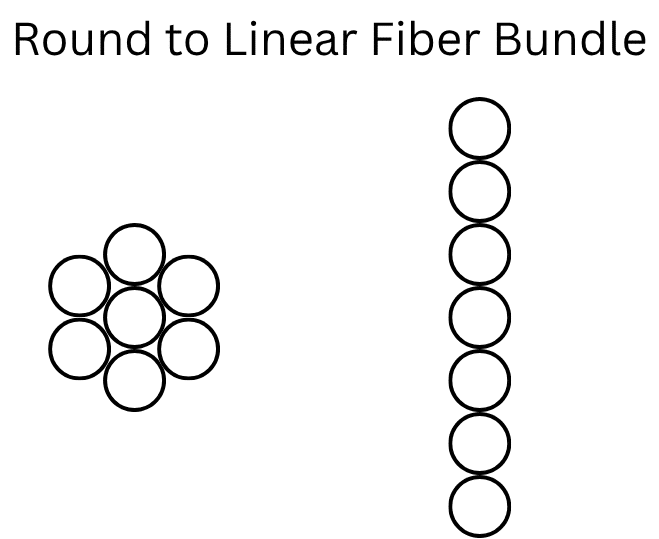
Single Fiber vs. Linear Fiber Bundle for Spectroscopy | Light Throughput Comparison
Comparison of Single-Fiber Cable vs. Linear Fiber Bundle Fiber optic cables are a critical component of spectroscopy systems - directly influencing signal strength, measurement repeatability, and...
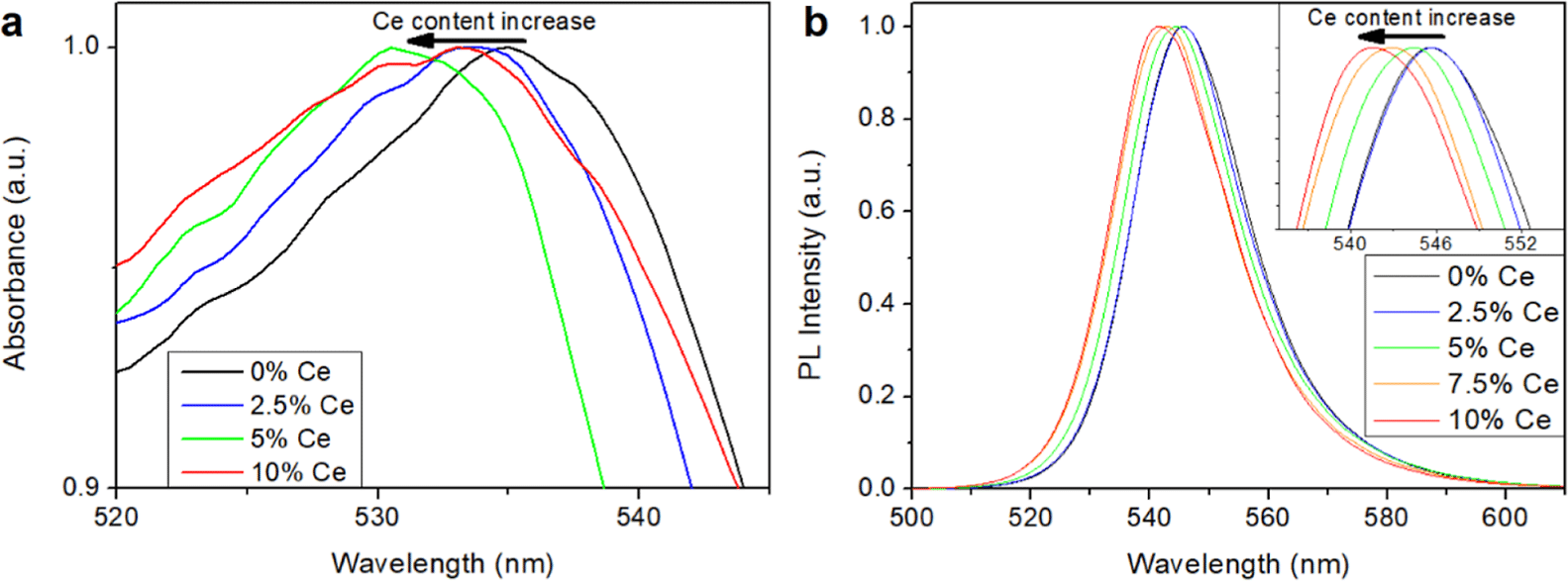
Photoluminescence Quantum Yield Enhancement of FAPbBr3 Thin Films via Ce Doping
Dmytro Vorontsov, Martin Ledinský, Aleš Vlk, Robert Hlaváč, Lucie Landová, Tereza Košutová, Karel Knížek, Anna Fučíková, Nada Mrkyvkova, Peter Siffalovic, Jan Valenta Abstract The photoluminescence...
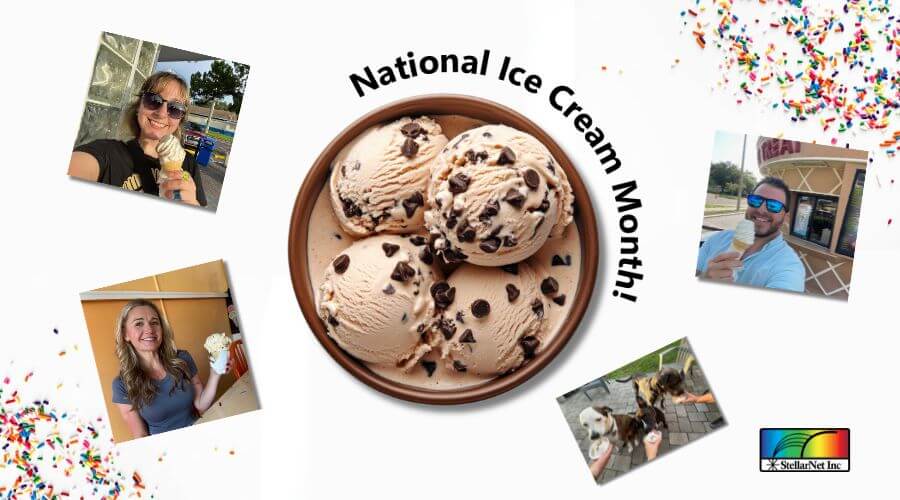
National Ice Cream Month
View Industrial Analyzers Industrial Analyzers Learning Center Near-Infrared (NIR) spectroscopy (NIR Spectrometers) is a valuable tool for quality control in the production of soft serve ice cream...
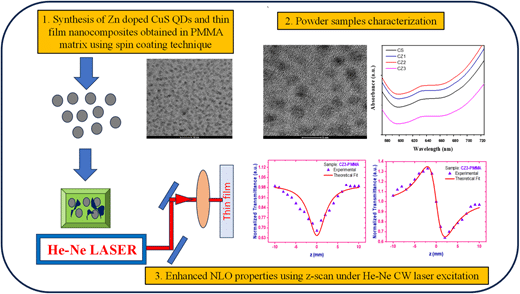
High thermal nonlinearity in thin films of Zn-doped CuS QDs dispersed in a PMMA matrix for NLO applications
G. G. Muley; Y. S. Tamgadge; P. P. Gedam; R. P. Ganorkar Abstract We report improved thermally stimulated third-order nonlinear optical coefficients (nonlinear refraction and nonlinear absorption)...