Spectroscopy Applications
Explore how researchers, manufacturers, and quality-control laboratories use StellarNet spectrometers to solve real-world measurement challenges. Our compact UV-Vis, VIS-NIR, NIR, and Raman spectroscopy systems support applications across food safety, pharmaceuticals, advanced materials, thin films, biomedical research, environmental monitoring, industrial process analysis, radiometry, and space science.
Browse the application areas below to discover customer research, technical articles, spectroscopy methods, and practical solutions for absorbance, transmission, reflectance, fluorescence, Raman, radiometric, and chemometric analysis.
Key Application Areas
Food Safety & Quality
Advanced & quantum materials
Thin Films & Optical Coatings
Pharmaceuticals & Nutraceuticals
Biomedical & Life Sciences
Environmental & Microplastics
Industrial & Process Analysis
Lighting, Displays & Radiometry
Featured Spectroscopy Application –
Astronomy, Space & Remote Sensing
Astronomy spectroscopy gives researchers a way to study light from objects and environments far beyond the laboratory. StellarNet systems support astronomical spectroscopy for research into stars, planets, meteors, and atmospheric phenomena. Spectral measurements can reveal information that cannot be seen through imaging alone. Compact instruments also open new possibilities for space spectroscopy and CubeSat missions where size and flexibility matter. From meteor and aurora research to remote sensing and educational astronomy, StellarNet provides accessible spectroscopy tools for exploring our planet and the universe beyond it.
Astronomy, Space & Remote Sensing
Looking for something else?
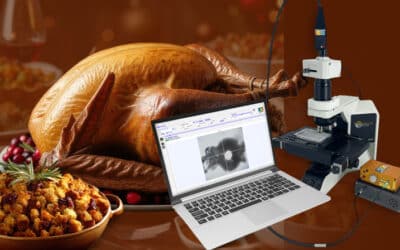
A Spectral Feast: StellarNet’s Thanksgiving Spectroscopy Special
Food Quality Inspection This Thanksgiving, StellarNet is serving up science with a side of flavor! Our new StellarScope Raman Particle Analyzer helps food manufacturers ensure every batch of bread,...
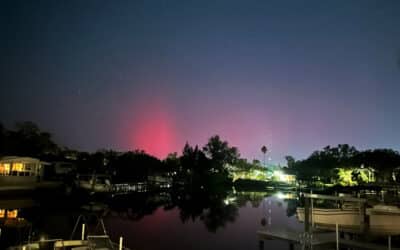
Aurora Spectroscopy with StellarNet
Recent solar storms have transformed skies across the country, pushing dazzling auroras far beyond their usual reach—even into Florida. On November 11th, long-exposure photography captured vibrant...
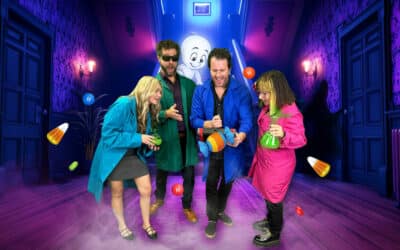
Spectroscopy of the Haunted Laboratory—Casper the Spectral Scientist
Using Spectroscopy to ensure a SAFE and FUN Halloween🎃See how the StellarNet Gang and Casper the Spectral Scientist leverage spectroscopy for Halloween. Episode 1: A Halloween Candy...
Characterizing Graphene with Cost-effective Raman Systems
Stephanie Boxel, StellarNet, Inc. Tampa Fl, USA With an explosion of scientific interest in graphene based material for its incredible electronic, optical, and physical properties; it became clear...
The SpectraWizard’s Spectroscopy Application Challenge Results 2025
The SpectraWizard’s Spectroscopy Application Challenge has come to a close! 🌍✨ Spectroscopists from across the globe went head-to-head for a shot at $5,000 in StellarCash. We’re...

Back to School Special 2025- FREE Spectrometer Promotion
Yes, your calendar is correct - it's time to go back to school! While you’ve been enjoying summer vacation, the StellarNet team has been busy testing new exciting products in preparation for all of...