Spectroscopy Applications
Explore how researchers, manufacturers, and quality-control laboratories use StellarNet spectrometers to solve real-world measurement challenges. Our compact UV-Vis, VIS-NIR, NIR, and Raman spectroscopy systems support applications across food safety, pharmaceuticals, advanced materials, thin films, biomedical research, environmental monitoring, industrial process analysis, radiometry, and space science.
Browse the application areas below to discover customer research, technical articles, spectroscopy methods, and practical solutions for absorbance, transmission, reflectance, fluorescence, Raman, radiometric, and chemometric analysis.
Key Application Areas
Food Safety & Quality
Advanced & quantum materials
Thin Films & Optical Coatings
Pharmaceuticals & Nutraceuticals
Biomedical & Life Sciences
Environmental & Microplastics
Industrial & Process Analysis
Lighting, Displays & Radiometry
Featured Spectroscopy Application –
Astronomy, Space & Remote Sensing
Astronomy spectroscopy gives researchers a way to study light from objects and environments far beyond the laboratory. StellarNet systems support astronomical spectroscopy for research into stars, planets, meteors, and atmospheric phenomena. Spectral measurements can reveal information that cannot be seen through imaging alone. Compact instruments also open new possibilities for space spectroscopy and CubeSat missions where size and flexibility matter. From meteor and aurora research to remote sensing and educational astronomy, StellarNet provides accessible spectroscopy tools for exploring our planet and the universe beyond it.
Astronomy, Space & Remote Sensing
Looking for something else?
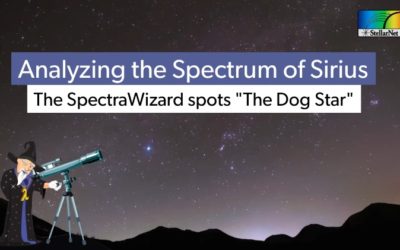
Analyzing the Spectrum of Sirius: SpectraWizard Spots “The Dog Star”
The next stop on the SpectraWizard's exploration of the Universe is Sirius: The Dog Star. Found in the Constellation Canis Major, Sirius is always easy to find because it is the sky's brightest...
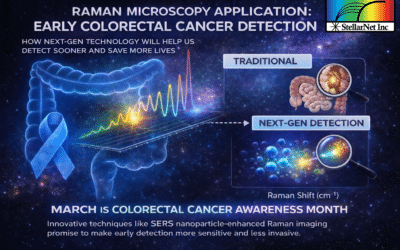
Raman Microscopy in Early Colorectal Cancer Detection
Colorectal cancer remains one of the most common malignancies worldwide, and early detection is key to improving patient outcomes. Traditional colonoscopy methods, while effective, are invasive and...
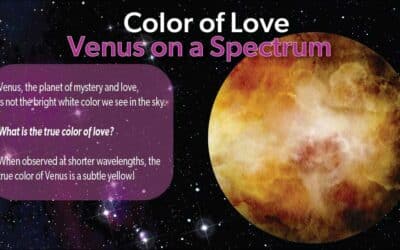
Color of Love: Venus on a Spectrum
To the human eye, Venus appears as white but it's true colors are actually eclipsed by the Sun's light. If you use a far ultraviolet camera/spectrograph, you can capture the true color of the...
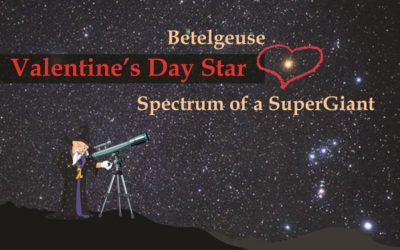
Analyzing the Spectrum of Betelgeuse the Valentine’s Day Star
The SpectraWizard begins his quest to explore the Universe and "Develop Intelligence from Light" by taking a look at Betelgeuse, the Valentine's Day star. The SpectraWizard is a bit of a romantic...
2025 Winter Spectroscopy Special – Analyzing Holiday LEDs, Lasers & Lighting
Season’s Greetings from the SpectraWizard and the StellarNet Team!It’s that magical time of year when lights twinkle, lasers glow, and displays shimmer in every spectral color—and we couldn’t resist...
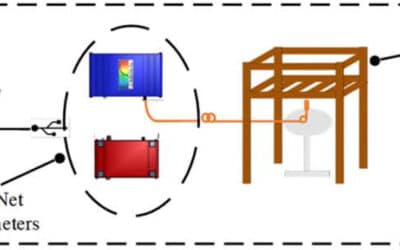
Solar Simulator Prototype with Halogen and Light-Emitting Diode Sources
Gustavo P. C. da Cruz, Gabriel L. Barreto, Luis A. Gómez-Malagón, Ricardo A. de Lima, and Caio V. P. Vital Published: August 2025 | Journal of Solar Energy Engineering AbstractTest PV Devices...