
Spectroscopy Applications
Explore how researchers, manufacturers, and quality-control laboratories use StellarNet spectrometers to solve real-world measurement challenges. Our compact UV-Vis, VIS-NIR, NIR, and Raman spectroscopy systems support applications across food safety, pharmaceuticals, advanced materials, thin films, biomedical research, environmental monitoring, industrial process analysis, radiometry, and space science.
Browse the application areas below to discover customer research, technical articles, spectroscopy methods, and practical solutions for absorbance, transmission, reflectance, fluorescence, Raman, radiometric, and chemometric analysis.
Key Application Areas
Food Safety & Quality
Advanced & quantum materials
Thin Films & Optical Coatings
Pharmaceuticals & Nutraceuticals
Biomedical & Life Sciences
Environmental & Microplastics
Industrial & Process Analysis
Lighting, Displays & Radiometry
Featured Spectroscopy Applications -
Astronomy, Space & Remote Sensing
Astronomy spectroscopy gives researchers a way to study light from objects and environments far beyond the laboratory. StellarNet systems support astronomical spectroscopy for research into stars, planets, meteors, and atmospheric phenomena. Spectral measurements can reveal information that cannot be seen through imaging alone. Compact instruments also open new possibilities for space spectroscopy and CubeSat missions where size and flexibility matter. From meteor and aurora research to remote sensing and educational astronomy, StellarNet provides accessible spectroscopy tools for exploring our planet and the universe beyond it.
Astronomy, Space & Remote Sensing
Wildlife & Ecology Spectroscopy
Spectroscopy provides powerful tools for studying how animals perceive light, display coloration, communicate, and interact with their environments. From ultraviolet vision in birds and insects to underwater light conditions in marine ecosystems, UV-Vis-NIR spectroscopy helps researchers characterize the optical properties of biological structures and natural habitats.
Wildlife & Ecology Spectroscopy
Looking for something else?
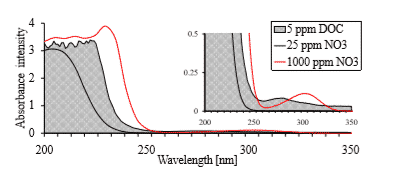
Continuous in-situ monitoring of nitrate concentration in soils–a key for groundwater protection from nitrate pollution
E Yeshnoa, S Arnonb, O Dahana Abstract Lack of real-time information on nutrient availability in cultivated soils inherently leads to excess application of fertilizers in agriculture. As a result,...
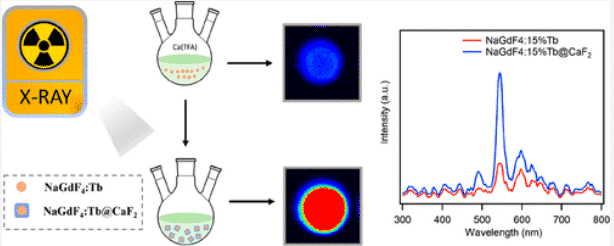
PEGylated β-NaGdF4/Tb@CaF2 Core/Shell Nanophosphors for Enhanced Radioluminescence and Folate Receptor Targeting
Y Ren, H Winter, J Rosch, K Jung, A Duross, M Landry… - ACS Applied Nano …, 2019 Abstract Lanthanide-doped nanocrystals have been examined extensively as contrast agents for various optical...
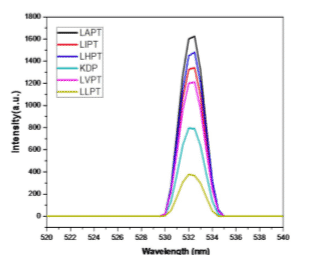
Structural, optical, thermal, dielectric and mechanical studies of a new organic NLO material: L-isoleucinium p-toluenesulfonate monohydrate (LIPT)
M Suresh, SA Bahadur, S Athimoolam - Materials Science-Poland, 2019 Abstract In the present work, a new organic second order NLO material: L-isoleucinium p-toluenesulfonate monohydrate (LIPT) is...
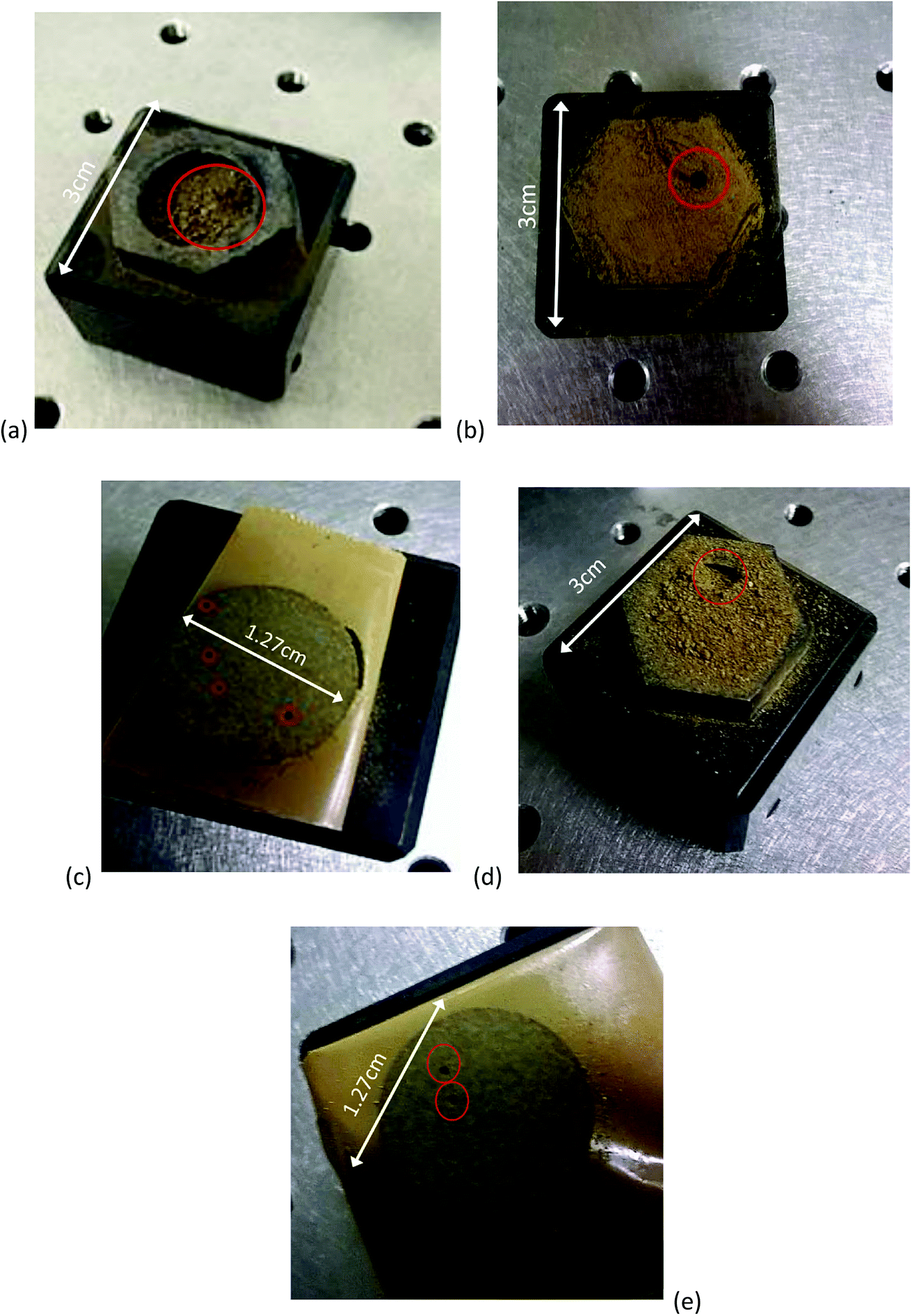
Effects of sample pretreatment and particle size on the determination of nitrogen in soil by portable LIBS and potential use on robotic-borne remote Martian and agricultural soil analysis systems
XT Yan, KM Donaldson, CM Davidson, Y Gao, H Wu… - RSC Advances, 2018 Abstract Field determination of nitrogen in soil is of interest for both terrestrial and Martian applications. Improved...

Hydrogen sulfide splitting using solar energy and hematite photo-anodes
SV Kuznetsov, AS Nizamutdinov, MN Mayakova… Abstract The forecast for the development of renewable energy [1], conducted by Fraunhofer ISE, showed that by 2030, humanity will reach the terawatt...
Innate resistance of PSII efficiency to sunlight stress is not an advantage for cyanobacteria compared to eukaryotic phytoplankton
L Beecraft, SB Watson, REH Smith - Aquatic Ecology Abstract The effects of acute solar radiation stress on photosynthetic efficiency in freshwater unialgal cultures representing three phytoplankton...