What is Signal to Noise Ratio?
The signal to noise ratio, often abbreviated S/N, is exactly what it sounds like; it’s the ratio of the magnitude of the signal to the magnitude of the noise. Experiments need a large S/N to be able to distinguish features in the signal from the noise. If the S/N is...What is Dark Spectrum (concept)?
The dark spectrum of a spectrometer is a spectrum taken with no light hitting the detector. It captures the shape of the baseline offset. It can be used to adjust sample spectra for non-uniformities in the detector pixels. The SpectraWiz software is able to do this...What is a Spectrograph?
What is a Spectrograph? A spectrograph is an optical device that separates light into its individual wavelengths, allowing the spectral content of a light source or sample to be analyzed. It is a key component of a spectrometer and is responsible for dispersing...What is Raman Spectroscopy?
What is Raman Spectroscopy? Raman spectroscopy is a non-destructive analytical technique used to identify materials and characterize their molecular structure. It works by measuring the small changes in wavelength that occur when laser light interacts with a sample....What is a Light Source?
A light source emits electromagnetic radiation. Some sources you encounter everyday are the sun, light bulbs, and microwaves. The light sources that StellarNet offers fall into three categories: lasers, lamps, and LEDs.
Introducing our new Applied Spectroscopy Division
New Handheld Raman!
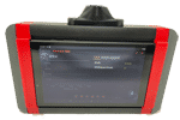
New! ChemWiz-ADK Handheld NIR Spectrophotometer with on board chemometrics and spectral matching!
Read More
Check out our SpectroChemistry Systems for UV-VIS and Fluorescence Applications
Learn More
New Spectrometer Python Application Driver
for Windows, Linux, RasPi, Mac
Check it out!
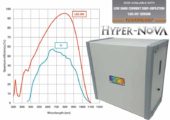
HYPER-Nova Highest Performance Raman Spectrometer
Learn More