What is a Spectrograph?
A spectrograph is an optical device that separates light into its individual wavelengths, allowing the spectral content of a light source or sample to be analyzed. It is a key component of a spectrometer and is responsible for dispersing incoming light so that each wavelength can be measured independently.
A simple example of wavelength separation is a prism splitting white light into a rainbow of colors. 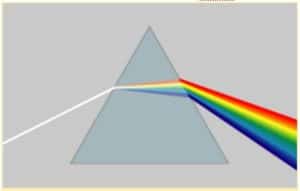
Modern spectrographs typically use diffraction gratings instead of prisms because they provide greater efficiency, improved spectral resolution, and wider wavelength coverage.
How Does a Spectrograph Work?
Light enters the spectrograph through an entrance slit or optical fiber and is directed onto a dispersive element, usually a diffraction grating. The grating separates the incoming light into its component wavelengths and focuses them onto a detector.
By spreading light across the detector, the spectrograph enables measurement of the intensity at each wavelength, creating a spectrum that can be used for material identification, color measurement, chemical analysis, and optical characterization.
What is the Difference Between a Spectrograph and a Spectrometer?
The terms are often used interchangeably, but they are not the same.
A spectrograph is the optical system that separates light into its individual wavelengths.
A spectrometer includes:
- A spectrograph
- A detector
- Electronics for signal processing
- Software for data acquisition and analysis
In other words, the spectrograph creates the spectrum, while the spectrometer measures and analyzes it.
Spectrographs vs. Monochromators
A monochromator is a specialized type of spectrograph that isolates a single wavelength or a narrow wavelength band at a time. Traditional monochromators typically use moving gratings, mirrors, or slits to scan through wavelengths sequentially.
In contrast, a spectrograph disperses all wavelengths simultaneously onto a detector array, allowing the entire spectrum to be captured in a single measurement. This enables faster data acquisition and improved measurement efficiency.
Spectrographs in Modern Spectroscopy
Spectrographs are used in a wide range of applications, including:
- UV-Vis spectroscopy
- Near-infrared (NIR) spectroscopy
- Raman spectroscopy
- Fluorescence spectroscopy
- Spectroradiometry
- Color measurement
- Optical emission spectroscopy (OES)
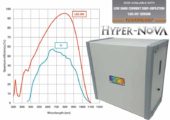
StellarNet spectrometers utilize high-performance diffraction grating spectrographs to provide rapid, accurate spectral measurements across UV, visible, and near-infrared wavelength ranges.