What is Reflection?
What is Diffuse Reflectance? Diffuse reflectance is a measurement technique used to analyze light scattered and reflected from the surface of a sample. Unlike specular reflection, which reflects light in a single direction, diffuse reflectance occurs when light...What is Scattering?
In general, scattering is what happens when light is forced to deviate from a straight path, or forced to deviate from a reflection angle described by the law of reflection. For example, in the X-ray region, atoms can scatter the X-rays in a well defined pattern. This...What is Transmittance?
Transmittance describes how much light passes through a sample unchanged. In other words, it is light that is not absorbed, scattered, or reflected. In most cases, the scattered and/or reflected light is miniscule and not significant. Transmittance is usually measured...What is Raman Spectroscopy?
What is Raman Spectroscopy? Raman spectroscopy is a non-destructive analytical technique used to identify materials and characterize their molecular structure. It works by measuring the small changes in wavelength that occur when laser light interacts with a sample....What is Absorption Spectroscopy?
The principle of absorption spectroscopy is to measure how much light is absorbed by the sample. As seen in the absorbance entry, this can be accomplished by measuring the intensity of the light before and after the sample. The Beer-Lambert law describes how the...
Introducing our new Applied Spectroscopy Division
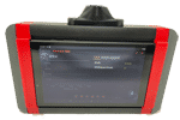
New Handheld Raman!
New! ChemWiz-ADK Handheld NIR Spectrophotometer with on board chemometrics and spectral matching!
Read More
Check out our SpectroChemistry Systems for UV-VIS and Fluorescence Applications
Learn More
New Spectrometer Python Application Driver
for Windows, Linux, RasPi, Mac
Check it out!
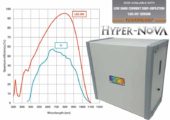
HYPER-Nova Highest Performance Raman Spectrometer
Learn More