What is a Light-Emitting Diodes (LEDs)?
LEDs are semi-conductors that are used to emit radiation. In this instance, semi-conductors behave much like atoms and molecules do. They have energy levels and radiation is emitted when electrons fall from a higher level to a lower level. The difference is that an...What is a Lamp?
Lamps are light sources that provide radiation mainly through spontaneous emission. This means that the radiation is emitted in all directions and is not coherent. Many lamps tend to emit many wavelengths, but the radiation is hard to collimate into a beam. For many...What is a Wave?
A wave is an oscillation in energy. In the context of electromagnetic radiation, the electric and magnetic fields oscillate. These oscillations repeat a pattern. For example, think of a sine wave. It starts at zero, goes up to a crest, goes down to a trough, and comes...What is a Photon?
A photon is a quantized amount of electromagnetic radiation that behaves like a particle. Each photon has a frequency, ν ,and a wavelength, λ. The energy of a photon is E=hν where h is Planck’s constant. On diagrams, they will often be represented as a wave...What is Absorption and Emission?
Absorption is a process where an atom or molecule absorbs energy to promote an electron into a higher energy level. Often, the energy is delivered by a photon. The photon must have the same energy as the difference between the energy levels in the atom or molecule....
Introducing our new Applied Spectroscopy Division
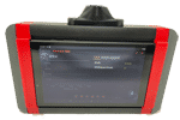
New Handheld Raman!
New! ChemWiz-ADK Handheld NIR Spectrophotometer with on board chemometrics and spectral matching!
Read More
Check out our SpectroChemistry Systems for UV-VIS and Fluorescence Applications
Learn More
New Spectrometer Python Application Driver
for Windows, Linux, RasPi, Mac
Check it out!
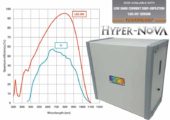
HYPER-Nova Highest Performance Raman Spectrometer
Learn More