What is a Laser?
The word “laser” is an acronym that stands for “light amplification by stimulated emission of radiation.” Lasers have two main components: a cavity made by two mirrors that reflect light between them and a gain medium that sits inside the cavity. Energy is pumped into...What is a Light Source?
A light source emits electromagnetic radiation. Some sources you encounter everyday are the sun, light bulbs, and microwaves. The light sources that StellarNet offers fall into three categories: lasers, lamps, and LEDs.What is Electromagnetic Radiation?
Electromagnetic radiation is a form of energy generated by an electromagnetic field. It consists of waves that propagate through space carrying this energy. The most familiar type of electromagnetic radiation is visible light. This represents only a small fraction of...What is the Electromagnetic Spectrum?
The electromagnetic spectrum is the range of wavelengths of known electromagnetic radiation. It has been divided into sections, such as visible light and microwaves. While the lines between the sections are not well defined, StellarNet uses the following divisions for...
Introducing our new Applied Spectroscopy Division
New Handheld Raman!
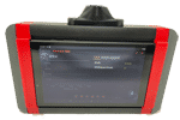
New! ChemWiz-ADK Handheld NIR Spectrophotometer with on board chemometrics and spectral matching!
Read More
Check out our SpectroChemistry Systems for UV-VIS and Fluorescence Applications
Learn More
New Spectrometer Python Application Driver
for Windows, Linux, RasPi, Mac
Check it out!
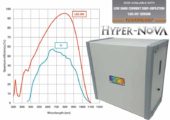
HYPER-Nova Highest Performance Raman Spectrometer
Learn More