
Wildlife & Ecology Spectroscopy
Spectroscopy provides powerful tools for studying how animals perceive light, display coloration, communicate, and interact with their environments. From ultraviolet vision in birds and insects to underwater light conditions in marine ecosystems, UV-Vis-NIR spectroscopy helps researchers characterize the optical properties of biological structures and natural habitats.
StellarNet spectrometers and optical measurement accessories support applications in animal vision, reflectance and transmission measurements, behavioral ecology, marine biology, conservation research, and habitat lighting. Portable instrumentation enables laboratory and field measurements across a wide range of ecological studies.
Featured Articles
Seeing Through Birds' Eyes: Spectroscopy for Bird-Strike Prevention
Researchers have used StellarNet BLACK-Comet spectroradiometers to study how birds perceive aircraft colors and warning lights. By measuring spectral reflectance and illumination, scientists can evaluate visual contrast from an avian perspective and investigate strategies for reducing bird–aircraft collisions.
Marine & Reef Ecology
When Night Is No Longer Dark: Light Pollution and Oyster Biology
Scientists at the University of Bordeaux used a StellarNet BLUE-Wave UVN-100 spectroradiometer to characterize artificial nighttime lighting in experiments with Pacific oysters. Their research showed that even low levels of nighttime illumination could disrupt daily activity and molecular rhythms, revealing an important environmental threat to coastal ecosystems.
The Science of Warning Colors: How Poison Frogs See and Signal
Brilliantly colored poison frogs use visual signals in mate selection and predator interactions. Research using StellarNet spectroscopy has quantified frog skin reflectance to investigate how color signals influence communication and survival. These measurements help connect the physical properties of coloration with the visual systems of frogs and their predators.
Customer Research & Publications
Warning signal properties covary with toxicity but not testosterone or aggregate carotenoids in a poison frog
L Crothers, RA Saporito, J Yeager, K Lynch, C Friesen… - Evolutionary Ecology Aposematic (warning) coloration is a highly conspicuous trait that is found throughout the animal kingdom. In several...
A Naturally-Derived Compound Schisandrin B Enhanced Light Sensation in the pde6c Zebrafish Model of Retinal Degeneration
L Zhang, L Xiang, Y Liu, P Venkatraman, L Chong… - PloS one, 2016 Retinal degeneration is often progressive. This feature has provided a therapeutic window for intervention that may extend...
Black Phoebes Applications – Bird Monitoring
Black Phoebes rely on chromatic contrast to search for food. For a bird to survive, it must be able to successfully find and eat food items. Many factors can affect the ability of the bird to find...
A private ultraviolet channel in visual communication | StellarNet.us
A private ultraviolet channel in visual communication Molly E. Cummings, Gil G. Rosenthal and Michael J. Ryan- Section of Integrative Biology, University of Texas, Austin- Boston University Marine...
A field-study of inducible molecular defenses, ultraviolet radiation, and melanomagenesis in natural Xiphophorus hybrids
A field-study of inducible molecular defenses, ultraviolet radiation, and melanomagenesis in natural Xiphophorus hybrids Seth W. Coleman & Zachary W. Culumber & Ashley Meaders & Jennifer...
Aposematic Signal Variation Predicts Male-Male Interaction in Polymorphic Poison Frog
Aposematic Signal Variation Predicts Male-Male Interaction in Polymorphic Poison Frog- Nov 2010 Laura Crothers, Eben Gering, Molly Cummings- International Journal of Organic Evolution Many species...
Female Preferences for Aposematic Signal Components in a Polymorphic Poison Frog
Female Preferences for Aposematic Signal Components in a Polymorphic Poison Frog Martine E. Maan and Molly E. Cummings, University of Texas at Austin, Integrative Biology Aposematic signals may be...
Influence of plumage colour on prey response: does habitat alter heron crypsis to prey?
Influence of plumage colour on prey response: does habitat alter heron crypsis to prey? M. CLAY GREEN & PAUL L. LEBERG The foraging strategies of wading birds may be influenced by their degree of...
Spectroscopy Applications
Food Safety & Quality
Advanced & quantum materials
Thin Films & Optical Coatings
Pharmaceuticals & Nutraceuticals
Biomedical & Life Sciences
Environmental & Microplastics
Industrial & Process Analysis
Lighting, Displays & Radiometry
Recommended Wildlife & Ecology Spectrometers
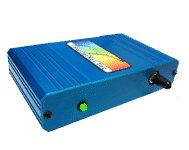
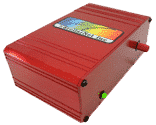
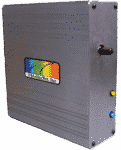
Learn More
Explore spectroscopy and optical measurement for wildlife and ecology through practical guides, application notes, videos, technical resources, and real-world research. Learn how spectroscopy is used to study animal vision, coloration, camouflage, behavioral ecology, habitat conditions, and conservation, with applications spanning birds, marine and reef ecosystems, reptiles, amphibians, and zoo wildlife. These Learning Centers provide practical resources to help researchers, conservationists, educators, and students understand spectral measurements and apply spectroscopy to the study and protection of wildlife and natural ecosystems.
-
Spectroscopy Guides & Tutorials — Learn the fundamentals of spectral reflectance, irradiance, radiance, color measurement, calibration, and practical techniques for wildlife and ecological research.
-
Application Notes & Research — Explore real-world applications of spectroscopy in animal vision, coloration, camouflage, behavioral ecology, habitat monitoring, and wildlife conservation, including studies of birds, marine life, reptiles, and amphibians.
-
Videos, Labs & Technical Resources — Explore spectroscopy demonstrations, educational labs, software resources, experiments, and practical measurement techniques for studying wildlife and natural ecosystems.