Food Safety & Quality
Featured Articles
Can Spectroscopy Help Detect Food Contamination Earlier?
The 2026 Cyclospora outbreak linked to iceberg lettuce highlights a persistent challenge in food production: contamination can move through the supply chain before conventional testing identifies a problem. Emerging research suggests that NIR, Raman/SERS, chemometrics and machine learning may provide food producers with additional tools for faster screening and earlier investigation.
Predicting Avocado Ripeness with NIR Spectroscopy
Knowing when an avocado is ready for market can be challenging without cutting into the fruit. This application demonstrates how near-infrared spectroscopy and chemometric analysis can predict avocado ripeness quickly and non-destructively, providing a potential tool for monitoring fruit quality and improving consistency throughout the supply chain.
Taking NIR Spectroscopy to the Strawberry Field
What can spectroscopy reveal about strawberries in the field? This application follows a portable NIR spectroscopy system into a strawberry field to demonstrate how rapid, non-destructive measurements can help evaluate fruit quality and collect valuable data outside of the laboratory.
Customer Research & Publications
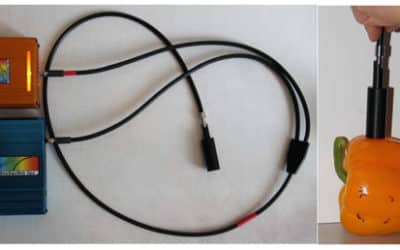
Non-Destructive, Opto-Electronic Determination of the Freshness and Shrivel of Bell Pepper Fruits
Bernhard Althaus and Michael Blanke … - INRES-Horticultural Science, Faculty of Agriculture, University of Bonn, Germany Abstract (1) The objective of the present study was to identify suitable...

Prost! Oktoberfest Beer Analysis at Home with David Parrino
While Oktoberfest celebrations in Munich and around the world have been canceled this year due to the COVID-19 pandemic, the StellarNet Team decided to make the best of it with a beer celebration...
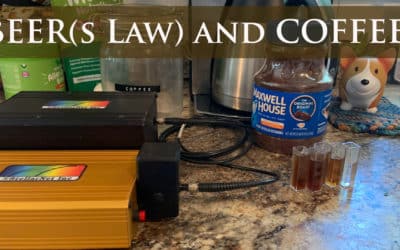
BEER(s Law) and COFFEE? Measuring Spectral Absorbance to Achieve Instant Coffee Perfection
Well, not the type of beer you are thinking of. Have you ever woken up early ready for a fresh cup of coffee only to find that you failed to notice that you ran out? Living in Florida has taught me...
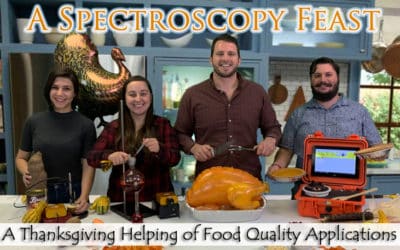
A Spectroscopy Feast- A Thanksgiving Helping of Spectroscopy for Food Quality Applications
Here in the United States, it’s almost Thanksgiving! It’s a time to give thanks and at StellarNet we’re thankful for our customers! So, until the end of the year, we’re offering a “Buy a NIR...
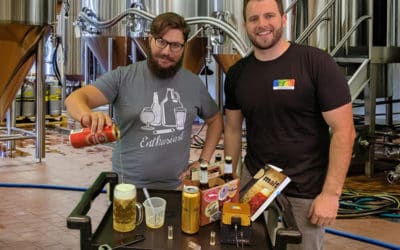
Holiday Beer Testing – SRM, EMC, & Lovibond: What’s your color?
For this week’s Feasibility Friday, David and Jason are testing the SRM, EBC, and Lovibond colors of beer from a local brewery. David has chosen some classic styles with published SRM values to...
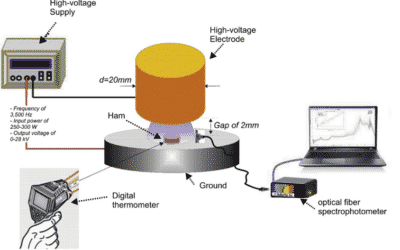
Cold plasma treatment of ready-to-eat ham: Influence of process conditions and storage on inactivation of Listeria innocua
B Yadav, AC Spinelli, BN Govindan, YY Tsui… - Food Research International, 2019 Abstract Ready-to-eat (RTE) deli meat has been linked to several Listeria monocytogenes associated recalls. Recent...
Spectroscopy Applications
Astronomy, Space & Remote Sensing
Advanced & quantum materials
Thin Films & Optical Coatings
Pharmaceuticals & Nutraceuticals
Biomedical & Life Sciences
Environmental & Microplastics
Industrial & Process Analysis
Lighting, Displays & Radiometry
Food Safety & Quality Spectrometers
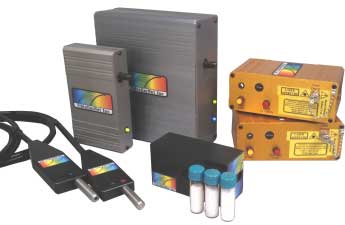
Learn More
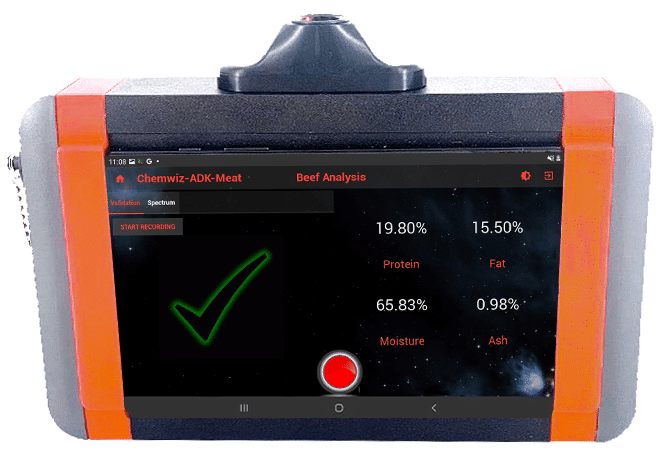
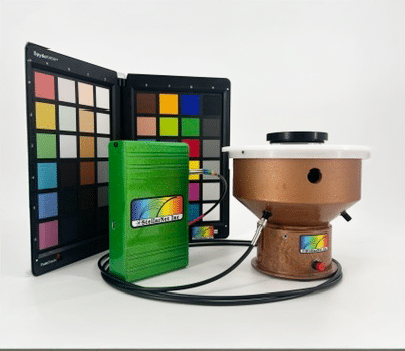
Explore Raman, UV-VIS, and NIR spectroscopy through practical guides, application notes, videos, technical resources, and real-world research. Learn how spectroscopy can be used for food quality and safety, ingredient identification, composition analysis, adulteration screening, color measurement, and quality control. These Learning Centers provide practical resources to help researchers and food manufacturers better understand their measurements and apply spectroscopy throughout food research, ingredient verification, and production.
- NIR Learning Center — Discover NIR spectroscopy for food composition analysis, ingredient verification, adulteration screening, and rapid quality control measurements.
- Raman Learning Center — Explore Raman spectroscopy for food and ingredient identification, authenticity testing, adulteration detection, and molecular analysis.
- UV-VIS Learning Center — Learn about UV-VIS spectroscopy for food color measurement, absorbance and transmission analysis, quality evaluation, and food research applications