Food Safety & Quality
Featured Articles
Can Spectroscopy Help Detect Food Contamination Earlier?
The 2026 Cyclospora outbreak linked to iceberg lettuce highlights a persistent challenge in food production: contamination can move through the supply chain before conventional testing identifies a problem. Emerging research suggests that NIR, Raman/SERS, chemometrics and machine learning may provide food producers with additional tools for faster screening and earlier investigation.
Predicting Avocado Ripeness with NIR Spectroscopy
Knowing when an avocado is ready for market can be challenging without cutting into the fruit. This application demonstrates how near-infrared spectroscopy and chemometric analysis can predict avocado ripeness quickly and non-destructively, providing a potential tool for monitoring fruit quality and improving consistency throughout the supply chain.
Taking NIR Spectroscopy to the Strawberry Field
What can spectroscopy reveal about strawberries in the field? This application follows a portable NIR spectroscopy system into a strawberry field to demonstrate how rapid, non-destructive measurements can help evaluate fruit quality and collect valuable data outside of the laboratory.
Customer Research & Publications
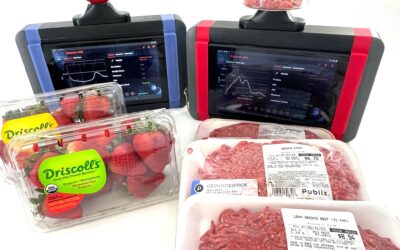
Summer Spectroscopy BBQ- Quality Analysis of Meats and Fresh Fruits
Welcome to the SpectraWizard's annual Spectroscopy Summer BBQ! This summer we're conducting a quality analysis of meats and fresh fruits using our ChemWiz-ADK NIR spectrometer and the ColorWiz...
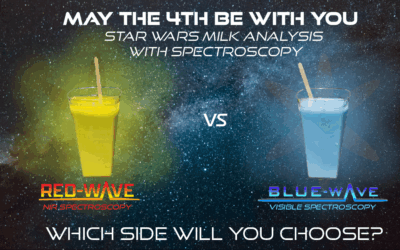
MAY THE 4TH BE WITH YOU – Star Wars Milk Analysis with Spectroscopy
Looking to score some Blue or Green Milk from "a galaxy far, far, away?" Blue and green milk are fictional beverages that previously existed only in the Star Wars Universe. The famous blue milk...
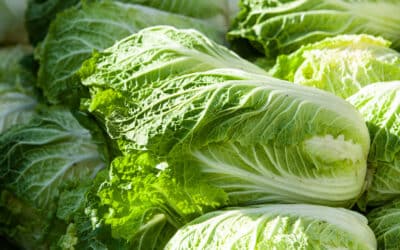
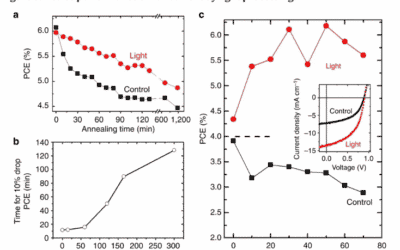
Growth, morphology, and photosynthetic activity of Chinese cabbage and lettuce grown under polyethylene and spectrum conversion films
Jun Hyeun Kang, Doyeon Kim, Hyo In Yoon & Jung Eek Son; Horticulture, Environment, and Biotechnology (January 2023) Abstract The light environment affects the growth and morphology of vegetables...
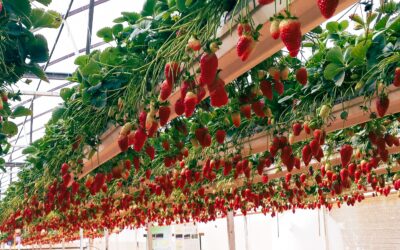
Improvement of strawberry transplant production efficiency by supplementary blue light in a plant factory using white LEDs
Hyein Lee, Seon Woo Park, Meiyan Cui, Byungkwan Lee, Duy Minh Pham, Hyunseung Hwang & Changhoo Chun Abstract The lighting source is one of the most critical environmental elements in a plant...
Monitoring the freshness of pork during storage via near-infrared spectroscopy based on colorimetric sensor array coupled with efficient multivariable calibration
Wenya Wei, Huanhuan Li, Suleiman A. Haruna, Jizhong Wu, Quansheng Chen Abstract The quality of pork meat is vital since it is one of the most essential sources of proteins and other nutrients....
The SpectraWizard’s Summer Spectroscopy BBQ
It’s summer, and like most people at this time of year, the SpectraWizard is excited about summer barbeques. In fact, he’s so excited that he’s hosting one and you are invited! What is on the menu...
Spectroscopy Applications
Astronomy, Space & Remote Sensing
Advanced & quantum materials
Thin Films & Optical Coatings
Pharmaceuticals & Nutraceuticals
Biomedical & Life Sciences
Environmental & Microplastics
Industrial & Process Analysis
Lighting, Displays & Radiometry
Food Safety & Quality Spectrometers
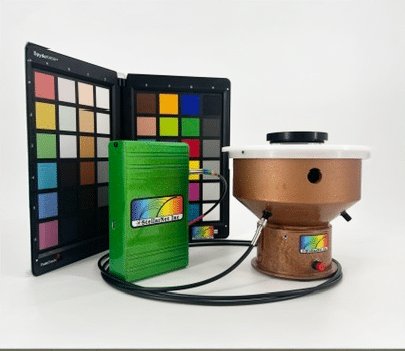
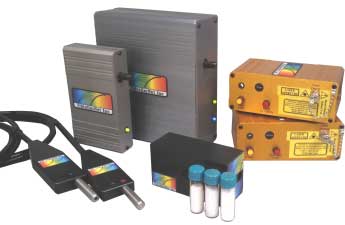
Learn More
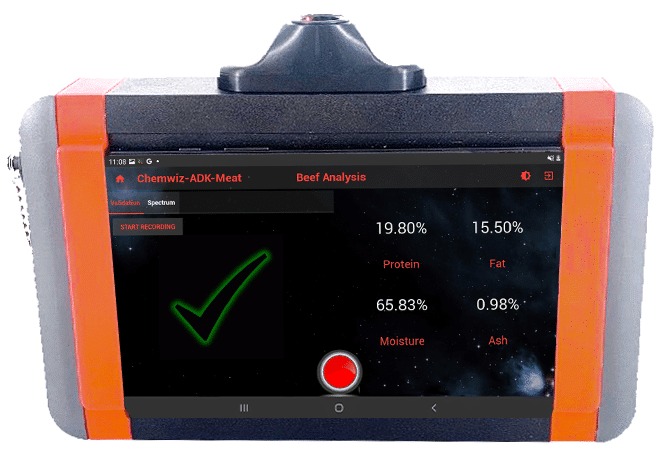
Explore Raman, UV-VIS, and NIR spectroscopy through practical guides, application notes, videos, technical resources, and real-world research. Learn how spectroscopy can be used for food quality and safety, ingredient identification, composition analysis, adulteration screening, color measurement, and quality control. These Learning Centers provide practical resources to help researchers and food manufacturers better understand their measurements and apply spectroscopy throughout food research, ingredient verification, and production.
- NIR Learning Center — Discover NIR spectroscopy for food composition analysis, ingredient verification, adulteration screening, and rapid quality control measurements.
- Raman Learning Center — Explore Raman spectroscopy for food and ingredient identification, authenticity testing, adulteration detection, and molecular analysis.
- UV-VIS Learning Center — Learn about UV-VIS spectroscopy for food color measurement, absorbance and transmission analysis, quality evaluation, and food research applications