Biomedical & Life Science
Featured Articles
Raman Microscopy for Early Colorectal Cancer Detection
Early detection is critical in improving outcomes for colorectal cancer, creating a need for sensitive methods that can identify subtle changes in tissue. This research explores how Raman microscopy can characterize biochemical differences in colorectal tissue, demonstrating the potential of molecular-level spectral information for early cancer detection research.
Optical Spectroscopy for Skin Lesion Classification
Optical spectroscopy offers a non-invasive way to investigate differences between healthy and abnormal tissue. This application explores how spectral measurements and machine learning can be used to classify skin lesions, highlighting the potential of spectroscopy as a rapid tool for supporting research into skin cancer detection and tissue analysis.
Wearable NIR Spectroscopy for Monitoring Brain Activity
Could NIR spectroscopy move brain activity monitoring beyond the laboratory? This project from Vladimir Pozdin and Alper Bozkurt combines NIR light sources, optical sensing, onboard electronics, and wireless connectivity into a compact wearable system for real-time monitoring of physiological responses associated with cognitive activity.
Customer Research & Publications
In vitro Demonstration of Cancer Inhibiting Properties from Stratified Self-Organized Micro-Discharge Plasma-Liquid Interface
Z Chen, S Zhang, I Levchenko, II Beilis, M Keidar - arXiv preprint arXiv:1701.01655, 2017 Experiments have revealed a nontrivial cancer-inhibiting capability of liquid media treated by the plasma...
Enhancing cold atmospheric plasma treatment of cancer cells by static magnetic field
X Cheng, K Rajjoub, A Shashurin, D Yan, JH Sherman… - Bioelectromagnetics, 2016 It has been reported since late 1970 that magnetic field interacts strongly with biological systems. Cold atmospheric...
Three-dimensional printed miniaturized spectral system for collagen fluorescence lifetime measurements
L Zou, R Koslakiewicz, M Mahmoud, M Fahs, R Liu… - Journal of Biomedical Optics, 2016 Abstract. Various types of collagens, e.g., type I and III, represent the main load-bearing components in...
Detection of protein deposits using NIR spectroscopy
J Šakota Rosić, J Munćan, I Mileusnić, B Kosić, L Matija - Soft Materials, 2016 The aim of this study was to determine if it is possible to distinguish between the groups of spoiled and unspoiled...
Repurposing Synechocystis PCC6803 UirS-UirR as a UV-violet/green photoreversible transcriptional regulatory tool in E. coli
P Ramakrishnan, JJ Tabor - ACS Synthetic Biology, 2016 We have previously engineered green/red and red/far red photoreversible E. coli phytochrome and cyanobacteriochrome (CBCR) two component...
Optical aggregometry of red blood cells associated with the blood-clotting reaction in extracorporeal circulation support
D Sakota, R Kosaka, M Nishida, O Maruyama - Journal of Artificial Organs The aggregability of red blood cell (RBCs) is associated with the contribution of plasma proteins, such as fibrinogen and...
Key Application Areas
Food Safety & Quality
Advanced & quantum materials
Thin Films & Optical Coatings
Pharmaceuticals & Nutraceuticals
Astronomy, Space & Remote Sensing
Environmental & Microplastics
Industrial & Process Analysis
Lighting, Displays & Radiometry
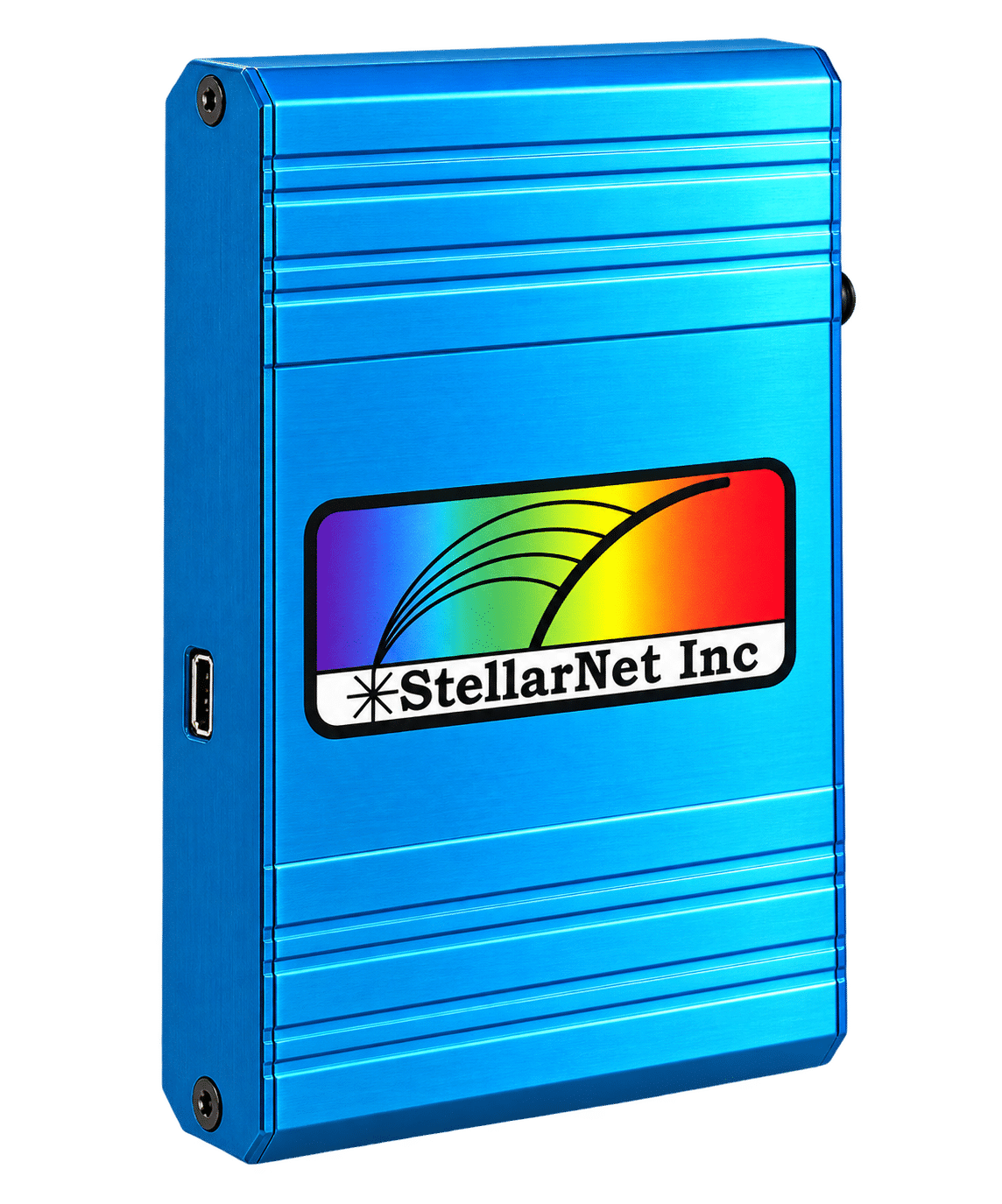
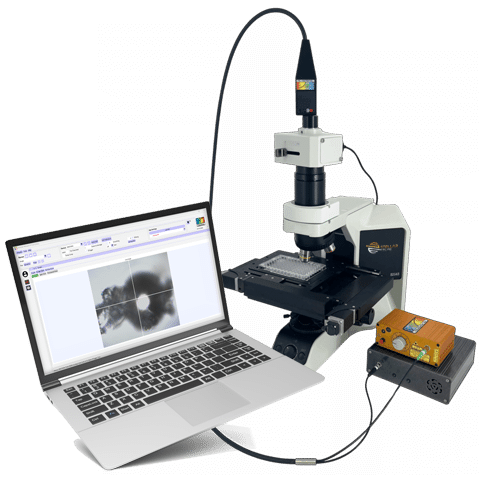
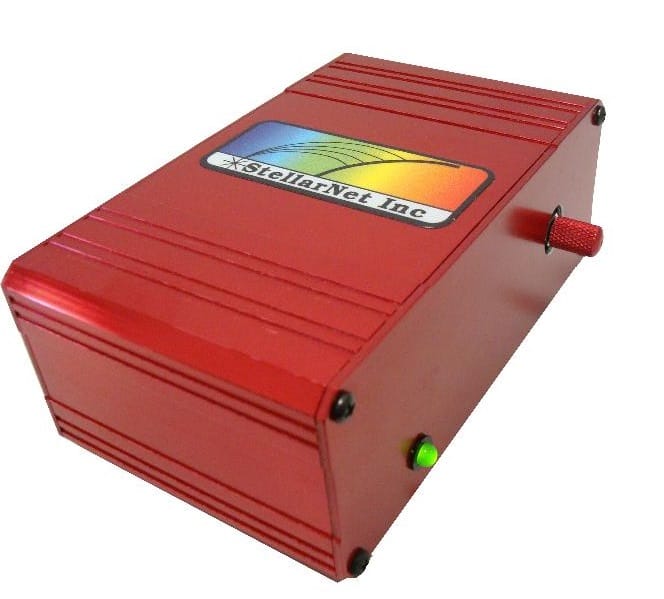
Recommended Spectrometers for Biomedical Applications
Learn More
Explore Raman, UV-VIS, and NIR spectroscopy through practical guides, application notes, videos, technical resources, and real-world research. Learn how these techniques can support biomedical and life sciences research, biomolecular analysis, tissue measurements, biosensing, physiological monitoring, and biomaterials characterization. These Learning Centers provide practical resources to help researchers understand their measurements and apply spectroscopy to biological and biomedical applications.
- Raman Learning Center — Explore Raman spectroscopy for biomolecular analysis, biological samples, cells and tissues, biosensing, and biomedical materials characterization.
- UV-VIS Learning Center — Learn about UV-VIS spectroscopy for absorbance, transmission, biomolecular measurements, assays, optical biosensors, and life sciences research.
- NIR Learning Center — Explore NIR spectroscopy for biological tissue measurements, physiological monitoring, biomaterials, composition analysis, and biomedical research.