Biomedical & Life Science
Featured Articles
Raman Microscopy for Early Colorectal Cancer Detection
Early detection is critical in improving outcomes for colorectal cancer, creating a need for sensitive methods that can identify subtle changes in tissue. This research explores how Raman microscopy can characterize biochemical differences in colorectal tissue, demonstrating the potential of molecular-level spectral information for early cancer detection research.
Optical Spectroscopy for Skin Lesion Classification
Optical spectroscopy offers a non-invasive way to investigate differences between healthy and abnormal tissue. This application explores how spectral measurements and machine learning can be used to classify skin lesions, highlighting the potential of spectroscopy as a rapid tool for supporting research into skin cancer detection and tissue analysis.
Wearable NIR Spectroscopy for Monitoring Brain Activity
Could NIR spectroscopy move brain activity monitoring beyond the laboratory? This project from Vladimir Pozdin and Alper Bozkurt combines NIR light sources, optical sensing, onboard electronics, and wireless connectivity into a compact wearable system for real-time monitoring of physiological responses associated with cognitive activity.
Customer Research & Publications
Current production by non-methanotrophic bacteria enriched from an anaerobic methane-oxidizing microbial community
S.Berger; D.R.Shaw; T.Berben; H.T.Ouboter; M.H.in ’t Zandt; J.Frank; J.Reimann; M.S.M.Jetten; C.U.Welte Abstract In recent years, the externalization of electrons as part of respiratory metabolic...
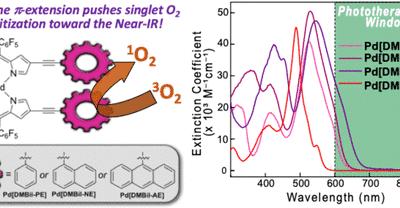
Synthesis, Spectroscopic, and 1O2 Sensitization Characteristics of Extended Pd(II) 10,10-Dimethylbiladiene Complexes Bearing Alkynyl–Aryl Appendages
Anthony T. Rice; Maxwell I. Martin; Molly C. Warndorf; Glenn P. A. Yap; and Joel Rosenthal Abstract Photodynamic therapy (PDT), which involves the photoinduced sensitization of singlet oxygen, is an...
Enhancement of emission from indium in flowing liquid anode atmospheric pressure glow discharge using organic media
K Greda, S Burhenn, P Pohl, J Franzke - Talanta, 2019 Abstract The effect of addition of low molecular weight organic compounds, i.e. acids, salts and alcohols, on the emission measured from In with...
Current status and recommendations toward a virus standard for ballast water
Y Kim, SD Snow, V Reichel-Deland, M Maghsoodi… - Management of Biological …, 2019 Abstract Ballast water contains and transfers a variety of biological and non-biological materials between biomes....
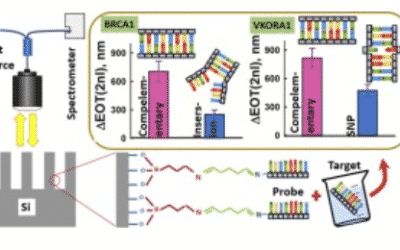
Label-free discrimination of single nucleotide changes in DNA by reflectometric interference Fourier transform spectroscopy
F Makiyan, F Rahimi, M Hajati, A Shafiekhani… - Colloids and Surfaces B …, 2019 Abstract Phenotypic variation – such as disease susceptibility and differential drug response – has a strong genetic...

Intra-class variability in diffuse reflectance spectroscopy: application to porcine adipose tissue
F Fanjul-Vélez, L Arévalo-Díaz, JL Arce-Diego - Biomedical Optics Express, 2018 Abstract Optical diffuse reflectance spectroscopy (DRS) has great potential in the study, diagnosis, and...
Key Application Areas
Food Safety & Quality
Advanced & quantum materials
Thin Films & Optical Coatings
Pharmaceuticals & Nutraceuticals
Astronomy, Space & Remote Sensing
Environmental & Microplastics
Industrial & Process Analysis
Lighting, Displays & Radiometry
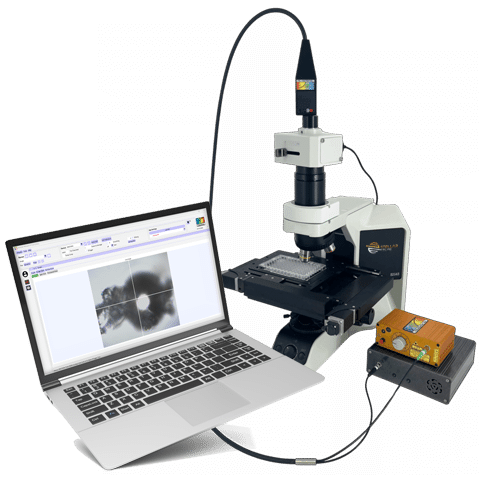
Recommended Spectrometers for Biomedical Applications
Learn More
Explore Raman, UV-VIS, and NIR spectroscopy through practical guides, application notes, videos, technical resources, and real-world research. Learn how these techniques can support biomedical and life sciences research, biomolecular analysis, tissue measurements, biosensing, physiological monitoring, and biomaterials characterization. These Learning Centers provide practical resources to help researchers understand their measurements and apply spectroscopy to biological and biomedical applications.
- Raman Learning Center — Explore Raman spectroscopy for biomolecular analysis, biological samples, cells and tissues, biosensing, and biomedical materials characterization.
- UV-VIS Learning Center — Learn about UV-VIS spectroscopy for absorbance, transmission, biomolecular measurements, assays, optical biosensors, and life sciences research.
- NIR Learning Center — Explore NIR spectroscopy for biological tissue measurements, physiological monitoring, biomaterials, composition analysis, and biomedical research.