Astronomy, Space & Remote Sensing
Featured Articles
MISSE (Materials International Space Station Experiment), a joint project between NASA and Boeing
Our BLUE-Wave spectrometers were launched into space and mounted on the ISS as part of the MISSE-7 experiment, designed to take real-time spectra to provide insight on how the environment of space affects different optical properties of materials. Many of the materials were designed for space exposure and are considered next generation materials for space travel.
StellarNet Customer Spotlight – Launching Spectrometers and Careers
The Harding University Atmospheric and Space Research Team operates under the leadership of Dr. Ed Wilson, Professor of Chemistry in Harding University’s Department of Chemistry and Biochemistry, and longtime StellarNet customer. The team’s research has been funded by several sources over the years, including NASA Astrobiology Science and Technology Instrument Development (ASTID), NASA Experimental Program to Stimulate Cooperative Research (EPSCoR), and the Arkansas Space Grant Consortium…
The SpectraWizard Goes Stellar- AstroSpectroscopy Basics
Spectroscopy is one of the most valuable tools that an astronomer has for studying the Universe. Spectrometers help us determine the chemical compositions, physical properties, and velocities of astronomical bodies light-years away…
Customer Research & Publications
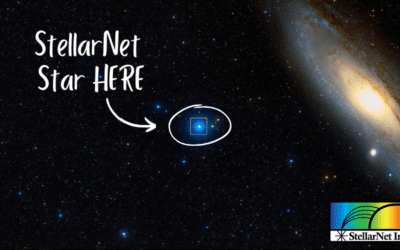
The StellarNet Star
This holiday season, we received an incredible surprise from our StellarNet team—a star named in our honor! The star is located in the Andromeda constellation, close to the Pegasus constellation....
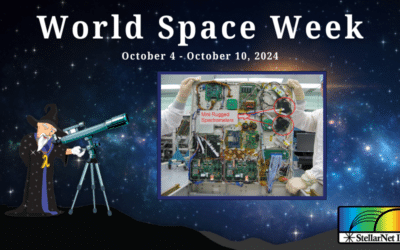
World Space Week Spectroscopy with StellarNet
This week (October 4th-October 10th) is World Space Week! At StellarNet, we celebrate space day everyday. Our products are spaced-themed with names such as "BLACK-Comet", "Quasar", "DWARF-Star", and...
Celebrating Women Astronomers Day!
Today, we come together to honor and celebrate the incredible contributions of women astronomers who have played a vital role in exploring the mysteries of the universe. Their brilliance,...
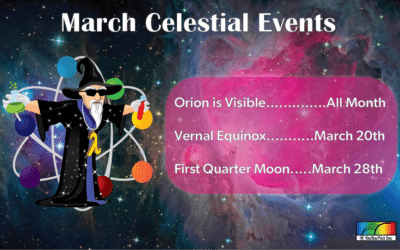
March Celestial Events Wonderful for Spectroscopy
All throughout March, unpack those binoculars and set up that telescope to view these celestial wonders. The Orion Constellation is visible to the naked eye in the southern part of the sky...
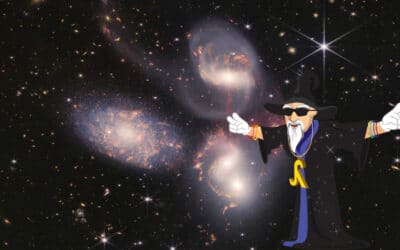
The SpectraWizard’s Choice for Newly Released James Webb Telescope Image goes to the “Cosmic Dance”
The SpectraWizard's Choice for Newly Released James Webb Telescope Image goes to the "Cosmic Dance" After considerable review of NASA's recently released James Webb space telescope images, the...
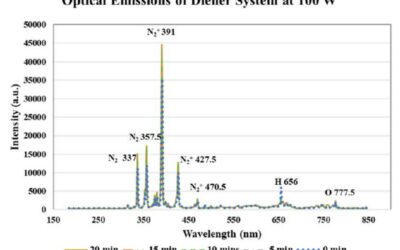
Plasma sanitization of cherry belle radish seeds for Space agricultural applications
Ryan P Gott, K. W Engeling, Christina M Johnson, Haley O Boles, Victoria C Brown, Mary Hummerick, Gioia D Massa and Annie J Meier Abstract As human innovation continuously expands the knowledge base...
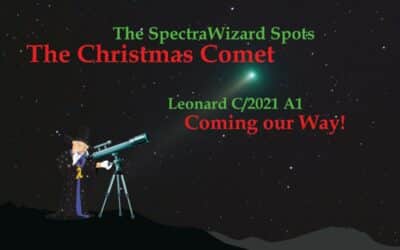
The SpectraWizard Spots a Bright Green Christmas Comet Coming our Way Soon!
If you look up into the early morning sky in the weeks leading up to Christmas, you might just see a bright green spot traversing the sky. Is it Santa doing test runs with his reindeer? Did Rudolph...
The SpectraWizard Goes Stellar- AstroSpectroscopy Basics
Spectroscopy is one of the most valuable tools that an astronomer has for studying the Universe. Spectrometers help us determine the chemical compositions, physical properties, and velocities of...
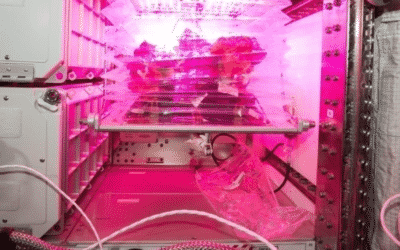
Optimizing Controlled-Release Fertilizers for Lettuce and Mizuna Grown on the International Space Station
Asmaa Morsi… - Purdue University, Department of Horticulture Abstract Astronaut diets on the International Space Station (ISS) depend on resupplied packaged food. However, missions to Mars of 3 - 5...
Spectroscopy Applications
Food Safety & Quality
Advanced & quantum materials
Thin Films & Optical Coatings
Pharmaceuticals & Nutraceuticals
Biomedical & Life Sciences
Environmental & Microplastics
Industrial & Process Analysis
Lighting, Displays & Radiometry
Recommended Astronomy, Space & Remote Sensing Spectrometers
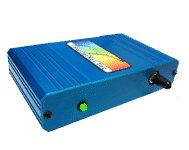
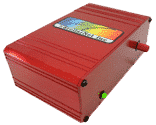
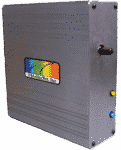
Learn More
Explore spectroscopy and optical measurement for space and astronomy through practical guides, application notes, videos, technical resources, and real-world research. Learn how spectroscopy can be used for astronomical observations, solar measurements, spectral analysis, light-source characterization, and space science research. These Learning Centers provide practical resources to help researchers, educators, and students understand spectral measurements and apply spectroscopy to the study of the Sun, stars, and other astronomical objects.
- Spectroscopy Guides & Tutorials — Learn the fundamentals of spectrometers, spectral measurement, calibration, and practical measurement techniques.
- Application Notes & Research — Explore real-world uses of spectroscopy in astronomy, solar studies, optical measurement, and scientific research.
- Videos, Labs & Technical Resources — Explore spectroscopy demonstrations, educational labs, software resources, experiments, and practical measurement tips