Spectroscopy Applications
Explore how researchers, manufacturers, and quality-control laboratories use StellarNet spectrometers to solve real-world measurement challenges. Our compact UV-Vis, VIS-NIR, NIR, and Raman spectroscopy systems support applications across food safety, pharmaceuticals, advanced materials, thin films, biomedical research, environmental monitoring, industrial process analysis, radiometry, and space science.
Browse the application areas below to discover customer research, technical articles, spectroscopy methods, and practical solutions for absorbance, transmission, reflectance, fluorescence, Raman, radiometric, and chemometric analysis.
Key Application Areas
Food Safety & Quality
Advanced & quantum materials
Thin Films & Optical Coatings
Pharmaceuticals & Nutraceuticals
Biomedical & Life Sciences
Environmental & Microplastics
Industrial & Process Analysis
Lighting, Displays & Radiometry
Featured Spectroscopy Applications -
Astronomy, Space & Remote Sensing
Astronomy spectroscopy gives researchers a way to study light from objects and environments far beyond the laboratory. StellarNet systems support astronomical spectroscopy for research into stars, planets, meteors, and atmospheric phenomena. Spectral measurements can reveal information that cannot be seen through imaging alone. Compact instruments also open new possibilities for space spectroscopy and CubeSat missions where size and flexibility matter. From meteor and aurora research to remote sensing and educational astronomy, StellarNet provides accessible spectroscopy tools for exploring our planet and the universe beyond it.
Astronomy, Space & Remote Sensing
Wildlife & Ecology Spectroscopy
Spectroscopy provides powerful tools for studying how animals perceive light, display coloration, communicate, and interact with their environments. From ultraviolet vision in birds and insects to underwater light conditions in marine ecosystems, UV-Vis-NIR spectroscopy helps researchers characterize the optical properties of biological structures and natural habitats.
Wildlife & Ecology Spectroscopy
Looking for something else?
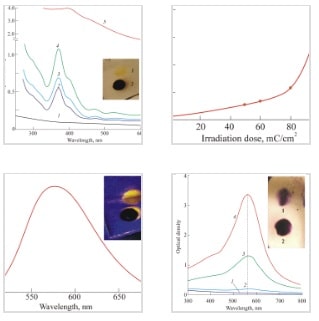
Formation of metal nanoparticles in MgF 2, CaF 2 and BaF 2 crystals under the electron beam irradiation and Fibers
ES Bochkareva, AI Sidorov, UV Yurina, OA Podsvirov - Nuclear Instruments and …, 2017 Abstract It is shown experimentally that electron beam action with electrons energies of 50 and 70 keV on MgF2,...
Spectral Properties of Er3+/Tm3+ Co-Doped ZBLAN Glasses and Fibers
X Liao, X Jiang, Q Yang, L Wang, D Chen - Materials, 2017 Abstract A series of Er3+/Tm3+ co-doped fluoride (ZBLAN) glasses and fibers was prepared and their fluorescence spectra was measured under...
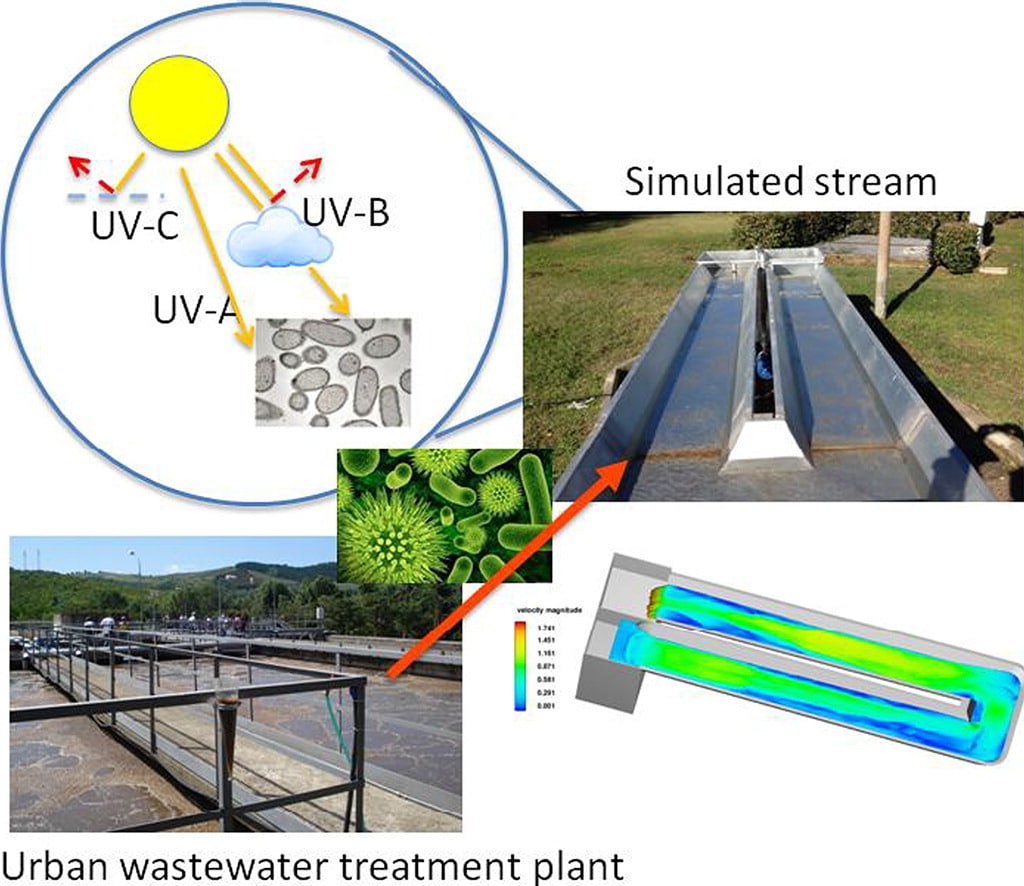
Simulating the fate of indigenous antibiotic resistant bacteria in a mild slope wastewater polluted stream
A Fiorentino, G De Luca, L Rizzo, G Viccione… - Journal of Environmental …, 2017 Abstract The fate of indigenous surface-water and wastewater antibiotic resistant bacteria in a mild slope stream...
Micro-sized tunable liquid crystal optical filters
C Stoltzfus, R Barbour, D Atherton, Z Barber - arXiv preprint arXiv:1705.00983, 2017 Abstract Liquid Crystal Arrayed Microcavities (LCAM) is a new technology for ultra-narrow optical filtering (FWHM...
Assessing Cyanobacterial Harmful Algal Blooms as Risk Factors for Amyotrophic Lateral Sclerosis
N Torbick, B Ziniti, E Stommel, E Linder, A Andrew… - Neurotoxicity Research, 2017 Abstract Reoccurring seasonal cyanobacterial harmful algal blooms (CHABs) persist in many waters, and recent work...
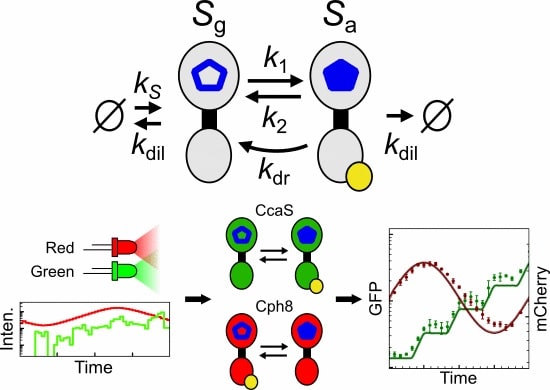
A photoconversion model for full spectral programming and multiplexing of optogenetic systems
EJ Olson, CN Tzouanas, JJ Tabor - Molecular Systems Biology, 2017 Abstract Optogenetics combines externally applied light signals and genetically engineered photoreceptors to control cellular...