Spectroscopy Applications
Explore how researchers, manufacturers, and quality-control laboratories use StellarNet spectrometers to solve real-world measurement challenges. Our compact UV-Vis, VIS-NIR, NIR, and Raman spectroscopy systems support applications across food safety, pharmaceuticals, advanced materials, thin films, biomedical research, environmental monitoring, industrial process analysis, radiometry, and space science.
Browse the application areas below to discover customer research, technical articles, spectroscopy methods, and practical solutions for absorbance, transmission, reflectance, fluorescence, Raman, radiometric, and chemometric analysis.
Key Application Areas
Food Safety & Quality
Advanced & quantum materials
Thin Films & Optical Coatings
Pharmaceuticals & Nutraceuticals
Biomedical & Life Sciences
Environmental & Microplastics
Industrial & Process Analysis
Lighting, Displays & Radiometry
Featured Spectroscopy Applications -
Astronomy, Space & Remote Sensing
Astronomy spectroscopy gives researchers a way to study light from objects and environments far beyond the laboratory. StellarNet systems support astronomical spectroscopy for research into stars, planets, meteors, and atmospheric phenomena. Spectral measurements can reveal information that cannot be seen through imaging alone. Compact instruments also open new possibilities for space spectroscopy and CubeSat missions where size and flexibility matter. From meteor and aurora research to remote sensing and educational astronomy, StellarNet provides accessible spectroscopy tools for exploring our planet and the universe beyond it.
Astronomy, Space & Remote Sensing
Wildlife & Ecology Spectroscopy
Spectroscopy provides powerful tools for studying how animals perceive light, display coloration, communicate, and interact with their environments. From ultraviolet vision in birds and insects to underwater light conditions in marine ecosystems, UV-Vis-NIR spectroscopy helps researchers characterize the optical properties of biological structures and natural habitats.
Wildlife & Ecology Spectroscopy
Looking for something else?
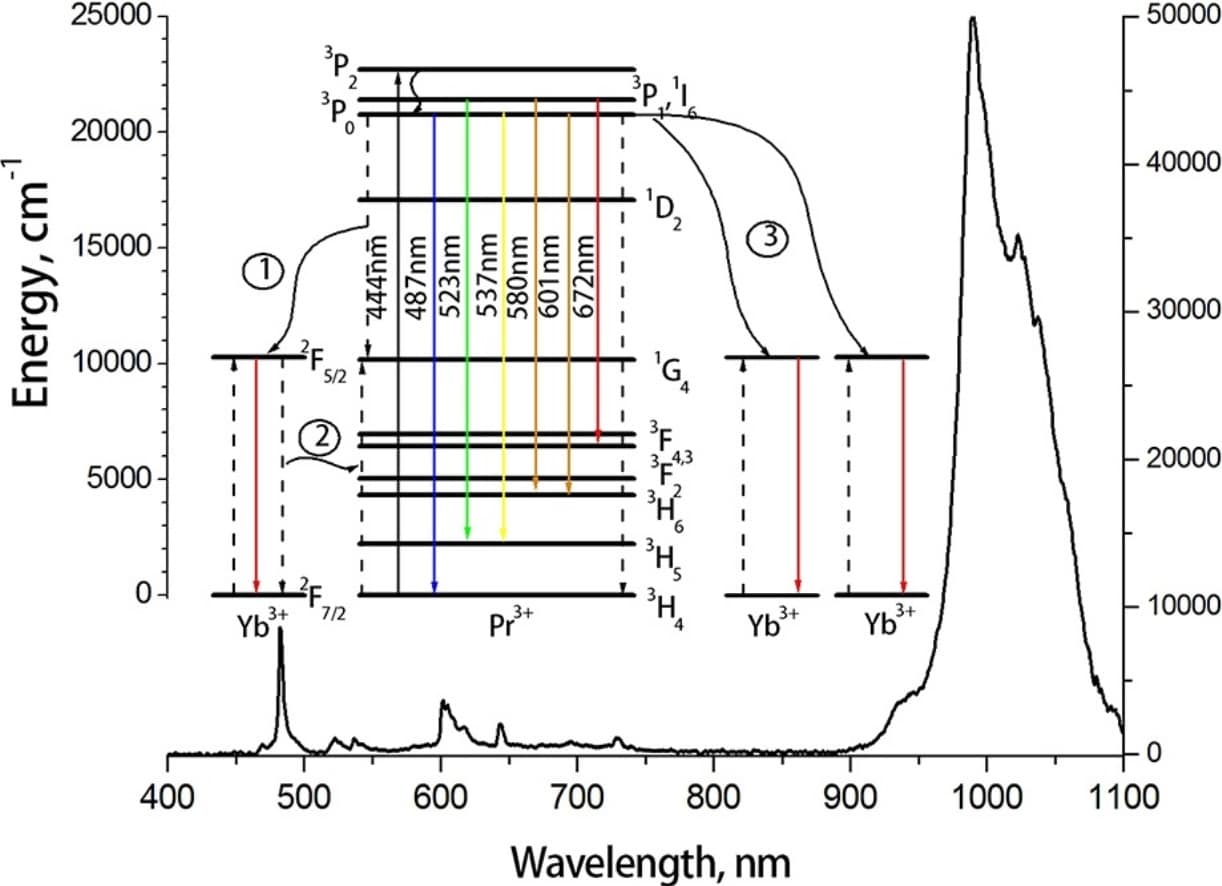
Synthesis and luminescence studies of CaF2:Yb:Pr solid solutions powders for photonics
SV Kuznetsov, OA Morozov, VG Gorieva… - Journal of Fluorine Chemistry 2018- Optics Letters, 2018 Abstract Praseodymium and ytterbium-doped calcium fluoride powder samples were prepared by...
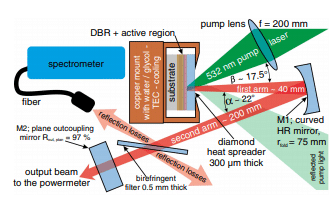
AlGaAs-based vertical-external-cavity surface-emitting laser exceeding 4 W of direct emission power in the 740–790 nm spectral range
H Kahle, K Nechay, JP Penttinen, A Tukiainen, S Ranta… - Optics Letters, 2018 Abstract An optically pumped vertical-external-cavity surface-emitting laser (VECSEL) for direct emission in the...
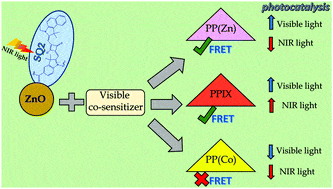
Ultrafast dynamics in co-sensitized photocatalysts under visible and NIR light irradiation
J Patwari, A Chatterjee, S Sardar, P Lemmens, SK Pal - Physical Chemistry Chemical …, 2018 Abstract Co-sensitization to achieve a broad absorption window is a widely accepted technique in light...
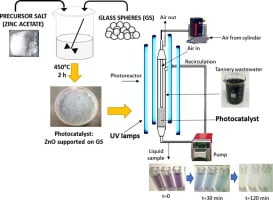
Facile method to immobilize ZnO particles on glass spheres for the photocatalytic treatment of tannery wastewater
V Vaiano, G Iervolino - Journal of Colloid and Interface Science, 2018 Abstract In order to apply the photocatalytic processes on a real scale for the treatment of industrial wastewaters, the use...

Partial photochemical oxidation was a dominant fate of Deepwater Horizon surface oil
Collin P. Ward, Charles M. Sharpless, David L. Valentine, Deborah P. French-McCay, Christoph Aeppli, Helen K. White, Ryan P. Rodgers, Kelsey M. Gosselin, Robert K. Nelson, and Christopher M. Reddy...
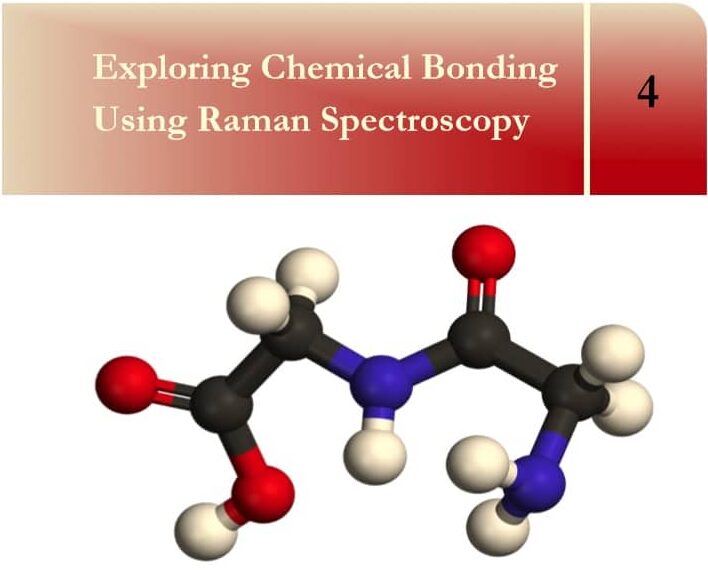
Example Raman Lab: Exploring Chemical Bonding Using Raman Spectroscopy
In the previous experiments, you were introduced to visible and fluorescence spectroscopy. You learned that different molecules absorb and emit different wavelengths of light and that you can...