Spectroscopy Applications
Explore how researchers, manufacturers, and quality-control laboratories use StellarNet spectrometers to solve real-world measurement challenges. Our compact UV-Vis, VIS-NIR, NIR, and Raman spectroscopy systems support applications across food safety, pharmaceuticals, advanced materials, thin films, biomedical research, environmental monitoring, industrial process analysis, radiometry, and space science.
Browse the application areas below to discover customer research, technical articles, spectroscopy methods, and practical solutions for absorbance, transmission, reflectance, fluorescence, Raman, radiometric, and chemometric analysis.
Key Application Areas
Food Safety & Quality
Advanced & quantum materials
Thin Films & Optical Coatings
Pharmaceuticals & Nutraceuticals
Biomedical & Life Sciences
Environmental & Microplastics
Industrial & Process Analysis
Lighting, Displays & Radiometry
Featured Spectroscopy Applications -
Astronomy, Space & Remote Sensing
Astronomy spectroscopy gives researchers a way to study light from objects and environments far beyond the laboratory. StellarNet systems support astronomical spectroscopy for research into stars, planets, meteors, and atmospheric phenomena. Spectral measurements can reveal information that cannot be seen through imaging alone. Compact instruments also open new possibilities for space spectroscopy and CubeSat missions where size and flexibility matter. From meteor and aurora research to remote sensing and educational astronomy, StellarNet provides accessible spectroscopy tools for exploring our planet and the universe beyond it.
Astronomy, Space & Remote Sensing
Wildlife & Ecology Spectroscopy
Spectroscopy provides powerful tools for studying how animals perceive light, display coloration, communicate, and interact with their environments. From ultraviolet vision in birds and insects to underwater light conditions in marine ecosystems, UV-Vis-NIR spectroscopy helps researchers characterize the optical properties of biological structures and natural habitats.
Wildlife & Ecology Spectroscopy
Looking for something else?

Application Note – The Raman Spectrum of Water
Water is arguably the most important chemical compound on our planet. As such, a great deal of scientific research has gone into understanding the structure and dynamics of water as it relates to...
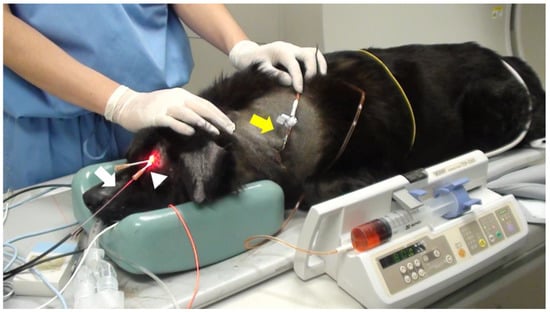
Efficacy of 5-Aminolevulinic Acid in Photodynamic Detection and Photodynamic Therapy in Veterinary Medicine
T Osaki, I Yokoe, Y Sunden, U Ota, T Ichikawa… - Cancers, 2019 Abstract 5-Aminolevulinic acid (5-ALA), a commonly used photosensitizer in photodynamic detection (PDD) and therapy (PDT), is converted...

Cold plasma treatment of ready-to-eat ham: Influence of process conditions and storage on inactivation of Listeria innocua
B Yadav, AC Spinelli, BN Govindan, YY Tsui… - Food Research International, 2019 Abstract Ready-to-eat (RTE) deli meat has been linked to several Listeria monocytogenes associated recalls. Recent...
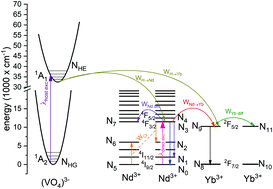
Enhancing the sensitivity of a Nd3+,Yb3+:YVO4 nanocrystalline luminescent thermometer by host sensitization
L Marciniak, A Bednarkiewicz, K Trejgis… - … Chemistry Chemical Physics, 2019 Abstract Numerous methods are known to improve the relative temperature sensitivity of luminescent thermometers. These...
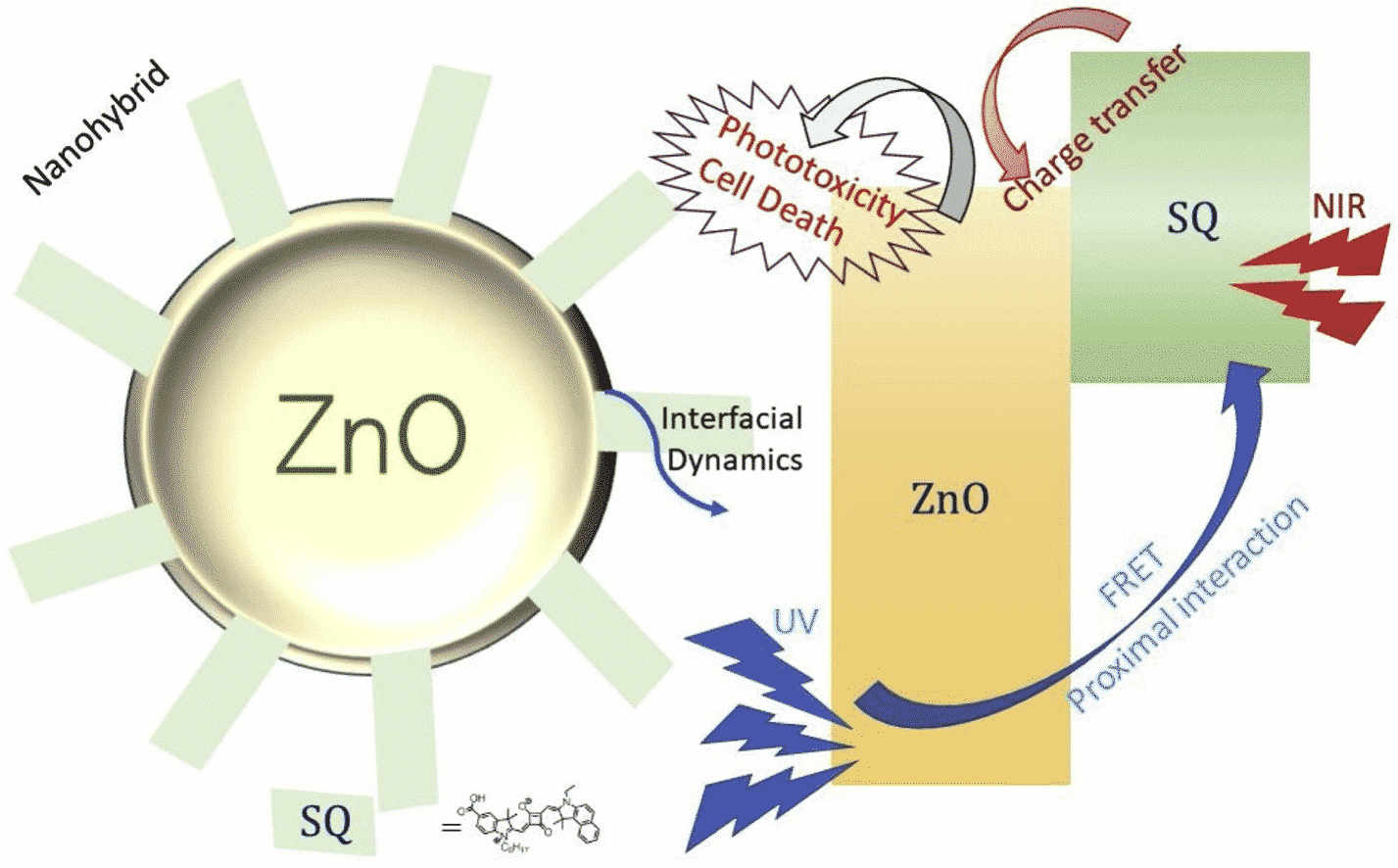
Exploration of interfacial dynamics in squaraine based nanohybrids for potential photodynamic action
D Bagchi, A Halder, S Debnath, P Saha, SK Pal - Journal of Photochemistry and …, 2019 Abstract Photodynamic therapy (PDT) is a clinically approved, minimally invasive therapeutic procedure...

Alexandrite microchip lasers
M Fibrich, J Šulc, H Jelínková - Optics Express, 2019 Abstract We report on a continuous-wave alexandrite (Cr3+ :BeAl2O4) microchip lasers operating at 680.4 nm and 749.5 nm laser wavelengths....