Spectroscopy Applications
Explore how researchers, manufacturers, and quality-control laboratories use StellarNet spectrometers to solve real-world measurement challenges. Our compact UV-Vis, VIS-NIR, NIR, and Raman spectroscopy systems support applications across food safety, pharmaceuticals, advanced materials, thin films, biomedical research, environmental monitoring, industrial process analysis, radiometry, and space science.
Browse the application areas below to discover customer research, technical articles, spectroscopy methods, and practical solutions for absorbance, transmission, reflectance, fluorescence, Raman, radiometric, and chemometric analysis.
Key Application Areas
Food Safety & Quality
Advanced & quantum materials
Thin Films & Optical Coatings
Pharmaceuticals & Nutraceuticals
Biomedical & Life Sciences
Environmental & Microplastics
Industrial & Process Analysis
Lighting, Displays & Radiometry
Featured Spectroscopy Applications -
Astronomy, Space & Remote Sensing
Astronomy spectroscopy gives researchers a way to study light from objects and environments far beyond the laboratory. StellarNet systems support astronomical spectroscopy for research into stars, planets, meteors, and atmospheric phenomena. Spectral measurements can reveal information that cannot be seen through imaging alone. Compact instruments also open new possibilities for space spectroscopy and CubeSat missions where size and flexibility matter. From meteor and aurora research to remote sensing and educational astronomy, StellarNet provides accessible spectroscopy tools for exploring our planet and the universe beyond it.
Astronomy, Space & Remote Sensing
Wildlife & Ecology Spectroscopy
Spectroscopy provides powerful tools for studying how animals perceive light, display coloration, communicate, and interact with their environments. From ultraviolet vision in birds and insects to underwater light conditions in marine ecosystems, UV-Vis-NIR spectroscopy helps researchers characterize the optical properties of biological structures and natural habitats.
Wildlife & Ecology Spectroscopy
Looking for something else?
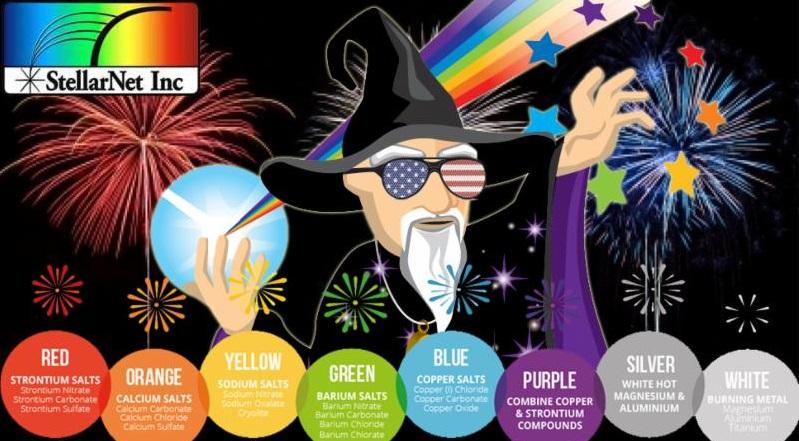
Happy 4th of July – How Compact Spectrometers are being used in Combustion Research: Here Come the Fireworks!
Let’s be frank: the most exciting part about chemistry is the explosions! A popular demonstration in General Chemistry class is the reaction between Al and Fe2O3, the thermite reaction. It needs a...
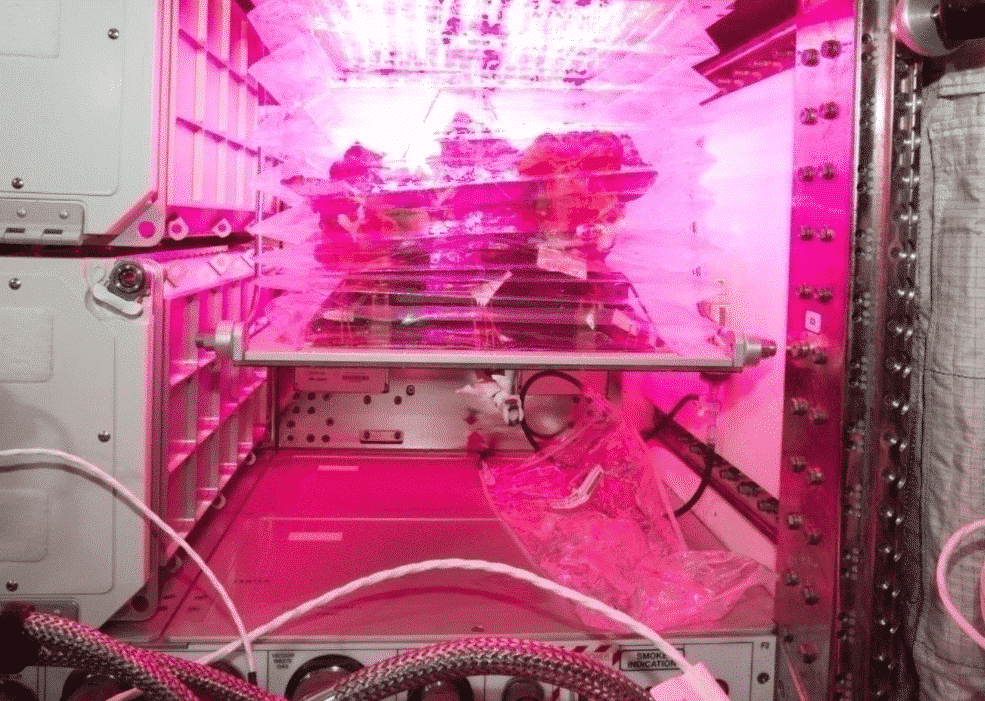
Optimizing Controlled-Release Fertilizers for Lettuce and Mizuna Grown on the International Space Station
Asmaa Morsi… - Purdue University, Department of Horticulture Abstract Astronaut diets on the International Space Station (ISS) depend on resupplied packaged food. However, missions to Mars of 3 - 5...
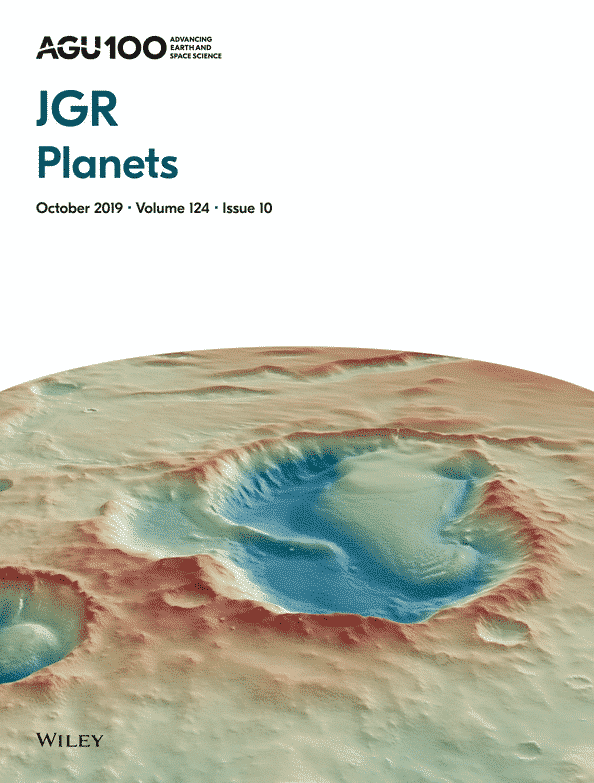
Attenuation of Ultraviolet Radiation in Rocks and Minerals: Implications for Mars Science
B. L. Carrier W. J. Abbey L. W. Beegle R. Bhartia Y. Liu… - Advancing Earth and Space Science. 16 September 2019 Abstract The effects of radiation on the survivability of key biosignatures are a...

The Role of Titanium Dioxide (TiO2) in the Production of Perchlorate (ClO4–) from Chlorite (ClO2–) and Chlorate (ClO3–) on Earth and Mars
Dongyu Liu and Samuel P. Kounaves*… - ACS Earth Space Chem. July 12, 2019 Abstract The widespread presence of perchlorate (ClO4–) on Mars has significant implications for the alteration or...

Spectroscopy in Space- Extreme Spectrometer Applications
The recent excitement of space travel by NASA astronauts Robert Behnken and Douglas Hurley allowed us to take our minds off the worldwide pandemic, if just for a moment. It reminds us of the...