Spectroscopy Applications
Explore how researchers, manufacturers, and quality-control laboratories use StellarNet spectrometers to solve real-world measurement challenges. Our compact UV-Vis, VIS-NIR, NIR, and Raman spectroscopy systems support applications across food safety, pharmaceuticals, advanced materials, thin films, biomedical research, environmental monitoring, industrial process analysis, radiometry, and space science.
Browse the application areas below to discover customer research, technical articles, spectroscopy methods, and practical solutions for absorbance, transmission, reflectance, fluorescence, Raman, radiometric, and chemometric analysis.
Key Application Areas
Food Safety & Quality
Advanced & quantum materials
Thin Films & Optical Coatings
Pharmaceuticals & Nutraceuticals
Biomedical & Life Sciences
Environmental & Microplastics
Industrial & Process Analysis
Lighting, Displays & Radiometry
Featured Spectroscopy Applications -
Astronomy, Space & Remote Sensing
Astronomy spectroscopy gives researchers a way to study light from objects and environments far beyond the laboratory. StellarNet systems support astronomical spectroscopy for research into stars, planets, meteors, and atmospheric phenomena. Spectral measurements can reveal information that cannot be seen through imaging alone. Compact instruments also open new possibilities for space spectroscopy and CubeSat missions where size and flexibility matter. From meteor and aurora research to remote sensing and educational astronomy, StellarNet provides accessible spectroscopy tools for exploring our planet and the universe beyond it.
Astronomy, Space & Remote Sensing
Wildlife & Ecology Spectroscopy
Spectroscopy provides powerful tools for studying how animals perceive light, display coloration, communicate, and interact with their environments. From ultraviolet vision in birds and insects to underwater light conditions in marine ecosystems, UV-Vis-NIR spectroscopy helps researchers characterize the optical properties of biological structures and natural habitats.
Wildlife & Ecology Spectroscopy
Looking for something else?
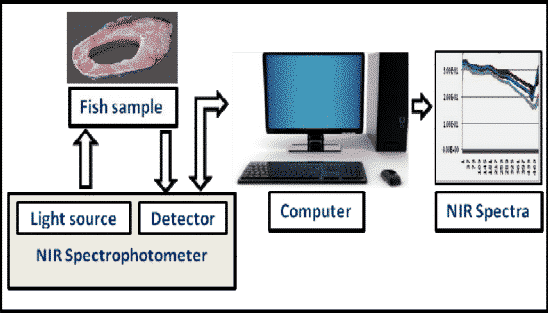
Fish Freshness Assessment using NIR spectroscopy
Jyotsna Dei; Hemanta Naskar; Samhita Dasgupta; Shreya Nag; Bijay Kumar Behera; Bipan Tudu; Runu Banerjee Roy; Rajib Bandyo Abstract The feasibility of near- infrared (NIR) spectroscopy to...
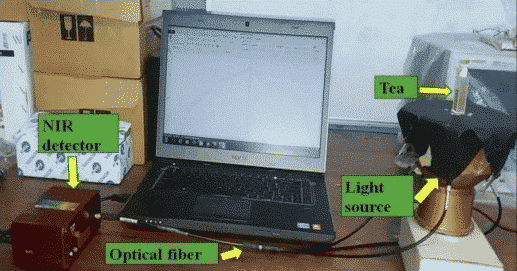
Discrimination of Various Clones of Black Tea Using NIR Spectroscopy
Debangana Das; Shreya Nag; Hemanta Naskar; Ajanto Kumar Hazarika; Runu Banerjee Roy; Santanu Sabhapondit; Bipan Tudu Abstract In this work, discrimination of five different clones of black tea viz.,...
Selection of Vis-NIR wavebands for forecasting apple fruitlet drop in response to chemical treatment
Yevgeniya Orlova, Raphael Linker,Boris Spektor - Faculty of Civil and Environmental Engineering, Technion-Israel Institute of Technology, Haifa, 3200003, Israel Abstract Apple trees tend to bear an...
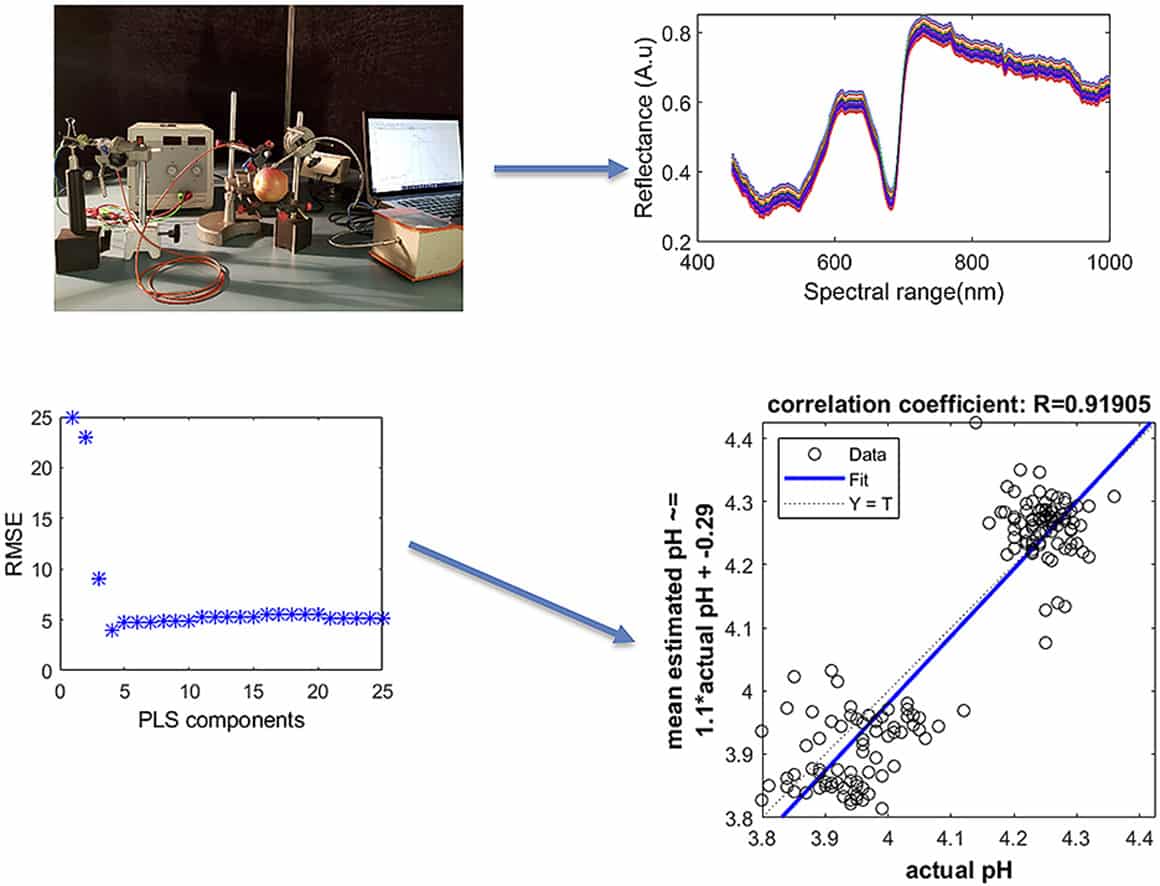
Non-destructive visible and short-wave near-infrared spectroscopic data estimation of various physicochemical properties of Fuji apple (Malus pumila) fruits at different maturation stages
Razieh Pourdarbani, SajadSabzii, Davood Kalantari, Juan I. Arribas - Chemometrics and Intelligent Laboratory Systems, November 2020 Abstract Measurement of physicochemical properties of fruits...

Non-Destructive, Opto-Electronic Determination of the Freshness and Shrivel of Bell Pepper Fruits
Bernhard Althaus and Michael Blanke … - INRES-Horticultural Science, Faculty of Agriculture, University of Bonn, Germany Abstract (1) The objective of the present study was to identify suitable...

Prost! Oktoberfest Beer Analysis at Home with David Parrino
While Oktoberfest celebrations in Munich and around the world have been canceled this year due to the COVID-19 pandemic, the StellarNet Team decided to make the best of it with a beer celebration...