Spectroscopy Applications
Explore how researchers, manufacturers, and quality-control laboratories use StellarNet spectrometers to solve real-world measurement challenges. Our compact UV-Vis, VIS-NIR, NIR, and Raman spectroscopy systems support applications across food safety, pharmaceuticals, advanced materials, thin films, biomedical research, environmental monitoring, industrial process analysis, radiometry, and space science.
Browse the application areas below to discover customer research, technical articles, spectroscopy methods, and practical solutions for absorbance, transmission, reflectance, fluorescence, Raman, radiometric, and chemometric analysis.
Key Application Areas
Food Safety & Quality
Advanced & quantum materials
Thin Films & Optical Coatings
Pharmaceuticals & Nutraceuticals
Biomedical & Life Sciences
Environmental & Microplastics
Industrial & Process Analysis
Lighting, Displays & Radiometry
Featured Spectroscopy Applications -
Astronomy, Space & Remote Sensing
Astronomy spectroscopy gives researchers a way to study light from objects and environments far beyond the laboratory. StellarNet systems support astronomical spectroscopy for research into stars, planets, meteors, and atmospheric phenomena. Spectral measurements can reveal information that cannot be seen through imaging alone. Compact instruments also open new possibilities for space spectroscopy and CubeSat missions where size and flexibility matter. From meteor and aurora research to remote sensing and educational astronomy, StellarNet provides accessible spectroscopy tools for exploring our planet and the universe beyond it.
Astronomy, Space & Remote Sensing
Wildlife & Ecology Spectroscopy
Spectroscopy provides powerful tools for studying how animals perceive light, display coloration, communicate, and interact with their environments. From ultraviolet vision in birds and insects to underwater light conditions in marine ecosystems, UV-Vis-NIR spectroscopy helps researchers characterize the optical properties of biological structures and natural habitats.
Wildlife & Ecology Spectroscopy
Looking for something else?

Label-free differential imaging of cellular components in mouse brain tissue by wide-band photoacoustic microscopy
Yajing Liu, Terence T W Wong, Junhui Shi, Yun He, Liming Nie, and Lihong V. Wang Published: 28 February 2023 Abstract Mapping diverse cellular components with high spatial resolution is important...
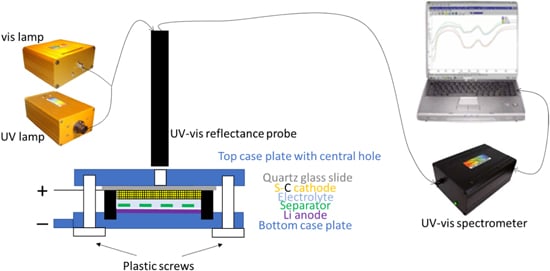
Investigation and Determination of Electrochemical Reaction Kinetics in Lithium-Sulfur Batteries with Electrolyte LiTFSI in DOL/DME
Sean Grabe, Matthew Dent, Shumaila Babar, Teng Zhang, Stephen Tennison, John F. Watts, and Constantina Lekakou Published: 28 February 2023 | Published on behalf of The Electrochemical Society...

Unravelling effects of red/far-red light on nutritional quality and the role and mechanism in regulating lycopene synthesis in postharvest cherry tomatoes
Yanjie Song, Graham Teakle, Robert Lillywhite Published: 21 February 2023 | Warwick Crop Centre, School of Life Science, The University of Warwick Abstract The main goal of this study was to...
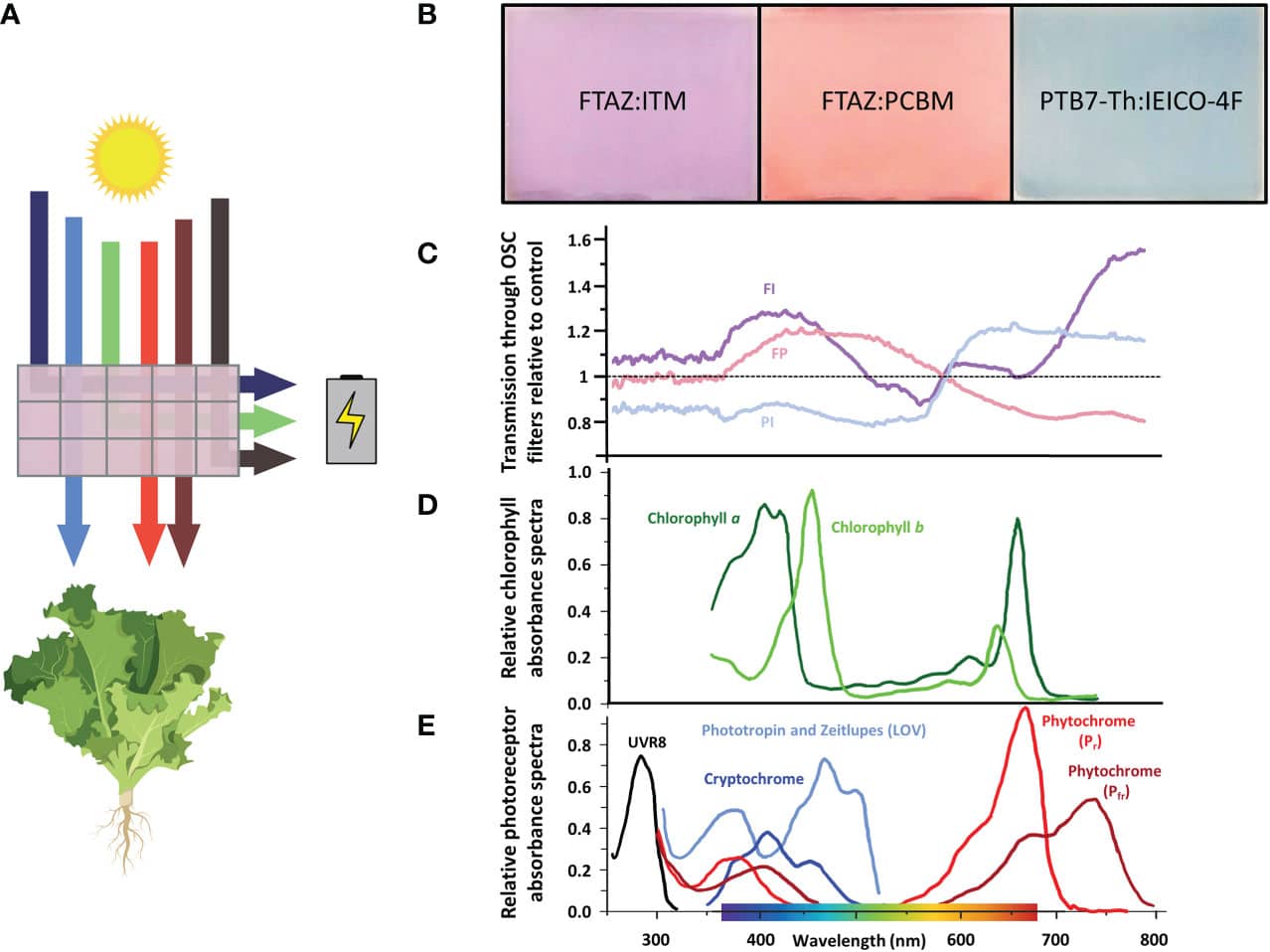
Emergent molecular traits of lettuce and tomato grown under wavelength-selective solar cells
Melodi Charles, Brianne Edwards, Eshwar Ravishankar, John Calero, Reece Henry, Jeromy Rech, Carole Saravitz, Wei You, Harald Ade, Brendan O’Connor, Heike Sederoff Published: 13 February 2023 |...

Multifaceted Structurally Coloured Materials: Diffraction and Total Internal Reflection (TIR) from Nanoscale Surface Wrinkling
Annabelle Tan, Zain Ahmad, Pete Vukusic, and João T. Cabral Published: 10 February 2023 | Imperial College London and University of Exeter Abstract We investigate the combined effects of surface...

Delineating the Effects of Molecular and Colloidal Interactions of Dissolved Organic Matter on Titania Photocatalysis
Mostafa Maghsoudi, Celine Jacquin, Benoit Teychené, Geoffroy Lesage, and Samuel D. Snow Published: 6 February 2023 Abstract In the face of significant challenges to practical applications of...