What is Refraction?
Refraction is when a light beam changes direction after entering a new medium. This is why objects in the water are seen at a different place from where they actually are; the light has been “bent” when exiting the water. The image below shows light being refracted...What is a Sapphire Attenuated Total Reflectance (SATR) Probe?
The SATR probes take advantage of the high refractive index of sapphire to consistently generate total internal reflection at the interface between the probe and the sample. When a beam is reflected through total internal reflection, an evanescent wave with the same...What are Ground and Excited States?
When talking about energy levels, the lowest level is called the ground state. At room temperature, everything (electrons, vibrations, etc.) is in the ground state. If the atoms or molecules can absorb energy, they can be promoted into a higher energy level, called an...What is intensity of light?
When talking about light, intensity is the power per unit area when the light is transmitted through a (real or imaginary) flat surface that is perpendicular to the direction of the beam. It is usually represented by the symbol I and common units are W/m2 or W/cm2. At...What is a Spectrometer?
What is a Spectrometer? A spectrometer is an instrument used to measure and analyze light as a function of wavelength. By separating light into its individual wavelengths, a spectrometer can reveal information about the composition, properties, and behavior of...
Introducing our new Applied Spectroscopy Division
New Handheld Raman!
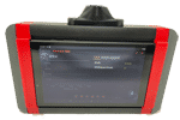
New! ChemWiz-ADK Handheld NIR Spectrophotometer with on board chemometrics and spectral matching!
Read More
Check out our SpectroChemistry Systems for UV-VIS and Fluorescence Applications
Learn More
New Spectrometer Python Application Driver
for Windows, Linux, RasPi, Mac
Check it out!
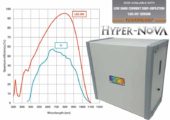
HYPER-Nova Highest Performance Raman Spectrometer
Learn More