Food Safety & Quality
Featured Articles
Can Spectroscopy Help Detect Food Contamination Earlier?
The 2026 Cyclospora outbreak linked to iceberg lettuce highlights a persistent challenge in food production: contamination can move through the supply chain before conventional testing identifies a problem. Emerging research suggests that NIR, Raman/SERS, chemometrics and machine learning may provide food producers with additional tools for faster screening and earlier investigation.
Predicting Avocado Ripeness with NIR Spectroscopy
Knowing when an avocado is ready for market can be challenging without cutting into the fruit. This application demonstrates how near-infrared spectroscopy and chemometric analysis can predict avocado ripeness quickly and non-destructively, providing a potential tool for monitoring fruit quality and improving consistency throughout the supply chain.
Taking NIR Spectroscopy to the Strawberry Field
What can spectroscopy reveal about strawberries in the field? This application follows a portable NIR spectroscopy system into a strawberry field to demonstrate how rapid, non-destructive measurements can help evaluate fruit quality and collect valuable data outside of the laboratory.
Customer Research & Publications
Spectroscopy of Beer- St. Patrick’s Day Beer Color Analysis
StellarNet celebrates St. Patrick's Day at Brew Bus Brewing by analyzing green beer. David Parrino, Director of OEM Business at StellarNet, uses the new ColorWiz Mobile App for Android and iPhone to...
November Spectroscopy Spotlight: Harvesting and Food Quality Applications
To celebrate the fall harvest and Thanksgiving, the StellarNet team has put together a collection of food quality spectrometer applications. Some of the applications are from our favorite 2020...
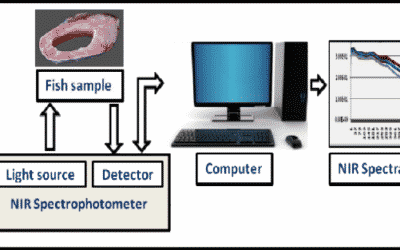
Fish Freshness Assessment using NIR spectroscopy
Jyotsna Dei; Hemanta Naskar; Samhita Dasgupta; Shreya Nag; Bijay Kumar Behera; Bipan Tudu; Runu Banerjee Roy; Rajib Bandyo Abstract The feasibility of near- infrared (NIR) spectroscopy to...
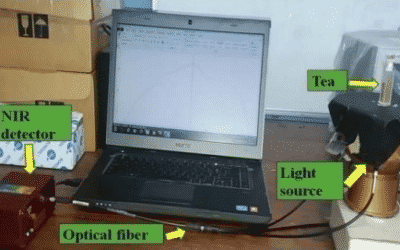
Discrimination of Various Clones of Black Tea Using NIR Spectroscopy
Debangana Das; Shreya Nag; Hemanta Naskar; Ajanto Kumar Hazarika; Runu Banerjee Roy; Santanu Sabhapondit; Bipan Tudu Abstract In this work, discrimination of five different clones of black tea viz.,...
Selection of Vis-NIR wavebands for forecasting apple fruitlet drop in response to chemical treatment
Yevgeniya Orlova, Raphael Linker,Boris Spektor - Faculty of Civil and Environmental Engineering, Technion-Israel Institute of Technology, Haifa, 3200003, Israel Abstract Apple trees tend to bear an...
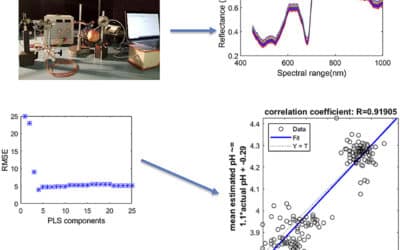
Non-destructive visible and short-wave near-infrared spectroscopic data estimation of various physicochemical properties of Fuji apple (Malus pumila) fruits at different maturation stages
Razieh Pourdarbani, SajadSabzii, Davood Kalantari, Juan I. Arribas - Chemometrics and Intelligent Laboratory Systems, November 2020 Abstract Measurement of physicochemical properties of fruits...
Spectroscopy Applications
Astronomy, Space & Remote Sensing
Advanced & quantum materials
Thin Films & Optical Coatings
Pharmaceuticals & Nutraceuticals
Biomedical & Life Sciences
Environmental & Microplastics
Industrial & Process Analysis
Lighting, Displays & Radiometry
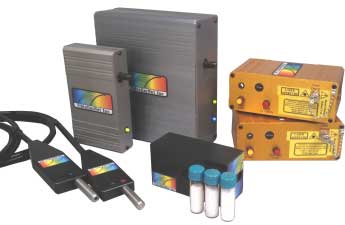
Food Safety & Quality Spectrometers
Learn More
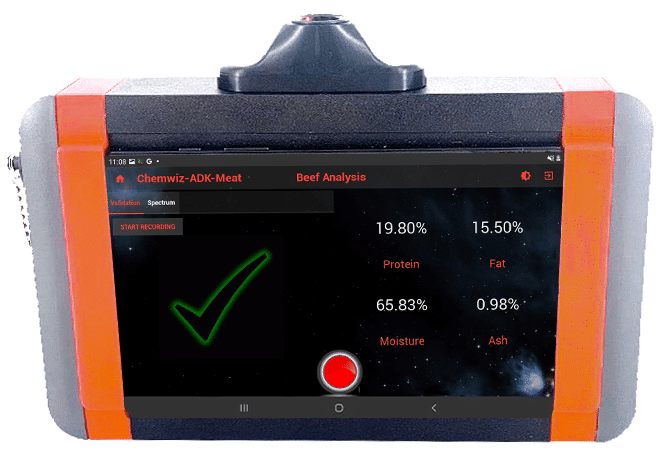
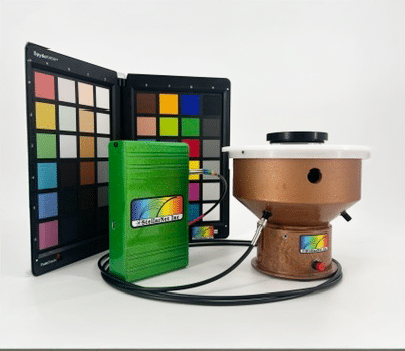
Explore Raman, UV-VIS, and NIR spectroscopy through practical guides, application notes, videos, technical resources, and real-world research. Learn how spectroscopy can be used for food quality and safety, ingredient identification, composition analysis, adulteration screening, color measurement, and quality control. These Learning Centers provide practical resources to help researchers and food manufacturers better understand their measurements and apply spectroscopy throughout food research, ingredient verification, and production.
- NIR Learning Center — Discover NIR spectroscopy for food composition analysis, ingredient verification, adulteration screening, and rapid quality control measurements.
- Raman Learning Center — Explore Raman spectroscopy for food and ingredient identification, authenticity testing, adulteration detection, and molecular analysis.
- UV-VIS Learning Center — Learn about UV-VIS spectroscopy for food color measurement, absorbance and transmission analysis, quality evaluation, and food research applications