Food Safety & Quality
Featured Articles
Can Spectroscopy Help Detect Food Contamination Earlier?
The 2026 Cyclospora outbreak linked to iceberg lettuce highlights a persistent challenge in food production: contamination can move through the supply chain before conventional testing identifies a problem. Emerging research suggests that NIR, Raman/SERS, chemometrics and machine learning may provide food producers with additional tools for faster screening and earlier investigation.
Predicting Avocado Ripeness with NIR Spectroscopy
Knowing when an avocado is ready for market can be challenging without cutting into the fruit. This application demonstrates how near-infrared spectroscopy and chemometric analysis can predict avocado ripeness quickly and non-destructively, providing a potential tool for monitoring fruit quality and improving consistency throughout the supply chain.
Taking NIR Spectroscopy to the Strawberry Field
What can spectroscopy reveal about strawberries in the field? This application follows a portable NIR spectroscopy system into a strawberry field to demonstrate how rapid, non-destructive measurements can help evaluate fruit quality and collect valuable data outside of the laboratory.
Customer Research & Publications
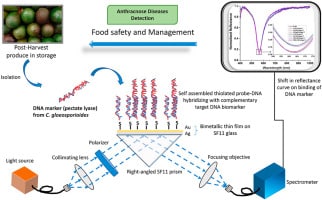
Detection of necrotrophic DNA marker of anthracnose causing Colletotrichum gloeosporioides fungi in harvested produce using surface plasmon resonance
Aabha Bajaj, Anand M.Shrivastav, Evgeny Eltzov, Noam Alkan, Ibrahim Abdulhalim Abstract Agriculture and food crops monitoring is extremely important for securing the food supply chain to human...
Predicting the shear value and intramuscular fat in meat from Nellore cattle using Vis-NIR spectroscopy
Marinade Nadai Bonin, Sauloda Luz e Silva, Lutz Bünger, Dave Ross, Gelson Luis Dias Feijó, Rodrigo da Costa Gomes, Francisco Palma Rennó, Miguel Henrique de Almeida Santana, Fernanda Marcondes de...
November Spectroscopy Spotlight: Thanksgiving and Food Quality Applications
To celebrate the fall harvest and Thanksgiving, the StellarNet team has put together a collection of food quality spectrometer applications. Some of the applications are from our favorite 2021...
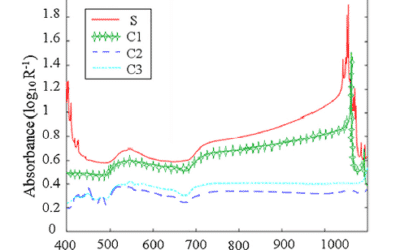
Achieving a robust Vis/NIR model for microbial contamination detection of Persian leek by spectral analysis based on genetic, iPLS algorithms and VIP scores
Sahar Rahi, Hossein Mobli, Bahareh Jamshidi, Aslan Azizi, Mohammad Sharifi Abstract Microbial contamination of vegetables is always known as a major food safety challenge. Persian leek is one of the...
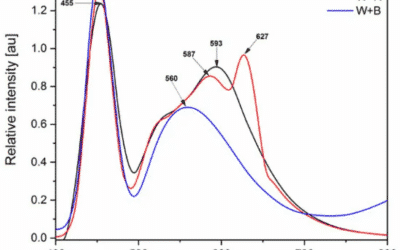
The Preferences of Different Cultivars of Lettuce Seedlings (Lactuca sativa L.) for the Spectral Composition of Light
Barbara Frąszczak and Monika Kula-Maximenko Abstract The spectrum of light significantly influences the growth of plants cultivated in closed systems. Five lettuce cultivars with different leaf...
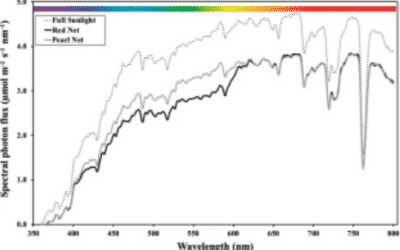
Sunburn control by nets differentially affects the antioxidant properties of fruit peel in ‘Gala’ and ‘Fuji’ apples
Héctor Olivares-Soto, Richard M. Bastías, Arturo Calderón-Orellana & María Dolores López Abstract Netting has been widely used in recent years to protect apple fruit from solar injury. There is...
Spectroscopy Applications
Astronomy, Space & Remote Sensing
Advanced & quantum materials
Thin Films & Optical Coatings
Pharmaceuticals & Nutraceuticals
Biomedical & Life Sciences
Environmental & Microplastics
Industrial & Process Analysis
Lighting, Displays & Radiometry
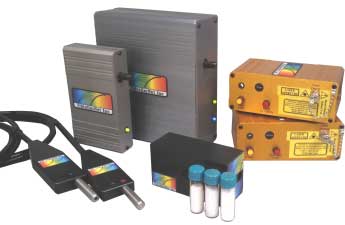
Food Safety & Quality Spectrometers
Learn More
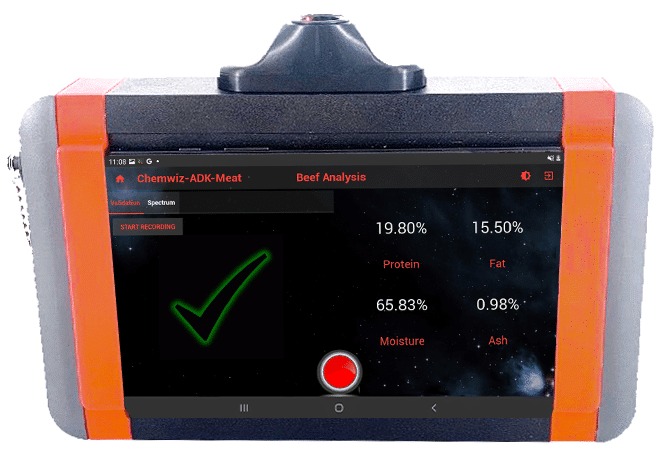
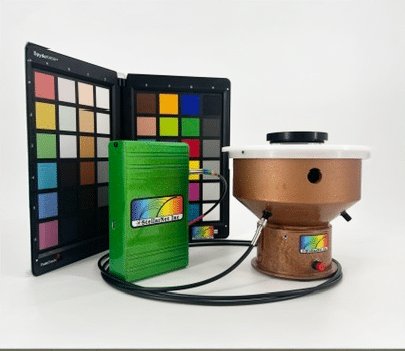
Explore Raman, UV-VIS, and NIR spectroscopy through practical guides, application notes, videos, technical resources, and real-world research. Learn how spectroscopy can be used for food quality and safety, ingredient identification, composition analysis, adulteration screening, color measurement, and quality control. These Learning Centers provide practical resources to help researchers and food manufacturers better understand their measurements and apply spectroscopy throughout food research, ingredient verification, and production.
- NIR Learning Center — Discover NIR spectroscopy for food composition analysis, ingredient verification, adulteration screening, and rapid quality control measurements.
- Raman Learning Center — Explore Raman spectroscopy for food and ingredient identification, authenticity testing, adulteration detection, and molecular analysis.
- UV-VIS Learning Center — Learn about UV-VIS spectroscopy for food color measurement, absorbance and transmission analysis, quality evaluation, and food research applications