Food Safety & Quality
Featured Articles
Can Spectroscopy Help Detect Food Contamination Earlier?
The 2026 Cyclospora outbreak linked to iceberg lettuce highlights a persistent challenge in food production: contamination can move through the supply chain before conventional testing identifies a problem. Emerging research suggests that NIR, Raman/SERS, chemometrics and machine learning may provide food producers with additional tools for faster screening and earlier investigation.
Predicting Avocado Ripeness with NIR Spectroscopy
Knowing when an avocado is ready for market can be challenging without cutting into the fruit. This application demonstrates how near-infrared spectroscopy and chemometric analysis can predict avocado ripeness quickly and non-destructively, providing a potential tool for monitoring fruit quality and improving consistency throughout the supply chain.
Taking NIR Spectroscopy to the Strawberry Field
What can spectroscopy reveal about strawberries in the field? This application follows a portable NIR spectroscopy system into a strawberry field to demonstrate how rapid, non-destructive measurements can help evaluate fruit quality and collect valuable data outside of the laboratory.
Customer Research & Publications
Spectroscopy of Summer Fruit Salads – Have you eaten the rainbow today?
Have you eaten the rainbow today? The SpectraWizard isn’t the only one who should be enjoying rainbows. One of the best ways to “eat the rainbow” as many nutritionists recommend is to fill your...
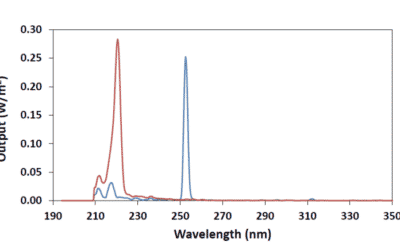
Ultraviolet-C (UV-C) for disease and pest management and automating UV-C delivery technology for strawberry
F. Takeda, W. Janisiewicz, B. Short, T. Leskey, A. Stager Abstract Alternative disease and pest management strategies are needed due to increased resistance by strawberry pathogens and arthropod...
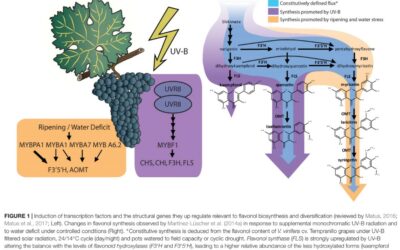
Flavonol Profile Is a Reliable Indicator to Assess Canopy Architecture and the Exposure of Red Wine Grapes to Solar Radiation
Johann Martínez-Lüscher, Luca Brillante, and Sahap Kaan Kurtural Abstract Exposure to solar radiation is a determining factor of grape composition. Flavonol synthesis is upregulated by solar...
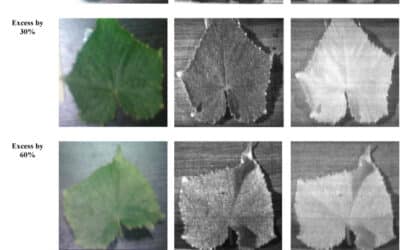
Estimation of nitrogen content in cucumber plant (Cucumis sativus L.) leaves using hyperspectral imaging data with neural network and partial least squares regressions
Sajad Sabzi, Razieh Pourdarbani, Mohammad H. Rohban, Ginés García-Mateos, Juan I. Arribas Abstract In recent years, farmers have often mistakenly resorted to overuse of chemical fertilizers to...
Potential of far ultraviolet (UV) 222 nm light for management of strawberry fungal pathogens
Wojciech Janisiewicz, Fumiomi Takeda, Breyn Evans, Mary Camp Abstract Recently developed, night-time irradiation provided the breakthrough that made ultraviolet (UV) technology with 254 nm (UV–C)...
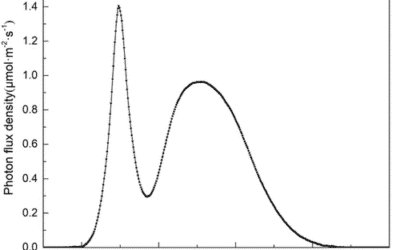
Carbon dioxide enrichment promoted the growth, yield, and light-use efficiency of lettuce in a plant factory with artificial lighting
Danyan Chen,Yanhao Mei,Qi Liu,Yongjun Wu,Zhenchao Yang Abstract Lettuce (Latuca sativa L.) is a commercially important crop and a good candidate for production in a plant factory with artificial...
Spectroscopy Applications
Astronomy, Space & Remote Sensing
Advanced & quantum materials
Thin Films & Optical Coatings
Pharmaceuticals & Nutraceuticals
Biomedical & Life Sciences
Environmental & Microplastics
Industrial & Process Analysis
Lighting, Displays & Radiometry
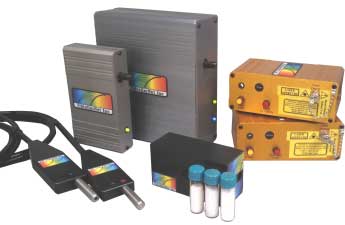
Food Safety & Quality Spectrometers
Learn More
Explore Raman, UV-VIS, and NIR spectroscopy through practical guides, application notes, videos, technical resources, and real-world research. Learn how spectroscopy can be used for food quality and safety, ingredient identification, composition analysis, adulteration screening, color measurement, and quality control. These Learning Centers provide practical resources to help researchers and food manufacturers better understand their measurements and apply spectroscopy throughout food research, ingredient verification, and production.
- NIR Learning Center — Discover NIR spectroscopy for food composition analysis, ingredient verification, adulteration screening, and rapid quality control measurements.
- Raman Learning Center — Explore Raman spectroscopy for food and ingredient identification, authenticity testing, adulteration detection, and molecular analysis.
- UV-VIS Learning Center — Learn about UV-VIS spectroscopy for food color measurement, absorbance and transmission analysis, quality evaluation, and food research applications