Environmental & Microplastics
Environmental spectroscopy provides fast, flexible tools for analyzing materials and monitoring changes in our environment. StellarNet UV-VIS, NIR, and Raman spectroscopy systems support applications including water quality and pollution monitoring, soil analysis, algae and vegetation research, chemical analysis, and microplastics identification.
Raman spectroscopy can identify microplastics and polymers through their unique molecular fingerprints, while UV-VIS and NIR spectroscopy enable a wide range of optical and environmental measurements. With compact fiber-optic systems for laboratory, field, and real-time monitoring, StellarNet provides versatile spectroscopy solutions for environmental research and analysis.
Featured Articles
Assessing Land Cover and Soil Quality with Remote Sensing
Understanding changes in land cover and soil quality is important for environmental monitoring, agriculture, and land management. This research combines remote sensing, spectroscopy, and geographic information systems (GIS) to assess landscape characteristics and soil conditions, demonstrating how spectral data can provide valuable information across large areas.
Measuring Soil pH with Spectrophotometry
Advancing Microplastics Detection with Raman Spectroscopy
Microplastics are increasingly found across environmental systems, creating a need for faster and more reliable methods of identifying and analyzing particles. This Earth Day feature explores how Raman spectroscopy and particle analysis can help characterize microplastics, providing detailed chemical information that can support environmental research and monitoring.
Customer Research & Publications
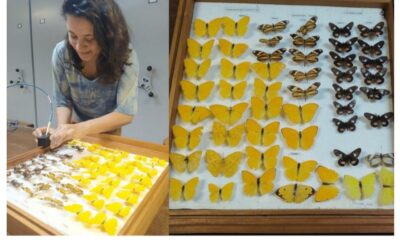
3rd Place: Beyond Vision: The near-infrared reflectance of butterfly wings and how the environment geometry and abiotic factors impact butterflies’ NIR reflectance
Congratulations to our third-place winner Ph.D. candidate Sofia Schirmer and Associate Professor Felipe Gawryszewski at Universidade de Brasília for their research on near-infrared reflectance in...

A Brief History of the Sky’s Blueness
How to: Be Uninteresting About Atmospheric Optics When I was asked to do a piece for this month’s Marketing campaign, I decided to ask my kids what they thought I should write about. They hated all...
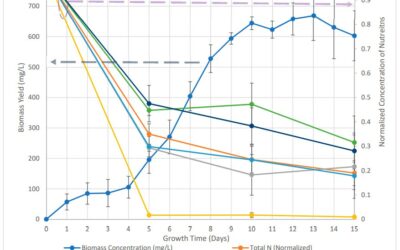
Algal Remediation of Wastewater Produced from Hydrothermally Treated Septage
Kyle McGaughy, Ahmad Abu Hajer, Edward Drabold, David Bayless, and M.Toufiq Reza Abstract Hydrothermal carbonization (HTC) is a promising technology to convert wet wastes like septic tank wastes, or...
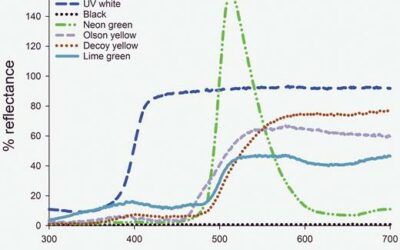
Can the Addition of Odor and Visual Targets Enhance Attraction of the Asian Citrus Psyllid (Hemiptera: Liviidae) to Sticky Traps?
Journal of Economic Entomology - Arjun Khadka, Sandra A Allan, Daniel Cho, Emma N I Weeks Abstract Asian citrus psyllid, Diaphorina citri Kuwayama, negatively impacts the citrus industry as it...
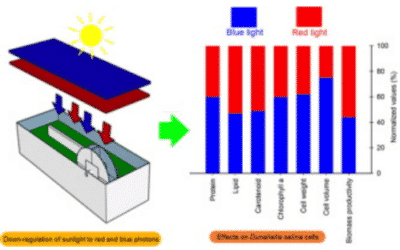
Monochromatic light filters to enhance biomass and carotenoid productivities of Dunaliella salina in raceway ponds
Emeka G. Nwoba, Tarannom Rohani, Mohammadjavad Raeisossadati, Ashiwin Vadiveloo, Parisa A.Bahri, Navid R.Moheimani Abstract Monochromatic blue and red wavelengths are more efficient for light to...
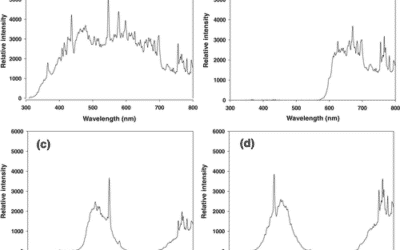
Growth and fatty acid composition of Acutodesmus obliquus under different light spectra and temperatures
Mark Helamieh, Annkathrin Gebhardt, Marco Reich, Friedericke Kuhn, Martin Kerner, Klaus Kümmerer Abstract The combined impact of temperature and light spectra on the fatty acid (FA) composition in...
Key Application Areas
Food Safety & Quality
Advanced & quantum materials
Thin Films & Optical Coatings
Pharmaceuticals & Nutraceuticals
Biomedical & Life Sciences
Astronomy, Space & Remote Sensing
Industrial & Process Analysis
Lighting, Displays & Radiometry
Spectrometers for Environmental Applications
Learn More
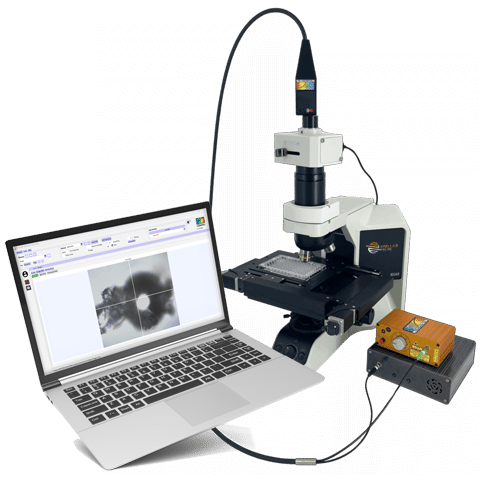
Explore environmental spectroscopy and optical measurement through practical guides, application notes, videos, technical resources, and real-world research. Learn the fundamentals of UV-VIS, NIR, and Raman spectroscopy while exploring techniques for environmental analysis, water quality research, microplastics identification, and material characterization.
Our Learning Centers bring together educational content and practical resources to help researchers and engineers better understand their measurements and make the most of their spectroscopy systems.
- Spectrometers Learning Center — Learn spectroscopy fundamentals, measurement techniques, spectrometer selection, applications, and practical resources.
- Raman Learning Center — Explore Raman spectroscopy for microplastics and polymer identification, molecular analysis, material characterization, and research applications.
- NIR Learning Center — Explore NIR spectroscopy for rapid material analysis, composition measurements, and chemical and environmental research.