Dielectric Thin Films
Dielectric Thin Films Dielectric thin films are electrically insulating materials used to control the reflection, transmission, and propagation of light. Silicon dioxide, silicon nitride, titanium dioxide, and tantalum pentoxide are among the most common dielectric...Transparent Conductive Oxides (TCOs)
Transparent Conductive Oxides (TCOs) Transparent conductive oxides (TCOs) are electrically conductive materials that maintain high optical transparency. Common TCOs include indium tin oxide (ITO) and aluminum-doped zinc oxide (AZO), which are widely used in displays,...Interference Fringes
Interference Fringes Interference fringes are the repeating peaks and valleys observed in reflected or transmitted spectra when light interacts with a thin film. The spacing and intensity of these fringes depend on film thickness, optical constants, wavelength, and...Optical Interference
Optical Interference Optical interference occurs when light reflected from multiple thin film interfaces combines to produce constructive and destructive interference patterns. These interference fringes contain valuable information about film thickness, refractive...
Introducing our new Applied Spectroscopy Division
New Handheld Raman!
New! ChemWiz-ADK Handheld NIR Spectrophotometer with on board chemometrics and spectral matching!
Read More
Check out our SpectroChemistry Systems for UV-VIS and Fluorescence Applications
Learn More
New Spectrometer Python Application Driver
for Windows, Linux, RasPi, Mac
Check it out!
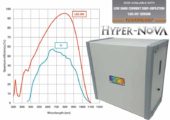
HYPER-Nova Highest Performance Raman Spectrometer
Learn More