Astronomy, Space & Remote Sensing
Featured Articles
MISSE (Materials International Space Station Experiment), a joint project between NASA and Boeing
Our BLUE-Wave spectrometers were launched into space and mounted on the ISS as part of the MISSE-7 experiment, designed to take real-time spectra to provide insight on how the environment of space affects different optical properties of materials. Many of the materials were designed for space exposure and are considered next generation materials for space travel.
StellarNet Customer Spotlight – Launching Spectrometers and Careers
The Harding University Atmospheric and Space Research Team operates under the leadership of Dr. Ed Wilson, Professor of Chemistry in Harding University’s Department of Chemistry and Biochemistry, and longtime StellarNet customer. The team’s research has been funded by several sources over the years, including NASA Astrobiology Science and Technology Instrument Development (ASTID), NASA Experimental Program to Stimulate Cooperative Research (EPSCoR), and the Arkansas Space Grant Consortium…
The SpectraWizard Goes Stellar- AstroSpectroscopy Basics
Spectroscopy is one of the most valuable tools that an astronomer has for studying the Universe. Spectrometers help us determine the chemical compositions, physical properties, and velocities of astronomical bodies light-years away…
Customer Research & Publications
No Results Found
The page you requested could not be found. Try refining your search, or use the navigation above to locate the post.
Spectroscopy Applications
Food Safety & Quality
Advanced & quantum materials
Thin Films & Optical Coatings
Pharmaceuticals & Nutraceuticals
Biomedical & Life Sciences
Environmental & Microplastics
Industrial & Process Analysis
Lighting, Displays & Radiometry
Recommended Astronomy, Space & Remote Sensing Spectrometers
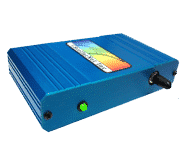
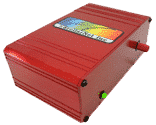
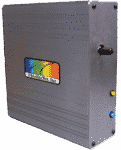
Learn More
Explore spectroscopy and optical measurement for space and astronomy through practical guides, application notes, videos, technical resources, and real-world research. Learn how spectroscopy can be used for astronomical observations, solar measurements, spectral analysis, light-source characterization, and space science research. These Learning Centers provide practical resources to help researchers, educators, and students understand spectral measurements and apply spectroscopy to the study of the Sun, stars, and other astronomical objects.
- Spectroscopy Guides & Tutorials — Learn the fundamentals of spectrometers, spectral measurement, calibration, and practical measurement techniques.
- Application Notes & Research — Explore real-world uses of spectroscopy in astronomy, solar studies, optical measurement, and scientific research.
- Videos, Labs & Technical Resources — Explore spectroscopy demonstrations, educational labs, software resources, experiments, and practical measurement tips