What is Temperature Compensation?
There are 15 “optically black” pixels on StellarNet detectors that are not hit by light during an acquisition. They provide a continuous measurement of the average dark spectrum and can be used to adjust for baseline drift during an experiment. In other words, this...What is a Stray Light?
Stray light is any light that hits the detector unintentionally. The detector is not able to distinguish wavelengths, so it cannot tell the difference between the e.g. 500 nm light that is supposed to hit a pixel and the 505 nm light that accidentally hit it. It will...What is Electronic Noise?
Electronic noise is all the noise generated by the electronic circuits after the electrons are converted to a voltage. This includes noise from any amplifiers and the A/D converter. For example, conversions of exactly the same charge will not necessarily yield exactly...What is Spectrometer Shot Noise?
Shot noise is a type of electronic noise that happens because electrons and photons are discrete particles. It arises in situations where the measurement involves counting events. In spectroscopy experiments, the event is a photon generating an electron. This process...What is Signal to Noise Ratio?
The signal to noise ratio, often abbreviated S/N, is exactly what it sounds like; it’s the ratio of the magnitude of the signal to the magnitude of the noise. Experiments need a large S/N to be able to distinguish features in the signal from the noise. If the S/N is...
Introducing our new Applied Spectroscopy Division
New Handheld Raman!
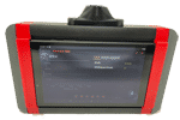
New! ChemWiz-ADK Handheld NIR Spectrophotometer with on board chemometrics and spectral matching!
Read More
Check out our SpectroChemistry Systems for UV-VIS and Fluorescence Applications
Learn More
New Spectrometer Python Application Driver
for Windows, Linux, RasPi, Mac
Check it out!
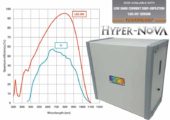
HYPER-Nova Highest Performance Raman Spectrometer
Learn More