What is Raman Spectroscopy?
What is Raman Spectroscopy? Raman spectroscopy is a non-destructive analytical technique used to identify materials and characterize their molecular structure. It works by measuring the small changes in wavelength that occur when laser light interacts with a sample....What is Absorption Spectroscopy?
The principle of absorption spectroscopy is to measure how much light is absorbed by the sample. As seen in the absorbance entry, this can be accomplished by measuring the intensity of the light before and after the sample. The Beer-Lambert law describes how the...What is a cuvette?
A cuvette is a type of sample holder for liquid samples. Often, they are made of plastic, borosilicate glass, or quartz. StellarNet offers glass cuvettes for experiments in the visible or NIR ranges and quartz cuvettes for experiments in the UV range. Cuvettes also...Photonics West 2017 Video Updates
StellarNet Makes a Splash! StellarNet recently unveiled its latest innovations at the industry’s leading photonics conference, Photonics West, where there were more than 1,200 companies and 20,000+ attendees. It was great to see so many familiar faces and happy...
Introducing our new Applied Spectroscopy Division
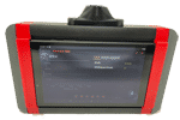
New Handheld Raman!
New! ChemWiz-ADK Handheld NIR Spectrophotometer with on board chemometrics and spectral matching!
Read More
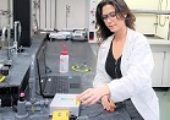
Check out our SpectroChemistry Systems for UV-VIS and Fluorescence Applications
Learn More
New Spectrometer Python Application Driver
for Windows, Linux, RasPi, Mac
Check it out!
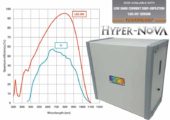
HYPER-Nova Highest Performance Raman Spectrometer
Learn More