What is Resolution?
Broadly speaking, resolution is the ability to detect differences in measured units. For spectroscopy experiments, the measured unit is the quantity used to describe the photon (e.g. wavelength, wavenumbers, frequency, energy). For example, if the resolution of an...What is a Concave Grating?
Plane (flat) gratings are prone to coma and astigmatism. Using multiple optics, as in the Czerny-Turner configuration, also increases the stray light. To minimize these errors, the BLACK-Comet spectrometer uses a concave grating. This means the three optics in a...What is a Czerny-Turner Configuration?
The Czerny-Turner configuration is a specific arrangement of optics in spectrographs. There are other configurations, but Czerny-Turner is the most common. A majority of StellarNet spectrometers use the Czerny-Turner configuration. The diagram below shows the...What is an Chromatic Aberration?
Chromatic aberration is an aberration caused by dispersion. When a beam of light is transmitted through a lens, dispersion causes the wavelengths to focus at different focal points. The aberration can be corrected by adding other materials to essentially cancel out...
Introducing our new Applied Spectroscopy Division
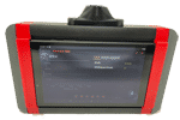
New Handheld Raman!
New! ChemWiz-ADK Handheld NIR Spectrophotometer with on board chemometrics and spectral matching!
Read More
Check out our SpectroChemistry Systems for UV-VIS and Fluorescence Applications
Learn More
New Spectrometer Python Application Driver
for Windows, Linux, RasPi, Mac
Check it out!
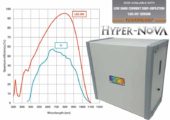
HYPER-Nova Highest Performance Raman Spectrometer
Learn More